

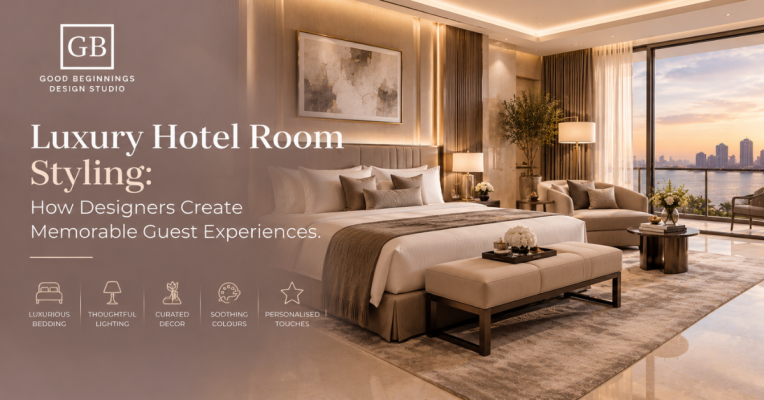
A great hotel experience is more than just a good bed or a nice room. When guests enter a space, they observe how the space feels, how easy it is to access the facilities, how the lighting changes the atmosphere, and whether every detail contributes to their comfort. When coupled with the thoughtful styling of luxury hotel rooms, these elements can contribute to a welcoming, functional, and visually refined environment.
Whether it’s a boutique hotel or a five-star property, a well-thought-out interior can help establish a hotel’s identity and play a major role in the overall guest experience. With the right mix of furniture, décor styling services, lighting, materials, colours, turnkey interior, textiles and accessories, a room can feel individual but still practical.
Good Beginnings Design Studio designs interiors with thoughtful space planning, material coordination, lighting and attention to detail. The key to designing hotel rooms that feel premium, comfortable and memorable is to understand how these elements work together.
Also Read: How to Design a Luxury Jewellery Store That Attracts Customers & Increases Sales
1. Develop a Clear Design Concept
It all starts with a solid design direction for a good hotel room. The concept should reflect the hotel’s location, its target guests, its architecture, and its brand reputation. A city business hotel may require a contemporary and efficient environment, while a resort property may prefer natural textures, softer colours and a more felt connection with its surroundings.
A consistent theme is applied to selections of finishes, furniture, fabrics, artwork and decorative accessories. Without a clear direction, the room can feel like a hodgepodge of design choices.
Key Components of a Strong Hotel Design Concept
- A consistent colour scheme.
- Coordinated styles and finishes for furniture.
- Additional materials to the architecture.
- Lighting for different guest activities.
- Artwork and accessories that reinforce the hotel’s identity.
Hotel room styling is an art form that balances function and form. “The aim is to develop a unique environment that guests immediately connect with and enjoy.
2. Use Colour to Create the Right Atmosphere
Colour is a huge part of the feel of a hotel room. Warm neutrals, muted earth tones, soft greys and carefully selected accent colours will give you a calm and sophisticated feel.
The best palette will depend on hotel positioning and location. A luxury urban hotel might use charcoal, beige and warm metallic accents, while a coastal property might bring in sand, cream, blue and natural green.
Colour consistency in the walls, flooring, upholstery, curtains and decorative elements is essential in luxury hotel interiors. Use headboards, cushions, artwork or accent furniture to create contrast rather than too many competing shades.
Practical tips for colour planning
- Lighten up where a room needs to feel more open.
- Add deeper colours by selecting feature elements.
- Match your wall colours with your flooring and furniture finishes
- Consider the effect of natural and artificial light on colour.
- Use the same shades of accent next to each other.
A thoughtful colour scheme will create visual harmony and reinforce the overall mood of the guest room.
3. Select Practical and Comfortable Furniture
The furniture should be functional for the guests and should be suitable for the style of design intended. In a hotel room, every major item should have a distinct purpose and be placed to facilitate movement.
Normally, the bed is the centre of attention. Size, headboard, bedding, and placement set the visual focus of the room. Bedside tables, wardrobes, seating, desks, and luggage benches should be positioned according to the size and use of the room.
Furniture for premium hotel room design should be comfortable, durable, and proportionate as well. Oversized furniture looks great in pictures but can make a small room hard to move around in.
Important furniture considerations
- High-quality mattresses and comfortable bedding.
- Simple storage and charging access on bedside tables.
- Seating that suits the room size and the guest profile.
- Desks or work surfaces for business travellers as they need them.
- Organised wardrobes and luggage storage.
- Finishes that are durable enough for frequent use.
Although there are several functional areas, the space is well planned, and the room feels spacious and intuitive.
4. Lighting Design for the Varied Needs of Guests
Lighting is one of the most important aspects of hotel room interior design. Guests need sufficient lighting to read, work, get ready, relax, and safely move around at night.
One overhead light does not provide the flexibility required in a premium hotel room. Instead, designers use ambient, task, and accent lighting to create different layers.
Three main lighting layers
- Ambient lighting: Lights up the room in general.
- Task Lighting: Facilitates reading, working at a desk, or using a dressing mirror.
- Accent lighting: Highlights art, architectural features, textured walls or decorative pieces.
Reading lights by the bed, desk lamps, concealed LED strips and downlights placed for effect can improve both function and atmosphere. Dimmers are especially helpful, allowing guests to adjust the light level to their liking.
Another important element is lighting colour temperature. Warm lighting is often useful in relaxing areas, while brighter light can be useful around mirrors and work areas. Controls should be intuitive and easy to access from the bed and the entrance.
5. Choose Materials That Feel Premium and Last Longer
The materials used affect the appearance and tactile feel of hotel interiors, their maintenance needs, and their longevity. A premium guest room must feel sophisticated, but the finishes chosen must also withstand regular cleaning and frequent guest use.
Wood, stone, textured laminates, quality upholstery, metal accents, and layered fabrics can add visual depth when used with care. Selection should be in accordance with the design concept and operating requirements of the hotel.
In luxury hospitality interiors, appearance is as important as durability. The flooring should be suitable for the foot traffic it will receive, the upholstery should be appropriate for the usage it will have, and the surfaces should be easy to clean and maintain their visual appeal.
Guidelines for material selection
- Select flooring that is appropriate for the room’s use and cleaning regime.
- Choose upholstery that’s built to last.
- Select practical finishes for desks, tables and other high-touch surfaces.
- Match metals and hardware throughout the room.
- When choosing fabrics, consider stain resistance and ease of replacement.
You don’t need a tonne of expensive finishes to get a sense of luxury in a room with a consistent material palette.

6. The bed is the visual centre of attention.
The bed is often the most dominant piece of furniture in a hotel guest room. Its style can instantly communicate comfort, quality and attention to detail.
The layered bed arrangement may include a mattress protector, fitted sheet, duvet, pillows, cushions and a bed runner where appropriate. The aim is to get a clean but inviting look, without sacrificing the comfort and function of the bedding.
The headboard can also help set the tone of the room. Timber details add warmth, and well-thought-out feature walls can become a stronger visual centre of attention, while upholstered panels add softness.
Details that make a bed look better
- Breathable, high-quality bedding
- A coordinated blend of pillows and cushions.
- A headboard in scale to the room.
- Bedside reading-position lighting.
- A well-balanced scheme that does not clutter up the bed.
Consistency is key, especially in hotels that have multiple rooms. A repeatable styling process keeps the brand’s visual standards but also allows for unique details in select rooms.
7. Make a Relaxing and Well-organised Bathroom
Bathrooms are an important part of the guest experience. Quality is also improved by clean finishes, practical storage, good lighting and a clear layout.
The bathroom design should be consistent with the bedroom through the chosen colours, metals, materials and lighting principles. But it also has to meet moisture, ventilation, cleaning and safety requirements.
Big mirrors can help with functionality, and layered lighting helps guests get ready comfortably. Storage should be provided for toiletries, towels, and personal items, which is accessible without making the vanity cluttered.
Essentials for bathroom styling
- Well-lit mirrors with good task lighting.
- Surfaces that are moisture-friendly and durable.
- Fixtures, handles and accessories
- Towel and toiletries storage made easy.
- Good choices for ventilation and slip-resistant flooring.
- Where the layout allows, provide a clear separation of wet and dry areas.
A well-designed bathroom contributes to the overall sense of quality and makes the day-to-day routines of guests easier.
8. Use Art and Accents to Develop Character
One hotel differs from another by means of decorative elements. Create personality without swamping the space with artwork, mirrors, ceramics, cushions, books, and selected objects.
The best styling is that which is relative to the location, architecture, or design concept of the hotel. Local artwork and artisanal accessories can add a greater sense of place to a property. Abstract art and subtle decorative items might be appropriate for a contemporary urban hotel.
Avoid placing too many accessories on desks, bedside tables, or shelves. These surfaces should remain usable for guests requiring space for their personal items.
A good rule of thumb for hospitality styling is that each piece should be in harmony with the larger composition. Hang artwork at a comfortable viewing height, keep accessories in proportion to furniture, and use repeated finishes to tie the various elements together.
The result should feel intentional, not staged or overly decorative.
9. Integrate technology without sacrificing design.
Today’s hotel guests expect to have easy access to power for charging devices, an internet connection, entertainment and air conditioning. These features should be easy to use and incorporated into the room’s design.
Power outlets (near the bed and desk), well-labelled controls, easily accessible charging points, and reliable Wi-Fi can make the stay more comfortable. Smart lighting and climate systems can also contribute to the comfort, provided they are easy to use.
Technology must support the experience in hotel guest room design and not dominate the visual environment. The clean look of the design is maintained by hidden wiring, coordinated control panels, and well-placed equipment.
Hotels have to look at their budget, maintenance capacity, and common guest needs before choosing advanced systems. It’s simple to overcomplicate things for guests. You’re better off with a simple, reliable system than a complex one guests can’t figure out.
10. Balance the visual luxury with easy maintenance.
Hotel rooms need to feel welcoming after repeated use. Thus, styling choices should take into account cleaning routines, replacement costs, durability, and time required to prepare rooms for the next stay.
Delicate fabrics, fragile accessories, and hard-to-clean surfaces may result in added maintenance demands. There are more practical alternatives that can achieve a similar visual effect but are easier to handle.
Styling that is maintenance-conscious
- Apply durable and cleanable finishes to frequently touched surfaces.
- Choose fabrics that are appropriate for the hotel’s laundry and replacement operations.
- Keep decorative accessories to a minimum and easy to clean.
- Offer ample storage space and avoid visual clutter.
- Select furniture that provides housekeeping teams access to surrounding areas.
- Replacement items will have the same specifications.
This is especially important for properties with high occupancy or multiple types of rooms. Good design should support both the operational team and the guest.”
A premium look is best when it can be maintained year-round.
The Good Beginnings Design Studio Way of Interior Styling
To design a good hotel room, you have to coordinate layout, furniture, lighting, materials, and decorative details. Every decision should be in line with the hotel’s identity but also meet guest expectations and operational requirements.
Good Beginnings Design Studio is all about cohesive interiors through thoughtful planning, material coordination, interior styling, furniture selection, and styling. A structured approach helps to ensure that the design is refined, functional, and practical for everyday use.
Whether it’s a boutique property, luxury hotel, or even just one guest room, having a clear design concept early on can help align decisions and reduce unnecessary changes during execution.
Also Read: Jewellery Showroom Lighting Design: How to Make Gold & Diamonds Stand Out
Conclusion
The winning formula for luxury hotel room design is about providing an experience that feels comfortable, unique, and easy. The colour palette, furniture layout, lighting, materials, bedding, the bathroom details, technology – these things affect how the guests experience the space.
“The most memorable rooms are the ones that look great and are functional. Guests should be able to relax, work, sleep and use the facilities comfortably without thinking about how the room works.
With careful planning, robust materials, consistent styling and an eye for detail, hotels can design interiors that emphasise their identity and foster a positive experience for guests.
FAQs
1. What is the styling of a luxury hotel room?
Ans: Luxury hotel room styling is about coordinating furniture, colours, lighting, materials, textiles, artwork and accessories to create a refined and comfortable environment for the guest. It combines visual quality with practical needs.
2. What makes luxury hotel interiors feel high-end?
Ans: A well-thought-out design concept, comfortable furniture, layered lighting, quality materials, well-finished bedding, and carefully curated décor all help to create a premium atmosphere. It’s about consistency and attention to detail and not just throwing expensive accessories at it.
3. What to consider when designing a hotel room interior?
Ans: Important issues include room plan, bed placement, circulation space, storage, lighting, acoustics, furniture durability, bathroom usability, access to technology, and maintenance needs.
4. How to improve guest experience with styling in hotels
Ans: Hotels can improve the guest experience with comfortable bedding, intuitive light controls, convenient charging points, practical storage, coordinated interiors and clear layouts. A good stay is made easier by small functional details.
5. What colours are best for luxury hotel room design?
Ans: Warm neutrals, soft greys, subdued earth tones and well-selected accent colours are versatile choices. And the best palette depends on the property location, brand recognition, architecture, and the mood you want to create.

Shubhangi Singh has been the creative marketing consultant for several luxury brands, with more than 18 years of experience in curating meaningful campaigns for brands like Reliance Brands, Walking Tree, Malabar, Simone, D’décor, Jio Wonderland, Zoya Jewels, Per Te Jewels, Rustomjee, Farah Ali Khan, Puma, Benetton, Vogue Wedding Show, and Foodhall X Vogue Sensorium.