

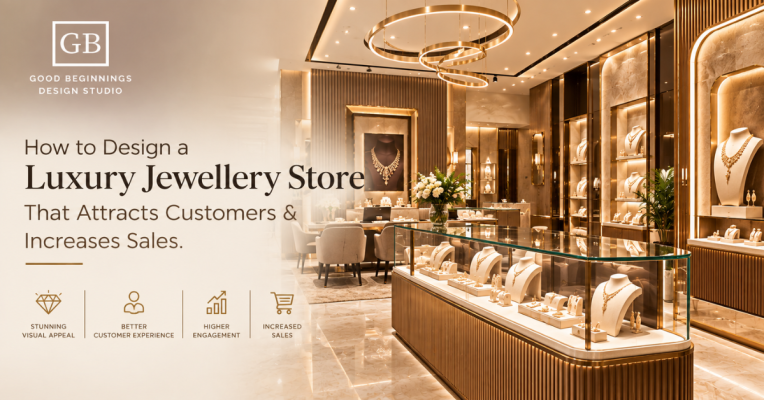
A luxury jewellery store isn’t just a platform to showcase products. It is a highly curated environment where customers browse collections, compare pieces, engage with sales consultants, and make big purchase decisions.
The interior styling is a huge part of the experience. Well-designed luxury jewellery stores can make a powerful first impression, make products more appealing, improve customer comfort and encourage visitors to spend more time exploring the showroom.
Lighting, display counters, seating, materials, turnkey interior execution, jewellery visual merchandising, and all aspects of the entrance and jewellery store layout should all be working together. It’s not just about making the store look expensive. It is to create an environment that speaks to quality and makes the purchasing experience a comfortable and memorable one.
For modern jewellery brands, therefore, jewellery retail design should combine aesthetics with functionality, security, brand recognition, and customer behaviour.
Also Read: Home Office Interior Design Ideas for Work-From-Home Professionals in Mumbai
The Importance of Jewellery Store Design
Jewellery is an emotional, high-value purchase for many customers. The environment can affect their perception of the brand and the products.
A well-designed store can assist:
- Make a good first impression
- Highlight significant collections
- Enhance product visibility
- Customer movement direct
- Encourage extended stays
- Offer comfortable consultation spaces
- Reinforce brand recognition.
- Sales staff support
- Upselling Call-to-Action Opportunities 1.
- Build customer trust
The interior should be friendly enough to tempt customers to browse but also provide the right environment for more detailed consultation.
1. Begin with a Customer-Centric Jewellery Store Design
The jewellery store layout should revolve around the customer journey.
When a customer walks into a store, the space needs to communicate the brand’s identity immediately and make it easy for them to find where different collections are housed.
A typical luxury jewellery store may include:
- Entrance hall, waiting room
- Featured show:
- Main jewellery counters
- Collection Zones
- Bridal,
- Areas for consultation
- Reception area
- Counter for billing
- Safe storage
- Staff areas
The layout should provide good circulation space, without large amounts of space being wasted.
2. Make a Good First Impression
The entrance is the first physical touchpoint that customers have with the brand.
A luxury jewellery store can create a sophisticated entrance by:
- Elegant signs
- Glass front
- Gorgeous stone or wood finishes
- Lighting, thoughtfully designed
- Simple architectural detailing
- A curated display window
Do not overdo the branding or decorative elements at the entrance. Often a restrained design can communicate luxury more effectively.
3. Create a striking window display.
Jewellery visual merchandising has a lot to do with window displays.
They provide an opportunity for you to attract the attention of people walking by outside your store and give them a taste of what your brand is all about.
A good display should have:
- A defined point of focus
- Jewellery, hand-selected.
- Proper lighting
- A controlled environment
- Branding consistency
- Enough visual space
Instead of displaying too many products, choose a smaller number of pieces that represent the collection or campaign.
4. Make jewellery stand out with lighting
Lighting is one of the most important parts of jewellery retail design.
The jewellery must be seen clearly, but the lighting must also highlight its brilliance, colour, texture and craftsmanship.
A layered lighting plan could include:
- LIGHTING AMBIANCE
- Gives general illumination.
- Display illumination
- Emphasis on products and collections.
- Accent Lamp
- Showcases architectural detail, feature displays or elements of the brand
- Decorative Lights
The store is characterised by the use of chandeliers, pendants or sculptural fixtures.
Care should be taken with the positioning of lighting to reduce reflections and glare on glass display surfaces.
5. Design Your Display Counters to Facilitate Customer Interaction:
Customers spend a lot of time at the display counters.
They should be the right height and depth for customers to view jewellery comfortably and provide enough working space for staff.
Luxury display counters may consist of:
- Glass-top
- Integrated lighting
- Premium stone finishes
- Wood or laminate
- Metal detailing
- Safe storage
- Pull-out drawers
The display should showcase the jewellery without giving the customer a feeling of separation from the product.

6. Build Dedicated Product Areas
A jewellery store may have different collections to cater to different customer requirements.
Dedicated zones make shopping easier. For instance.
Jewellery Daily
Create a comfortable, approachable environment for casual browsing.
Jewellery Diamonds
A neat setting can bring out the sparkle of diamonds.
The bride’s jewellery
Larger displays, mirrors, seating, and private consultation spaces all lend themselves to detailed bridal shopping.
Premium or Exclusive Collection
You can make a more private or visually separated area to create a sense of exclusivity.
Zones must remain connected with a consistent design language.
7. How to Make Visual Merchandising for Jewellery More Effective
It’s not simply about putting products in glass cases; it’s about jewellery visual merchandising. It’s about understanding what customers first see, how products are grouped, and how the display tells the story of a collection.
Effective merchandising can capitalise on:
- Grouping products
- Variation in height
- Hoover
- Colour co-ordination
- Feature Articles
- Temporary Exhibits
- Storytelling for the Collection
- Strategic lighting
Don’t cover every available display surface. Jewellery often looks more premium when there is enough visual space around each piece.
8. Utilise Negative Space
Negative space works especially well in luxury retail.
If displays are too crowded, individual pieces can lose visual importance.
Leaving space around selected products can help:
- Get a premium finish
- Boost product visibility
- Make displays more intelligible
- Highlight statement pieces
This principle applies to display counters, walls, shelves and window displays.
9. Use good materials.
Materials are an important part of customers’ perception of a luxury jewellery store.
Materials may comprise:
- MARBLE, Natural Stone, or Engineered Stone
- Veneer quality finishes in wood
- Glass
- Metal Brushed
- Brass accents
- Textured wall coverings
- Furnishings upholstered
The material palette must be consistent with the jewellery brand.
For example, warm wood and brass can create a classic luxury feel, while stone, glass and clean metal detailing can support a contemporary aesthetic.
10. Choose Colours Wisely
Jewellery should have a good background colour.
Neutral colours often work well because they allow the products to be the visual focus.
Possible palettes:
- Warm white
- Ivory
- Beige
- Taupe
- Soft grey
- Deep brown
- Charcoal
- Muted metallic accents
Darker interiors can create a dramatic and exclusive vibe, while lighter palettes can make the store feel open and modern.
The final palette must also fit the corporate identity.
How to Increase Sales by Designing a Luxury Jewellery Store
Interior design won’t guarantee sales, but it can provide an environment that supports the customer journey.
A well-designed store can help customers:
- Check out the brand.
- Come in comfortably.
- Browse Collections.
- Learn product categories.
- Browse jewellery easily.
- Engage with sales staff.
- Compare products
- Sit comfortably for consultation.
- Decide confidently.
- Seal the deal in a premium setting.
Here is where design and retail strategy meet.
Common Mistakes in Designing a Jewellery Store to Avoid
No matter how expensive the materials, they can’t make up for bad planning.
Avoid:
- Overstuffed display cases
- Too much light
- Heavy reflections on the glass
- Poor customer flow
- Not enough chairs
- Too many decorative elements.
- Bad product visibility
- Branding is not consistent
- Inadequate storage planning
- Ignoring personnel movement
- Security as an afterthought
The customer and the jewellery should always be the main focus of the showroom.
Why Good Beginnings Design Studio?
Good Beginnings Design Studio combines space planning, materials, lighting, furniture, styling and branding to approach commercial interiors.
So for jewellery retailers, it means creating an environment where the customer experience and product presentation are considered together.
From the entrance and jewellery store layout to display counters, consultation areas, lighting, ceiling design, materials, and visual merchandising – everything can be designed as part of one seamless interior.
The goal is to create a polished, smooth-running luxury jewellery store that supports the sales team and provides a comfortable and memorable customer experience.
Also Read: False Ceiling Design Ideas for Modern Luxury Homes in Mumbai
Conclusion
A successful design for a luxury jewellery store is about more than just expensive materials and decorative lighting. It’s about creating a well-thought-out space that makes customers feel comfortable, puts the visual focus on the products, and tells the brand story consistently.
Good lighting, comfortable consultation spaces, décor styling services, strategic jewellery visual merchandising, a practical jewellery store layout, and thoughtful jewellery retail design can all contribute to a stronger retail experience.
For jewellery brands looking to plan a new showroom or revamp an existing store, the focus should be on balancing luxury with functionality. When the showroom space is designed around customer behaviour, product presentation, brand recognition and operational requirements, the showroom can be an important part of the overall retail experience.
Good Beginnings Design Studio brings these together to produce jewellery retail environments that are elegant, functional, personalised and designed for the contemporary customer.
FAQs
1. What is important when designing luxury jewellery stores?
Ans: There are many factors in designing a luxury jewellery store. Layout, lighting, display counters, materials, customer comfort, security, branding, consultation areas, and visual merchandising.
2. Planning the layout of a jewellery store.
Ans: The layout should support customer flow, logical product areas, pleasant consultation spots, staff movement, secure storage, and a smooth transition between various parts of the showroom.
3. How does visual merchandising of jewellery raise customer interest?
Ans: Strategic product grouping, lighting, negative space, feature pieces, colour coordination, and collection storytelling can make jewellery easier to see and compare.
4. What is the best lighting for a jewellery store?
Ans: A balanced environment can be achieved by using ambient, display, accent, and decorative lighting in combination. Lighting for displays should emphasise jewellery without glare and reflections.
5. How to make a small jewellery store look luxurious?
Ans: Streamlined display counters, vertical displays, integrated lighting, quality materials, mirrors, a controlled colour palette, and minimal décor create a spacious and premium look.

Shubhangi Singh has been the creative marketing consultant for several luxury brands, with more than 18 years of experience in curating meaningful campaigns for brands like Reliance Brands, Walking Tree, Malabar, Simone, D’décor, Jio Wonderland, Zoya Jewels, Per Te Jewels, Rustomjee, Farah Ali Khan, Puma, Benetton, Vogue Wedding Show, and Foodhall X Vogue Sensorium.