

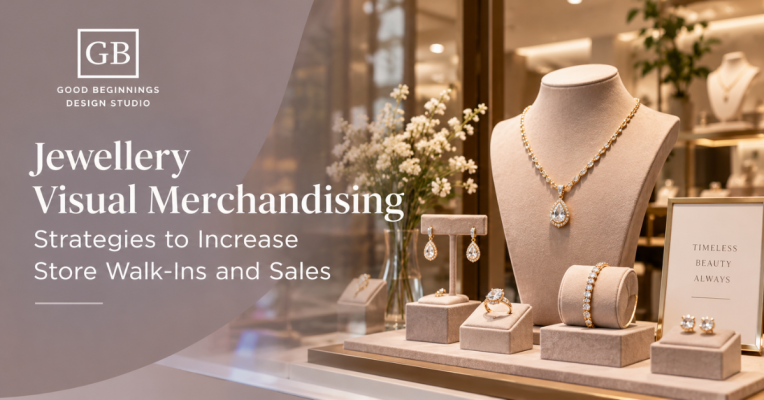
A jewellery store has seconds to grab a customer’s attention. The store entrance, window display, lighting, and overall presentation have already made an impression on the customer before he has spoken to a sales consultant or looked at a product.
This is where jewellery visual merchandising comes into play. It’s not just about placing jewellery on glass counters. It’s about creating a visual experience that draws attention, executes a turnkey interior, communicates the brand, décor styling services, highlights the products and motivates customers to visit the store.
Effective jewellery visual merchandising strategies can help jewellery retailers better utilise their displays, improve product visibility, build more powerful collection stories, and encourage customers to spend more time inside the showroom.
Every aspect of visual merchandising in a jewellery store, from the entrance and window display to individual showcases and consultation counters, should have a purpose.
Also Read: Best Furniture Layout Tips for Interior Styling
What exactly is Jewellery Visual Merchandising?
Jewellery visual merchandising is the process of displaying jewellery that attracts customers and makes products easier and more attractive to look at.
It’s a mixture of:
- Product arrangement
- Lighting
- Display furniture
- Colour
- Materials
- Signage
- Branding
- Product grouping
- Customer movement
- Seasonal presentation
The idea is to create a visual pathway that leads the customer from the shopfront to the products they are most likely to see and inspect.
More products on display doesn’t equal better merchandising. It’s about the right products at the right time.
Importance Of Jewellery Visual Merchandising
Jewellery is a very visual product category. Customers want to see the craftsmanship, the colour, the brilliance, the texture, the size, and how the individual pieces look together.
A well-designed display can assist:
- Attract attention from outside
- Increase store walk-ins
- Highlight new collections
- Make products easier to compare
- Communicate price or collection categories
- Encourage customers to explore
- Support sales conversations
- Create a premium brand impression
- Improve the shopping experience
The display is the first interaction point a customer has with the brand.
1. Begin at the Store Entrance
The entrance is one of the most important areas for attracting walk-ins.
When a customer walks past the store, they should be able to instantly tell what type of jewellery the brand offers and what makes it different.
The entrance may include:
- A strong brand logo
- A curated window display
- Focused lighting
- A feature collection
- Clean architectural details
- Seasonal elements
Don’t set too many products close to the entrance. One strong visual story is better than a cluttered presentation.
2. Build an Attractive Window Display
The window is your first chance to speak with prospective customers.
A great window display should be able to answer three questions quickly:
- What do they sell at the store?
- What is special about this collection?
- What do I win if I enter?
Instead of trying to show the whole range, showcase a selection of jewellery pieces.
Good window display ideas for jewellery are:
- Bridal collection themes
- Festive jewellery
- New arrivals
- Statement necklaces
- Diamond highlights
- Seasonal campaigns
- Signature brand pieces
The display should be refreshed regularly so repeat customers see something new.
3. A Single Strong Point of Focus
Visual hierarchy exists in all displays.
The first thing you see should be a single product, collection, or architectural feature.
You can do this by making:
- Lighting
- Size
- Position
- Colour
- Background
- Negative space
The primary focus grabs attention, and supporting items can draw the customer deeper into the display.
This prevents the customer from seeing the entire display as one undifferentiated mass.
4. Incorporate Negative Space
Space is a good place for luxury jewellery. Too many things put together diminish the visual importance of individual products. The negative space allows the products to shine individually.
Instead of packing a showcase to the gills, think:
- Fewer products
- Larger gaps
- Clear product grouping
- Simple backgrounds
- Focused lighting
This can make the built-in display more premium and easier to comprehend.
5. Group Jewellery by Collection
Grouping of products is an important aspect of jewellery merchandising.
Make clear collection stories, not mix unrelated products. For example.
Bridal Collection
Show necklaces, earrings, bangles, and other coordinated pieces together.
Diamond Collection
Employ a neat, classy display setting that highlights brilliance.
Jewellery for everyday
Design an easy-to-use display of products that can be worn every day.
Celebration Series
Use seasonal colours, styling and supporting visual elements.
Grouping products helps customers understand the collection and makes it easier for sales staff to recommend complementary pieces.

6. Use Colour to Guide Attention
Colour can affect where customers gaze first.
“The background should enhance the jewellery, not compete with it.
Neutral shades such as:
- Ivory
- Beige
- Warm white
- Soft grey
- Taupe
- Charcoal
can provide a refined backdrop.
Brand colours can be incorporated through the use of selected display elements, graphics, packaging or feature walls.
7. Use Lighting as a Display Element
Lighting is a key element in the display of jewellery products.
Gold, diamonds, gemstones, pearls and silver all react differently to light.
Use a combination of:
- Ambient lighting
- Display lighting
- Accent lighting
- Integrated LED lighting
Statement pieces can be highlighted with focused lighting, and softer ambient illumination adds comfort overall.
Lighting should also reduce reflections on glass displays.
8. Design Displays at Eye Level of Customers
Products should be at a height where customers can comfortably examine them.
Place the important collections where customers look naturally.
Displays that are very low or very high may not attract much attention unless they are deliberately used for some visual purpose.
The display height should also take into account the customer’s ability to engage with sales staff and see the jewellery in mirrors.
9. Display Ideas for Storytelling Jewellery
A display becomes more engaging if it communicates an idea rather than just showing products.
For example, a bridal display can tell a visual story about a wedding celebration.
You can use subtle seasonal elements in a festive display.
A heritage collection may include traditional materials or motifs.
A modern collection can include clean lines and minimal architecture.
“Stories like this help the jewellery to connect with customers on an emotional level.
10. Develop Complementary Product Displays
Many customers buy more than one piece of jewellery.
A well-designed display can demonstrate how products work together.
For example:
- Necklace with earrings
- Bracelet with ring
- Bridal set
- Pendant with matching earrings
This enables customers to visualise a complete look.
It can also create opportunities for sales staff to cross-sell.
Jewellery Visual Merchandising Tips for Increasing Walk-Ins
Walk-in rates increase outside the store.
1. Redecorate the window display.
Regular changes in the window display build curiosity for those who pass the store often.
2. Current Seasonal Collections
Use appropriate collections during large shopping periods.
3. Build Strong Visual Focus Points
Ensure customers see one or two key displays immediately.
4. Keep the door open.
A welcoming entrance can help reduce the psychological barrier to entering the store.
5. Use Appealing Lighting
Lighting can help the shopfront stand out and create a welcoming atmosphere.
6. Inform about new collections
Let customers know there’s something new to discover.
Jewellery visual merchandising techniques for sales
Merchandising can also assist the sales process once the customer enters.
Cross-Sell Complementary Products
Display earrings to match necklaces or rings to go with bracelets.
Create Full Outfits
Demonstrate how multiple pieces can work together.
Highlight Top Sellers
Use high-visibility areas for products you know have strong customer interest.
Create Premium Areas
“Exclusive products need their own environment.
Make Comparisons Easy
Group products by category to make it easy for customers to compare designs and styles.
Common Mistakes to Avoid in Jewellery Merchandising
And a beautiful jewellery store is diminished by poor merchandising.
Don’t:
- Overcrowded showcases
- Too many products in one display
- Poor lighting
- Excessive signage
- Inconsistent product grouping
- Weak focal points
- Too much decoration
- Poor customer circulation
- Ignoring window displays
- Using the same display throughout the store
- Failing to refresh seasonal collections
The best merchandising is carefully curated and refreshed frequently.
How to Develop a Successful Jewellery Merchandising Plan
Merchandising is more in line with a structured approach.
Step 1. Get to know the customer.
Know who is shopping at the store and what kind of jewellery they are looking for.
Step 2: Identify the Main Collections
Decide which products require the most attention.
Step 3: Map the Customer Journey
Decide how you want customers to travel through your store.
Step 4: Set Up Display Zones
Organise products into logical categories and collections.
Step 5: Lighting Plan
Use light to create a hierarchy and highlight important products.
6. Backing Elements
Use mirrors, graphics, signage, materials and digital displays as appropriate.
Step 7: Refresh Frequently
Review windows by season, campaign, new collections, and customer reaction.
Why Good Beginnings Design Studio?
Good Beginnings Design Studio offers a holistic methodology to retail interiors, combining space planning, interior styling, lighting, materials, display design and customer experience.
Jewellery merchandising is considered part of the total store environment, not a separate display activity for jewellery retailers.
Coordinate everything from shopfront windows and entrance displays to jewellery counters, feature walls and lighting, mirrors, consultation areas and product grouping to give your retail space a unified look and feel.
The aim is to develop a store that appeals from the outside, invites customers to come in and browse, and presents the jewellery in an elegant and accessible manner.
Also Read: How to Style a Living Room for Everyday Comfort
Conclusion
Effective jewellery visual merchandising is about creating a clear visual journey that links the customer with the product and the brand.
The right jewellery visual merchandising strategies can increase the appeal of your shopfront, enhance product presentation, encourage customers to browse through different collections, and facilitate sales conversations.
From carefully planned jewellery display ideas and effective jewellery retail display systems to thoughtful jewellery product display and jewellery store display design, every visual element can contribute to the overall customer experience.
Visual merchandising for jewellery stores should be a combination of aesthetics and customer behaviour, product storytelling, lighting, branding and practical store planning for modern retailers.
Good Beginnings Design Studio combines these to create jewellery retail spaces that are elegant, functional and visually exciting, designed around the way customers shop.
FAQs
1. What is visual merchandising in jewellery?
Ans: Jewellery visual merchandising is the art of presenting jewellery through the arrangement of products, lighting, displays, colour, signage, branding and store layout to attract customers and enhance the shopping experience.
2. How does visual merchandising of jewellery increase walk-ins in the store?
Ans: Eye-catching window displays, strong entrances, focused lighting, clear branding, and collections that are refreshed regularly can draw the attention of passers-by and make them want to enter.
3. What are some good jewellery display ideas?
Ans: Ways to create effective jewellery displays include grouping products, using negative space, tiered displays, focused lighting, feature pieces, seasonal themes, coordinated jewellery sets, and dedicated collection zones.
4. How does visual merchandising in jewellery stores matter?
Ans: It helps customers to understand collections, see important products, move around the store, and feel the brand in an engaging manner.
5. How do I showcase jewellery products?
Ans: Jewellery should be displayed with ample visual space, proper lighting, clear grouping of products, secure showcases, and comfortable viewing heights.

Shubhangi Singh has been the creative marketing consultant for several luxury brands, with more than 18 years of experience in curating meaningful campaigns for brands like Reliance Brands, Walking Tree, Malabar, Simone, D’décor, Jio Wonderland, Zoya Jewels, Per Te Jewels, Rustomjee, Farah Ali Khan, Puma, Benetton, Vogue Wedding Show, and Foodhall X Vogue Sensorium.