

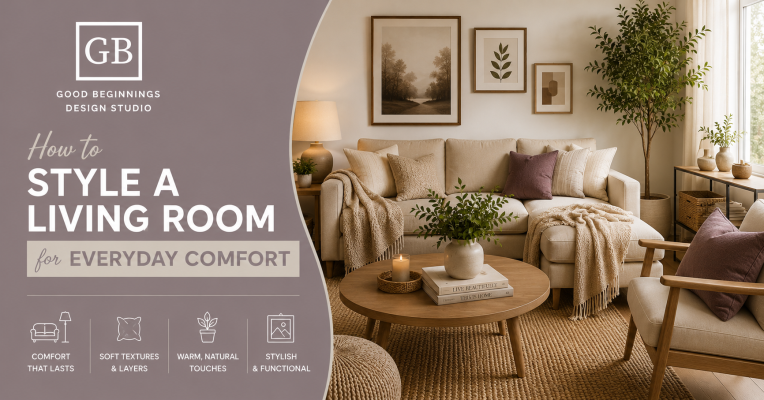
The living room is one of the most used spaces in a home. It’s where family relaxes, guests are welcomed, conversation occurs, and everyday life often takes place. Therefore, a living room should be not only attractive but also comfortable and practical.
Good interior styling is about combining furniture, colours, lighting, textures, décor and space planning to create a room that works well for everyday living. With the right styling choices, a living room can feel warm, organised and visually balanced without feeling too formal.
Good Beginnings Design Studio makes residential interiors that are not only visually appealing but also highly functional, ensuring that the living space reflects the homeowner’s lifestyle and needs.
Also Read: Luxury Hotel Interior Styling: Design Principles That Create Memorable Guest Experiences
What makes a living room cosy?
A comfortable living room should contain enough seating, easy flow, good lighting, helpful storage, and a pleasant atmosphere.
Key elements of a comfortable living room are:
- Comfortable and properly sized furniture
- Walking paths clear
- Balanced Lighting:
- Appropriate colours
- Soft textures
- Practical storage.
- decorative décor
- A well-considered furniture plan
These elements should work together rather than being selected independently.
1. Select Comfortable Furniture
The furniture is one of the most important parts of the living room.
The sofa must be comfortable enough for you to sit on and support you. The sofa must also fit into the space available. Depending on the room’s size and needs, you might want to add accent chairs, ottomans, and other seating.
Think:
- Sofa dimensions
- Number of seats
- Cushion comfort
- Furniture scale
- Usable floor space
- Mobility ease
Avoid buying furniture just because it looks nice. It should also be comfortable for daily wear.
2. Careful Planning of Furniture Arrangement
Furniture should be arranged for conversation and movement.
To prevent your room from feeling overcrowded with furniture, establish a defined seating area around a central feature like a TV, accent wall, piece of art, or architectural detail.
There are some practical layout criteria:
- Comfortable seating distances
- Obvious walking routes
- Tables at your fingertips
- Ease of movement within the room
- Enough space between the furniture
Even if you don’t have much space available, good space planning can make the living room more comfortable.
3. Choose a Calming Colour Palette
Colour has a great influence on the atmosphere of a living room.
“Neutrals such as beige, cream, soft grey and warm earthy tones can provide a calm and sophisticated base.
Then you can add accent colours through:
- Curtains, Rugs, Cushions
- Artwork, accent chairs, decorative accessories
The aim is to arrive at a colour scheme that feels welcoming, without being visually overpowering.
4. Layer Your Lights
One ceiling light isn’t enough for a comfortable living room.
You can create layered lighting to provide the right light for the area and the activity.
surrounding light
Provides general illumination for the whole room.
Task light
Can be used for reading, working or other assigned activities.
Accent Lighting
Exhibits art, feature walls, furniture or architectural detail.
You can combine floor lamps, wall lights, pendants, table lamps and recessed lights for a balanced lighting scheme.
5. Use soft textures
Textures add warmth and cosiness to a living room.
You can add comfort with soft furnishings and add visual depth.
In an effort to add:
- Pillow
- Rugs, Curtains, Throws
- Furniture with upholstery
- Accessories in soft fabric
Mixing different textures can add a sense of layering to a neutral interior without requiring lots of colours.
6. Define the Seating Area with a Rug
A rug can visually tie together the various pieces of a seating arrangement.
It can also bring warmth and softness to the space.
The size of the rug should be selected according to the layout of the furniture. A rug that’s too small can make the furniture look disjointed, but a rug that’s the right size can help define a cohesive seating area.

7. Make a useful point of focus
A centrepiece gives the living room a visual centre.
It might be:
- Feature wall
- Television set
- Artwork Statement lighting
- Large window.
- Ornamental wall panel, architectural feature
When you have a centre of attention, you can arrange your furniture and decorations around it.
This gives structure and stops the room from looking messy to the eye.
8. Add Functional Storage
Without storage, everyday life can quickly become a cluttered mess.
Storage should be integrated into the interior design rather than an afterthought.
You may use the following as a storage room in the living room:
- Storage TV Units
- Built-in cabinets
- Side panels
- Floating shelves
- Storage ottomans
- Furniture custom
- Hidden storage
Keeping your everyday items organised helps you to keep your living environment cleaner and more comfortable.
9. Add Personal Decor
A living room should be a reflection of the people who use it.
Artwork, photographs, books, plants, vases and decorative objects can make the space feel more personal.
Options for décor are:
- Art.
- Family photos
- House Plants
- Books
- Vase’s
- Decorative pieces
- Pillows
- Collections, personal or travel
The trick is to select pieces that mean something or relate to the interior design as a whole.
10. Don’t Forget the Everyday Use
A living room should be designed for real life and not for photographs.
Think about what role the space will play daily.
For example:
- Is there enough room for the family to sit?
- Is it easy for visitors to get around?
- Is there a handy spot for remote controls and other everyday items?
- Is the lighting good for reading or relaxing?
- Is there enough room?
- How easy is the décor to care for?
Such practical considerations can make a world of difference to everyday comfort.
Living Room Design Ideas for Different Interior Styles
Contemporary Living Room
Clean lines, neutral colours, minimal decor, and layered lighting can give a modern look to furniture.
Living Room Minimalist
Concentrate on simple furniture, minimal décor, neutral colours, and uncluttered surfaces.
Luxury Lounge
Premium materials, statement lighting, custom furniture, rich textures, and carefully selected décor can create a refined look.
Contemporary Warm Living Room
Use neutral colours and natural wood, soft textiles, indoor plants, and warm lighting to create an inviting atmosphere.
Common Mistakes to Avoid When Decorating a Living Room
Attractive furniture and décor can make a place uncomfortable if not planned properly.
Common errors include:
- Selecting furniture that is too big
- Blocking out sunlight
- Making narrow walking paths
- Too many decorative things
- Relying on a single light source
- Choosing a rug that’s too small
- Excluding storage requirements
- “Too many unrelated colours.
- Just looks, not comfort.
A living room should be balanced – it should look sophisticated but also be practical for everyday life.
Why Professional Interior Styling Can Make All the Difference
In professional interior styling, various design elements are combined into a coherent concept.
An interior design studio can assist with:
- Space planning
- Furniture selection.
- Colour consulting
- Lighting
- Material choices
- Bespoke furniture
- Planning Storage
- Decoration styling
This creates a balance between the major and finishing elements of the living room.
Why Good Beginnings Design Studio?
Good Beginnings Design Studio is an interior design and styling solution for residential spaces. The focus is on aesthetics, functionality, and attention to detail.
The studio is working across disciplines, including luxury residential interiors, space planning, custom furniture, modular kitchens, lighting consultation, styling, wall finishes, and turnkey interior execution.
Living room interiors can be planned based on the lifestyle of the homeowner, the design style they prefer, the space available, the furniture requirements and the overall vision.
The goal is to create a living space that is comfortable, organised, elegant and suitable for everyday life.
Also Read: Interior Turnkey Projects vs Traditional Interior Design: Which Is Better for Luxury Homes?
Conclusion
If you’re decorating a living room for everyday comfort, you’ll want to balance aesthetics and functionality. Good furniture, good space planning, good colours, good lighting layers, good textures, good storage and good personal decoration all help to create a better living environment.
The best living rooms are not just designed to look pretty. They’re made for the people who use them every day.
Good Beginnings Design Studio creates comfortable, functional, and visually coordinated living rooms by using space planning, furniture, lighting, materials, and décor styling services.
FAQs
1. How can I make my living room more comfortable?
Ans: Choose comfortable furniture, maintain clear walking paths, use layered lighting, add soft textures, provide practical storage, and select décor that makes the space feel personal.
2. What type of sofa is good for everyday use?
Ans: The best sofa depends on your room size, seating needs, lifestyle, and design style you like. Think about comfort, durability, proportions, and available space.
3. How can I make my living room more inviting?
Ans: Warm lighting, comfortable seating, soft textiles, a suitable rug, indoor plants, artwork, and a balanced colour palette all help create a more welcoming environment.
4. Why is the arrangement of furniture important in a living room?
Ans: Furniture layout is very important,, as it affects movement, comfort, conversation, and the overall visual balance of the room.
5. How do I organise my living room?
Ans: Use practical storage options like built-in cabinets, TV units, floating shelves, sideboards and furniture with hidden storage to keep the everyday items in an organised manner.

Shubhangi Singh has been the creative marketing consultant for several luxury brands, with more than 18 years of experience in curating meaningful campaigns for brands like Reliance Brands, Walking Tree, Malabar, Simone, D’décor, Jio Wonderland, Zoya Jewels, Per Te Jewels, Rustomjee, Farah Ali Khan, Puma, Benetton, Vogue Wedding Show, and Foodhall X Vogue Sensorium.