

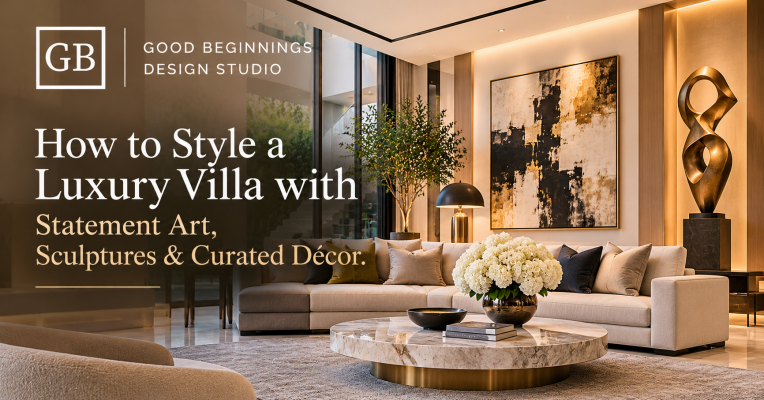
The interior of a luxury villa needs to express the character of the house and its inhabitants. Carefully selected art, sculptures, and decorative objects can add character, provide visual focus, and link different rooms. Good luxury villa decor styling is not about covering every surface. It’s about choosing significant pieces and letting them breathe.
Statement art and sculptural objects can also be used to create a centre of attention in a room. They play off the architecture, furnishings, lighting and materials, when selected and sited with care, rather than compete.
Good Beginnings Design Studio’s approach to interior styling is through thoughtful space planning, material coordination, turnkey interiors, and attention to detail. These principles can help homeowners create interiors that are personal, balanced and refined.
Also Read: Jewellery Showroom Lighting Design: How to Make Gold & Diamonds Stand Out
1. Start with the character of the villa’s design.
When choosing art or accessories, keep in mind the architecture of the villa, its interior palette and overall style. A contemporary villa with clean lines may go well with abstract art and sculptural forms, while a more traditional home might be enhanced with expressive paintings, handmade objects or pieces with historic character.
The goal is to create a connection between the art and the interior, not with everything matching up perfectly.
Consider these elements first.
- The colour palette and material finishes of the room.
- The style and size of the furniture.
- The amount of natural light.
- Existing architectural characteristics.
- The mood you want the room to have.
A clear direction helps give purpose to luxury villa art styling. It also makes it easier to pick pieces that work together from room to room.
2. Create a Focal Point with Statement Wall Art
Big pieces of art can add a definite visual anchor to a room. It’s particularly nice over a sofa, behind a dining table, in an entry, or on a more prominent wall in a living room.
When you are thinking about statement wall art ideas, think about the size of the wall, what furniture will be underneath it, and how far away it will be seen from. Small artwork can feel disconnected, and oversized pieces can overwhelm the room.
Tips for Choosing and Displaying Statement Art
- Pick something that works with the room’s palette but doesn’t have to repeat every colour.
- Hang art at a comfortable viewing height.
- Look at the width of the furniture underneath the artwork.
- Leave plenty of open wall space around the piece.
- Proper lighting should be used to highlight the artwork and prevent glare.
A single large work may sometimes have more impact than several smaller works. If you’re designing a gallery wall, plan the layout carefully so the frames and art feel connected.
3. Put sculptures where they can be enjoyed.
Sculptures bring shape, texture and dimension to a room. Depending on size and material, they can be exhibited on plinths, consoles, shelves or niches made for this purpose.
In luxury homes, the careful placement of sculpture considers sightlines, scale, circulation and the relationship of the sculpture with the environment. A sculptural piece should be seen without getting in the way or making a space feel crowded.
Places suitable for sculptures
- Entryways and foyers, where a piece can be an arrival feature.
- Living rooms, on a plinth or side table, are preferred.
- The stair landings provide different levels from which to view the sculpture.
- Shelves or niches for smaller items.
- Courtyards or terraces for outdoor-rated pieces that complement the landscape.
Avoid placing sculptures in narrow circulation paths or where they can be easily knocked over. Take into account the weight, stability, material, and maintenance requirements of each item.
4. Add Décor, Not Clutter, on All Surfaces
A selective approach to accessories usually works well in a refined interior. Curated home decor means selecting pieces that have a distinct role to play in the composition, whether that is adding colour, texture, contrast, or personal meaning.
All the decorative items you find in the market need not be displayed on a console, coffee table, or shelf. Leave room to enjoy the important pieces.
A simple approach to styling a surface
- Mix objects of varying heights and shapes.
- Don’t get scattered; put a few related pieces together.
- A combination of ceramic, glass, timber, and metal materials.
- Add books or personal objects when they add character.
- Keep the surfaces you use often practical and clear.
This is to make things feel balanced. A few well-chosen objects can feel more personal and sophisticated than many mismatched accessories.

5. Select accessories to complement the interior.
Luxury home accessories can provide the finishing touch to a room. Cushions, vases, trays, decorative bowls, mirrors, and lighting objects can reinforce the colour palette and add texture.
Accessories should support the larger design elements, not compete with them. If the room has bold artwork, it might require more restrained accessories. If the interior is quieter, it may need a more expressive decorative object.
Considerations for styling accessories
- Use chosen colours or materials in multiple places in the room.
- Use contrasting textures to add dimension.
- Think about the scale of accessories to furniture.
- Avoid placing fragile or valuable objects in high-traffic areas.
- Pick items that are easy to clean and maintain.
The room feels complete and clear visually when it is approached in a coordinated way.
6. Coordination of Art, Lighting and Furniture
The artwork and sculptures should be considered alongside the furniture and lighting and not as an addition to the room once it’s complete. Their location can influence furniture layout, light hanging, and people’s movement in the area.
For example, a large piece of art above a sofa can help define the seating area. A sculpture in an entry can be a centrepiece that draws the eye through the house.
Light, especially, is important. Picture lights, adjustable spotlights and well-placed ambient lighting can make artworks easier to appreciate. Do not install lights that cause glare or create shadows that will be distracting.
When you’re planning a room, think about how the big pieces of furniture, artwork and decorative features will work together from various vantage points.
7. Maintain a Balanced Collection
A luxury villa may have a few statement pieces, but there must be a clear visual hierarchy in each room. Busy interiors result when every wall, shelf and table is fighting for attention.
Balance can be achieved through scale, colour, spacing and contrast. A more subdued background can enhance a sculptural object, and simpler furniture can complement a dramatic piece of art.
How to maintain visual balance
- Give statement pieces lots of room around them.
- Don’t put too many large focus points close together.
- Use the same material or colour again and again to create continuity.
- Bring open space into the composition.
- Before finalising placement, look at the room from the entrance and main seating areas.
A thoughtful arrangement lets each item contribute to the room without dominating it.
How Good Beginnings Design Studio Can Help You
Styling a luxury villa with art and décor is more than simply picking up pretty objects. The size, the placement, the lighting, the materials, and the relationship to the architecture are all factors in the end result.
Homeowners can work with Good Beginnings Design Studio to coordinate these elements through thoughtful space planning, furniture selection, material coordination, and styling decisions. A clear approach helps ensure artwork, sculptures, and accessories feel connected to the overall interior design.
Also Read: Jewellery Exhibition Stall Design: How to Create a Premium Brand Experience
Final Thoughts
Statement art, sculptures and carefully chosen accessories can impart a distinctive and personal feel to a luxury villa. The best results are when you select pieces that are appropriate. to the architecture, that considers their scale and placement, and that allow enough space for each item to be appreciated.
Good luxury villa Décor styling services is not about how much but about balance. Thoughtful placement of art and curated accessories allows homeowners to create interiors that feel refined, welcoming, and meaningful, with a clear direction for design.
FAQ (Frequently Asked Questions)
1. What is styling luxury villa decor?
Ans: The styling of luxury villa decor includes the selection and arrangement of artwork, sculptures, accessories, textiles, and decorative objects that complement the villa’s architecture and interior design.
2. Selecting Artwork for a Luxury Villa
Ans: Consider the size of the room, its colour scheme, furniture, lighting, and general design character. Choose art that complements the room but also adds personality or visual contrast.
3. How to position sculptures in a luxury home?
Ans: Sculptures can be positioned in entryways, living rooms, stair landings, niches, or on appropriate consoles and plinths. Consider placement in terms of scale, stability, sightlines, and circulation.
4. How does statement wall art enhance a room?
Ans: Statement art can add colour and texture and help set the visual direction of the room, making a great centre of attention. Its size and placement should relate to the wall and to other nearby furniture.
5. What is the meaning of curated home decor?
Ans: Curated home decor is the selection of a small number of objects that all work together in terms of colour, material, scale, or personal meaning. It reduces the clutter and gives each piece a defined purpose.

Shubhangi Singh has been the creative marketing consultant for several luxury brands, with more than 18 years of experience in curating meaningful campaigns for brands like Reliance Brands, Walking Tree, Malabar, Simone, D’décor, Jio Wonderland, Zoya Jewels, Per Te Jewels, Rustomjee, Farah Ali Khan, Puma, Benetton, Vogue Wedding Show, and Foodhall X Vogue Sensorium.