

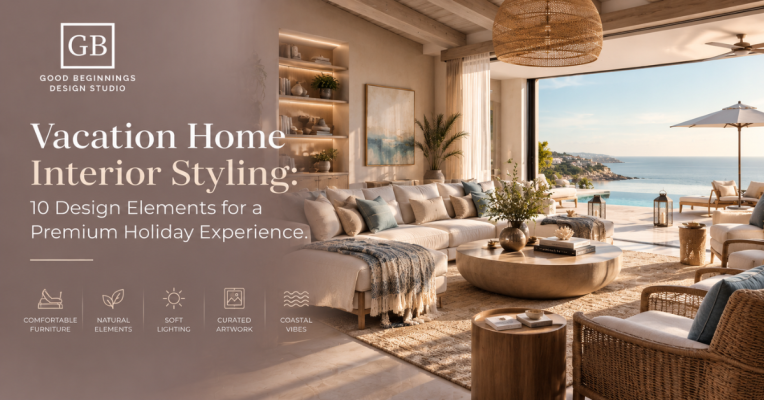
A vacation home should be more than just a place to stay. It should offer comfort, relaxation, privacy, and a memorable experience far from the daily routine. Good vacation home interior styling creates a setting where the architecture, furniture, lighting, turnkey interior, colours and décor styling services combine to make every stay feel special.
Whether it is a seaside villa, a mountain retreat, a countryside residence or a luxury holiday apartment, the right design choices can enhance both functionality and visual appeal. When designing a vacation home interior, you also want to consider that different people will be using the property in different ways, such as family get-togethers, quiet weekends away, or longer holidays with guests.
Our interior styling is adapted to practical planning, material selection, spatial balance, and refined aesthetics. Good Beginnings Design Studio: Here are 10 critical design elements to consider when creating a premium holiday experience.
Also Read: Kids’ Bedroom Interior Style Ideas for Luxury Mumbai Homes
1. Choose a Relaxed, Harmonious Colour Scheme
Colour is important in setting the mood of a holiday property. A vacation home can often benefit from a palette that feels calm and welcoming and connected to its surroundings, rather than a permanent residence that may reflect the routines of everyday life.
Soft neutrals, warm whites, muted greens, sandy beiges, and natural blues all help create a relaxed atmosphere. The palette should be in harmony with where the property is located and the natural light.
How to choose the right colours
- Coastal properties: whites, sands, soft blues, and muted sea greens.
- Mountain retreats: warm beige, earthy browns, forest green, and charcoal accents.
- Country houses: Combine cream, olive, terracotta, and natural wood tones.
- Contemporary holiday villas: Use a neutral base with pops of accent colour.
And not every room has to look the same to effectively style a vacation home. Create a visual flow by using a few colours and finishes that are repeated throughout the property. This approach creates interiors that are connected without repeating themselves.
2. Buy Comfortable and Functional Furniture
Furniture should be comfortable, functional, and utilise available space. Furniture in a holiday property needs to be comfortable, durable, and flexible enough to cater to different groups of guests.
In your living room, go for supportive sofas, useful side tables and occasional chairs that invite conversation. Bedrooms should have quality beds, easy-to-use bedside storage, and plenty of room to move around.
For a luxury vacation home, look for furniture that combines quality craftsmanship and everyday usability. Natural wood, textured upholstery, and select accent pieces can give a premium look without making the interiors feel formal.
Tips for planning furniture
- Keep clear walking paths between furniture pieces.
- Pick furniture that is proportionate to the size of the room.
- Make use of storage ottomans or benches where you need extra storage.
- Opt for durable upholstery that can handle frequent use.
- Provide versatile seating for family get-togethers and entertaining.
The goal is to create a space that feels welcoming upon guest arrival while still being easy to maintain between visits.
3. Prioritise Natural Light in Your Design
The holiday space will look larger, open, and connected to the outdoors with natural light. Large windows, glazed doors, skylights and mirrors placed in the right places will help you spread daylight throughout the property.
Where possible, orient seating and dining areas to take advantage of views and natural light. Avoid blocking key windows with large pieces of furniture.
Window treatments should provide a balance of privacy, light control, and appearance. Sheer curtains will diffuse daylight, while bedrooms are best with black-out curtains or layered window coverings.
Lighting also has to work when the sun goes down for luxury holiday home interiors. Blend ambient lighting with task and accent lighting so that each area can host various activities. Warm lighting in living and bedroom areas can create a relaxed mood, while brighter task lighting is useful in kitchens and workspaces.
4. Create a Strong Connection with Nature
The relationship of a holiday property to its environment is an important characteristic. A garden, balcony, terrace, poolside, or scenic view can be an important part of the interior experience.
“Vacation property styling should be planned with consideration for how the indoor relates to the outdoor. Sliding glass doors, matching flooring where appropriate, and furniture arrangements facing the view can help create a natural transition.
Features to look out for in outdoor styling
- Weather-resistant outdoor seating.
- Eating space for outdoor meals.
- Layered planting that is appropriate to the setting of the property.
- Soft outdoor lighting for the nights.
- Solutions for shade: Umbrellas, pergolas or covered terraces.
Select outdoor furniture according to your local climate and maintenance requirements. Materials exposed to strong sunlight, rain, humidity, or coastal air must have adequate durability.
A good outdoor space can increase the living space and make the property more enjoyable during the day.
5. Natural Materials and Tactile Textures |
Materials impact how a space looks, feels, and performs over time. Natural textures such as wood, stone, linen, cotton, wool and rattan can add warmth and visual depth to holiday interiors.
“The right mix depends on the location, the style of architecture and the desired level of luxury of the property. You might come across a modern villa with stone surfaces, timber detailing and soft fabrics, whereas a country retreat could benefit from woven accents and textured finishes.
Balance statement materials with practical surfaces for premium vacation home interiors. Choose kitchen counters, bathroom finishes, flooring, and frequently used furniture that are durable and easy to clean.
Adding texture
- Put linen or cotton pillows on seating areas to soften them up.
- Use rugs to define living and bedroom spaces.
- Bring in wood via furniture, wall features, or decorative items.
- Combine matte and glossy finishes for contrast.
- Where it’s appropriate, use natural stone or stone-inspired finishes.
A considered palette of materials assists in creating a layered interior without the need for over-decoration.
6. Bedrooms: A Place to Rest and Be Private
Bedrooms are the heart of the holiday experience. They must be able to sleep, keep their things, and feel comfortable.
A well-styled bedroom starts with a great mattress, quality bedding, supportive pillows, and the right lighting. A limited colour palette and clean layout can help to create a feeling of calm and order in the room.
Larger properties can have each bedroom with its own identity but a consistent overall design language. The master bedroom could be more luxurious in the textures, and the guest rooms could have lighter colours and simpler furnishings, for example.
Details of main bedroom
- Easy access storage in bedside tables.
- Reading lights on either side of the bed where appropriate.
- Blackout window coverings.
- Easy charging stations.
- Luggage or clothes storage
- Mirrors and functional dressing zones.
Good bedroom planning is especially important when a holiday home has to cater for several families or longer stays. Thoughtful details bring comfort without elaborate ornamentation.

7. Design a Kitchen and Dining Area for Easy Entertaining
A lot of guests choose a holiday property because they can cook, spend time together, and have a more flexible stay. Thus, the kitchen and eating space should be both attractive and functional.
A functional kitchen needs a lot of counter space, easy access to storage, dependable appliances, and good task lighting. In open-plan properties, the kitchen should complement the living and dining areas with finishes and colours.
The dining furniture should be appropriate for the number of guests the property is intended to host. In larger homes, a dining table provides a place to gather for communal meals, games and informal get-togethers.
When designing a luxury vacation home, pay attention to details such as pendant lighting over the dining table, sturdy work surfaces, comfortable seating and well-organised storage for cookware and tableware.
Keep items you use frequently within easy reach and skip the super-delicate finishes in areas that will see regular use. Good design creates memorable experiences, but not by making everyday tasks complicated.
8. Add Personalised Décor Without Adding Clutter
Décor adds character to a holiday property. Artwork, ceramics, decorative lighting, books, cushions, and carefully chosen accessories can add character and a sense of connection to the place to the interiors.
The secret is to pick pieces for a reason. Too many decorative items can make the rooms hard to clean and make the space feel smaller.
Vacation home decor ideas that work
- Display art influenced by local nature or culture.
- Not a lot of statement accessories. Not a lot of small objects.
- Where natural light and maintenance conditions allow, introduce plants.
- Choose cushions and throws that match the colour scheme.
- Give the property a sense of place by using locally made pieces.
Just make sure the décor isn’t too on the nose. A beach home doesn’t have to have nautical decor in every room, and a mountain retreat doesn’t have to have rustic finishes everywhere. More subtle references often produce a more sophisticated result.
Successful holiday home styling is about finding a happy medium between personality and flexibility so that different guests can feel at home in the space.
9. Combine Ambiance with Smart and Practical Tech
Technology can improve comfort when it is designed carefully. Guests may appreciate the simplicity of controls for lighting, climate, entertainment and window coverings, especially in premium properties.
The technology should be of a standard appropriate to the purpose of the property and its maintenance provisions. Integrated lighting controls and climate management might be just the thing for a luxury villa for an extended family holiday, but a smaller rental property might just need reliable Wi-Fi, convenient charging points and easy-to-use entertainment systems.
Features that can be useful are:
- Living/bedroom areas with adjustable lighting.
- Convenient power outlets and USB charging ports.
- Reliable internet connection.
- Easy-to-operate air conditioning or heating.
- Install secure entry systems where appropriate.
- Instructions for appliances and home controls
Technology should be simple, not complex. Visitors shouldn’t require a manual to use simple amenities.
From a design point of view, hiding the wiring, placing controls in the right location, and coordinating the finishes of equipment can help maintain the look and feel of the interiors.
10. Focus on Durability, Storage & Easy Maintenance
A premium holiday property must be attractive on repeated use. This is especially important for homes that are rented to different guests or are frequently used by extended families.
Materials and furnishings should be selected based on their expected use, cleaning needs, and exposure to environmental conditions. If a finish stains easily or requires specialised maintenance, it might not be the right choice even if it looks impressive.
Design decisions for long-term use
- Whenever possible, opt for washable or removable slipcovers.
- Use hard-wearing flooring in high-traffic areas.
- Choose moisture-resistant finishes for bathrooms and other wet areas.
- Make sure there’s enough storage to keep surfaces clear.
- Use weather-resistant outdoor furniture;
- Plan fixtures and fittings to allow for maintenance access.
Storage is especially important in bedrooms, kitchens, entryways and utility spaces. Having a designated area for bags, cleaning supplies, sheets and everyday items can help keep your home tidy.
Luxury holiday property design is not only appealing but also controllable over time with careful planning.
How can Good Beginnings Design Studio help you?
Creating a luxury vacation home requires a coordinated approach to layout, furniture, lighting, materials, and décor. Everything has to support the guest experience and respond to the architecture and the site.
Homeowners can learn how to navigate the design process with the help of Good Beginnings Design Studio, offering thoughtful space planning, interior styling, material coordination, furniture selection, lighting design and styling choices. The objective is to produce interiors that are consistent, comfortable and suitable for the purpose for which the property is intended.
Whether the project is a contemporary villa, holiday flat or private retreat, a clear design direction will help to avoid disjointed choices and unnecessary expenditure. Early planning of the key elements also helps balance visual quality with practical requirements.
Also Read: Jewellery Showroom Design in India: Layout, Lighting & Display Ideas for 2026
Final Thoughts
A well-styled vacation home interior is a balance of comfort, character, functionality, and strong connection to the surrounding environment. From a cohesive colour palette and comfortable furniture to layered lighting, durable materials, and carefully selected décor, every choice contributes to the overall holiday experience.
The best design is not always the most complicated one. It’s the one that makes guests feel at home, that allows them to use the space easily and create an atmosphere they remember after their stay.
By planning carefully and taking a consistent design approach, homeowners can create luxury vacation home interiors that are attractive, practical and comfortable over the long term.
Frequently Asked Questions
1. What is vacation home interior styling?
Ans: You’ll want to choose colours, furniture, lighting, materials, textiles and decor that work together to create a comfortable and visually cohesive holiday property when styling the interior of a vacation home. It balances the desired guest experience with functional and maintenance requirements.
2. What’s different about vacation home styling versus regular home styling?
Ans: Vacation home styling is more about guest comfort, flexible use, durable materials, ease of cleaning, and connection to the property location. It also thinks about how the interiors will function for different visitors, not just the day-to-day of a single household.
3. What makes luxury holiday home interiors feel luxurious?
Ans: Premium interiors tend to have a cohesive colour palette, comfortable furniture, quality materials, layered lighting, thoughtful layouts, and carefully selected accessories. Details and finishes, if consistent, are often more effective than over-decoration.
4. What colours are best for a luxury vacation home?
Ans: Warm whites, muted greens, soft blues, earthy tones, and neutrals make for versatile picks. The best palette will depend on the location, the natural light, the architecture, and the atmosphere the homeowner wants to create.
5. How do I make a vacation property easier to take care of?
Ans: Opt for durable flooring, washable fabrics, practical work surfaces, moisture-resistant finishes, and furniture suitable for frequent use. Good storage and easy-to-use appliance controls can also make the property easier to manage.

Shubhangi Singh has been the creative marketing consultant for several luxury brands, with more than 18 years of experience in curating meaningful campaigns for brands like Reliance Brands, Walking Tree, Malabar, Simone, D’décor, Jio Wonderland, Zoya Jewels, Per Te Jewels, Rustomjee, Farah Ali Khan, Puma, Benetton, Vogue Wedding Show, and Foodhall X Vogue Sensorium.