

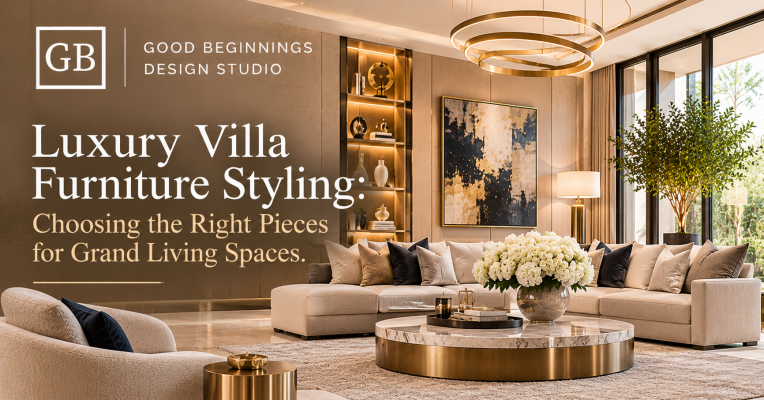
Furniture is a key determinant of how a luxury villa looks, feels, and works. The right pieces can highlight architectural details, create a sense of proportion, and make large spaces feel inviting instead of empty. Thoughtful styling of luxury villa furniture combines comfort, scale, materials and visual balance.
Furniture selection for a villa is more than simply choosing attractive pieces. The final arrangement is influenced by room dimensions, circulation, natural light, intended use, and the relationship between adjoining spaces. A good interior styling should not only look sophisticated but also support daily life.
Good Beginnings Design Studio designs furniture styles through careful space planning, furniture selection, turnkey interiors, material coordination, and attention to detail. Such principles can guide homeowners to design living spaces that feel comfortable, cohesive, and appropriate to the character of the villa.
Also Read: Jewellery Visual Merchandising Strategies to Increase Store Walk-Ins and Sales
1. Begin with the Scale and Layout of the Room
Big rooms are versatile but can feel disjointed if furniture is too small or spaced too far apart. Before you select your furniture, measure the room and record its key features, including windows, doors, columns, fireplaces, and architectural highlights.
Create a plan that will facilitate use of the space. A large living room may need separate areas for conversation, reading, and entertaining, whereas a formal sitting room may need a more symmetrical arrangement.
Layout considerations:
- Ensure clear pathways from entrances to the main seating areas.
- Choose furniture that is the correct size for the room.
- Don’t push all the pieces against the walls.
- Think about how people will move between adjoining spaces.
- Decide on the main focus of the room before arranging furniture.
Good planning makes large rooms feel purposeful and comfortable instead of oversized or sparsely furnished.
2. Select Furniture that Complements the Villa Architecture
Furniture should work with architecture, not against it. Modern villas with clean lines might work well with simple furniture and restrained finishes, whereas houses with traditional detailing would be better with more expressive shapes and richer materials.
When choosing luxury villa furniture, think about the architectural character of the room, ceiling height, window proportions, and existing finishes. Furniture doesn’t have to match every architectural detail, but it should feel connected to the design as a whole.
Questions to ask yourself
- Is the furniture style in keeping with the architecture?
- Are the pieces in scale to the room?
- Do the finishes match the flooring and wall treatments?
- Are the furnishings comfortable and practical for daily living?
A consistent design direction makes the villa feel cohesive, with individual rooms still having their own character.
3. Buy comfortable, well-proportioned seating
The seat is often the centre of the main living areas of a villa. Comfortable sofas, lounge chairs, and occasional seating should define the visual structure of the room.
When considering luxury living room furniture, think about seat depth, back support, upholstery, and how different pieces work together. A big sofa can be the star of the room, and armchairs or little lounge chairs can provide extra seating without making the setup feel too heavy.
Tips for seating
- Select sofas that fit the size and purpose of the room.
- If the layout allows, use a mix of seating styles.
- Allow plenty of room for people to comfortably walk around the arrangement.
- Choose upholstery suitable for household use.
- Provide side tables or surfaces that are within easy reach.
May comfort remain a priority. Furniture should not only look good but also facilitate conversation, relaxation, and everyday use.
4. Think about Designer Furniture for Villas.
Designer furniture for villas can bring in unique shapes, craftsmanship, and quality materials. But you don’t need to fill a room with statement pieces to feel luxurious. Better results can be obtained by using a few well-chosen items rather than many competing designs.
Think where a designer piece will make the most impact. A sculptural lounge chair, unique dining table, or thoughtfully designed console can become a centrepiece when placed in a restrained setting.
Choose statement furniture
- Select pieces appropriate to the scale and function of the room.
- Think about craftsmanship, comfort, and long-term durability.
- Match finishes to nearby furniture and architectural details.
- Give statement pieces enough space to be appreciated.
- Don’t over-saturate a room with competing focuses.
The idea is to create a balanced interior, where the distinctive furniture adds to the design, not overpowers it.
5. Choose custom-made furniture if it fills a particular need.
Made-to-order furniture can be useful for villas with unusual dimensions, particular storage needs, or a design feature that cannot be met with standard pieces. Custom consoles, shelving, wardrobes and built-in seating can help maximise available space.
A clear purpose is the beginning of successful custom furniture styling. Custom furniture can be made to fit perfectly, echo architectural details, or provide a consistent finish in rooms that are connected.
When Custom Furniture Could Be Right For You
- A room has tricky corners or unusual proportions.
- Storage has to be built into the design.
- The requirement of a particular material or finish.
- Built-in furniture can enhance circulation.
- The interior needs a coordinated feature article.
Custom pieces still have to be evaluated for comfort, maintenance and practicality. Custom design is at its best when it improves the look or use of a space.
6. Coordinate Materials, Colours and Finishes
The materials you choose for your furniture affect the mood and character of a room. Depth can be achieved by co-ordinating colours and textures of timber, stone, metal, glass and upholstery.
You can have a balanced palette with a few dominant materials and some accents. Wooden furniture, for example, can add warmth, and metal accents add contrast. Upholstery can soften the composition and tie the furniture in with the colour scheme of the room.
Tips for coordinating materials
- Repeat select finishes in adjacent rooms.
- Don’t use too many materials, but mix textures that contrast.
- Think about how colour and surface appearance are affected by natural light.
- Choose finishes that fit how you plan to use the furniture.
- Balance the visual weight of the materials with lighter elements.
Consistency does not require that everything be the same. A thoughtful mix of materials can add a layered, personal feel to a room.

7. Place Furniture to Encourage Conversation and Movement
The arrangement of furniture determines how a room is experienced. In a large living room, seating can be grouped in conversation areas while allowing circulation to remain clear.
If you want premium furniture arranged, consider how sofas, chairs, tables, lighting, and the room’s centre point relate to each other. Seating should be close enough to promote conversation without being cramped.
Principles of arrangement
- “Arrange seating to encourage conversation.
- Leave clear paths around the main furniture cluster.
- If appropriate, use rugs to define a seating area.
- Tables at convenient distances for sides.
- Furniture should not block windows, doors or important views.
Regardless of the size of the room, a well-organised room should be easy to move through and comfortable to use.
8. Additional Tables, Storage and Support Pieces
Furniture that supports a room helps it run smoothly. Coffee tables, side tables, consoles, cabinets and shelves provide useful surfaces and storage, and also contribute to the overall design.
Choose these pieces based on the needs of the room and the main furniture layout. A coffee table should be within reach of the seating area, and a console can help to organise an entrance or provide a surface for chosen accessories.
Furniture to consider
- Coffee tables for the main seating area.
- Nightstands for lamps and everyday items.
- Consoles for entrances or transitional areas.
- Hidden storage cabinets.
- Books and some decorative items on shelves.
Do not add pieces to simply fill space. Everything should serve a purpose or contribute something to the composition of the room.
9. Use Lighting to Work with the Furniture
Lighting affects the perception of furniture, materials, and colours. A well-designed room should have general, task, and accent lighting to help with various activities.
Table lamps help create intimacy in seating areas and floor lamps provide useful light for reading. Pendant lights or chandeliers can help delineate a dining space or create a point of interest in a grand living room.
Think about where to put the lights and the furniture. Lamps should be easy to operate, and fixtures should not obstruct movement or sightlines.
Lighting can also tie together furniture arrangements in a large room. Using similar lighting finishes or styles in selected areas can provide continuity without making all areas the same.
10. Personalise And Keep Styling Minimal
Furniture establishes the bones of a room, and artwork, textiles and accessories provide personality. These finishing touches should work in harmony with the furniture, not in opposition to it.
A few meaningful objects, carefully chosen cushions or a striking piece of art can make the space feel personal. Leave enough space around important pieces of furniture so that their forms and materials can be seen.
Final touches
- Add cushions and throws that complement the upholstery.
- Establish or reinforce a central focus with art.
- Select accessories that are in harmony with the room’s palette and materials.
- Make often-used surfaces functional.
- See the setup from other points of view.
A restrained approach keeps grand living spaces elegant and comfortable, not over-decorated.
How Good Beginnings Design Studio Can Assist
The choice and placement of furniture in a luxury villa needs to be coordinated with the architecture of the room, its layout, its materials, its lighting, and its purpose. Good Beginnings Design Studio is able to help homeowners create a cohesive approach through space planning, furniture selection, material coordination, and styling.
A good, thought-out process makes sure each element is scaled properly for the room and works well with the larger design. It also balances aesthetics with comfort, circulation, and day-to-day function.
Also Read: Luxury Villa Styling in Mumbai: Creating a Refined Look with Art, Furniture & Accessories
Final Thoughts
The key to successful luxury villa furniture styling is selecting furniture that complements the architecture, the proportions of the room, and how the space will be used. Add comfortable seating, statement furniture that you’ve deliberately chosen, materials that work together, and a practical layout to make grand living spaces feel refined and inviting.
The best interiors aren’t just stuffed with expensive furniture. They’re built for comfort, balance, and purpose. If carefully selected and arranged, décor styling services and furniture can add character to a villa and at the same time support everyday living.
FAQ
1. What is the styling of luxury villa furniture?
Ans: Luxury villa furniture styling is the art of choosing, placing, and harmonising furniture to complement the architecture, the interior colour palette, and the practical requirements of a villa.
2. How to choose furniture for a villa’s big living room?
Ans: Start with the room’s size, its main points, and its purpose. Select furniture in the appropriate scale, and arrange it to facilitate conversation and easy traffic flow.
3. What to consider when choosing luxury living room furniture?
Ans: Think about comfort, size, fabric, durability, style, and how each piece fits into the room’s layout and finishes.
4. Does a luxury villa require designer furniture?
Ans: Not really. Designer furniture may add distinctive craft or form, but a refined interior can be achieved through thoughtful selection, proportion, and coordination.
5. When to Consider Custom-Made Furniture?
Ans: Bespoke furniture is useful in situations where a room has unusual dimensions, special storage needs, or a design requirement that standard furniture does not satisfy well.

Shubhangi Singh has been the creative marketing consultant for several luxury brands, with more than 18 years of experience in curating meaningful campaigns for brands like Reliance Brands, Walking Tree, Malabar, Simone, D’décor, Jio Wonderland, Zoya Jewels, Per Te Jewels, Rustomjee, Farah Ali Khan, Puma, Benetton, Vogue Wedding Show, and Foodhall X Vogue Sensorium.