

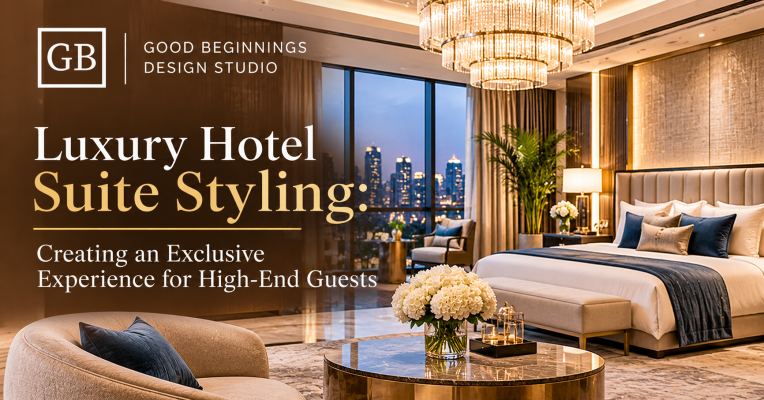
A luxury hotel suite should be more than a larger room. It should be private, comfortable, and well-designed, with details that make a guest’s stay distinctive. From the arrival experience to the placement of furniture and lighting, every interior styling design decision must support ease, privacy, and a sense of exclusivity.
At Good Beginnings Design Studio, turnkey interiors and luxury hotel suite styling are both an art of visual refinement and practical planning. The goal is to create a space that feels special but makes the everyday—from relaxing to working—effortless for discerning guests.
Also Read: Luxury Hotel Spa Interior Styling: Creating Calm and Premium Wellness Experiences
1. Set up a welcoming arrival.
The suite experience starts at the entrance. A well-planned sequence of entry with appropriate lighting and a well-planned transition into the main living area can help guests to feel at home.
Define the personality of the suite with a console, artwork, or a small decorative accent. Keep the entry clutter-free, so guests can get in and out of the door, wardrobe, and living space easily.
2. Create Separate Comfort and Privacy Zones
In the interior design of hotel suites, the best ones have separate areas for sleeping, relaxing, working, and dressing. These zones should feel related and allow for guests to use the suite in different ways.
A lounge area is provided for reading or receiving guests, and a desk or work surface will be useful for business travel. Where layout allows, use furniture, rugs or screens to define areas without making the suite feel compartmentalised.
Clear circulation is a must. Guests should be able to walk from one zone to another without ducking under oversized furniture.
3. Choose Furniture That Combines Style with Functionality
Furniture should be of the right scale to the suite and the way guests use it. A comfy sofa, suitably sized lounge chairs, and a functional work desk can increase the versatility of the space.
For styling luxury hotel rooms, consider:
- Upholstery that is comfortable and long-wearing
- Handy bedside tables for storage
- A desk arranged for comfortable work
- A suitcase bench next to the wardrobe
- Tables close to seats
Don’t overstuff the suite with too many statement pieces. A few well-chosen pieces will have more impact while still leaving space and comfort.
4. Sculpt the experience with lighting.
A layered lighting plan means the suite can be adapted to different activities and times of day. General lighting is for seeing. Task lighting is for reading and work. Spotlights can be used to highlight works of art, textures, or architectural details.
Bedside lighting should be easy to use, and workspaces should have adequate lighting. Dimmable options can help create the mood for guests to relax in the evening.
Make sure the lighting is consistent with the suite’s materials and colour palette. Avoid glare and overly bright fixtures in areas meant for rest.

5. Opt for Refined and Comfortable Materials
The look and feel of a suite are influenced by materials. Used with restraint, natural timber, stone, glass, metal and quality textiles can be used to create a balanced interior.
Add depth by mixing smooth with soft finishes. For instance, an upholstered seating arrangement, a textured rug and fabric window treatments might offset a stone surface.
The choice of material should also be influenced by regular use and cleaning. The quality of the interior must stay attractive and comfortable over time.
6. “Dress the bedroom for restful comfort”
The bedroom is the heart of the suite experience. A comfortable bed, quality bedding, and a soothing colour palette can create a restful setting.
Functional and neat bedside surfaces. Provide convenient lighting, access to charging, and space to put personal items. Curtains or blinds should give guests control over daylight and privacy.
The décor of luxury guest rooms should be in keeping with the rest of the suite but not too decorative. Add a couple of cushions, a throw, or a carefully chosen piece of art to finish the room.
7. Create the bathroom as a private sanctuary.
A suite bathroom should be clean, comfortable and easy to use. Good lighting, clear storage and appropriate materials are just as important as decorative finishes.
To improve usability, separate the vanity, shower, and bathing areas if space permits. Have practical storage for toiletries and towels and make sure surfaces can withstand moisture and regular cleaning.
Small things, such as a well-placed mirror and towel hooks within reach, can make a bathroom feel more considered.
8. Insert Personalised Details
A VIP hotel room is often designed to make it feel like the suite is ready for a particular guest or occasion. Personalisation should be thoughtful and relevant, not over the top.
A welcome note, a well-thought-out tray of amenities, or a small display related to the destination can add a touch of warmth. Ensure these details are in keeping with the hotel’s service standards and do not over-burden work surfaces or tables.
You still want the space to feel calm and comfortable for guests to make their own while they’re there.
9. Have a Consistent Design Identity
The suite should be in line with the overall design language of the hotel but also offer a different level of comfort and privacy. Repeating chosen colours, materials or forms can help tie the suite to the rest of the property.
Consistency doesn’t mean all spaces have to look the same. Artwork, furnishings or a different arrangement of materials can give the suite its own character and yet feel like part of the same hotel.
10. Make the Suite User-Friendly for the Upscale Guest
A well-designed suite is one that foresees everyday needs. Convenient stays are facilitated by storage, charging points, accessible controls, and clear circulation.
Think about the different needs of guests, whether they are on business, on holiday, or staying for longer periods. Leave enough space for bags, keep things you use often close by, and make sure that furniture does not get in the way.
These practical decisions are the heart of good hotel suite interior design. They add a luxury feel to the suite without sacrificing usability.
Also Read: What Makes Taj and St Regis Hotels Feel Luxurious? Design Details Behind Premium Hospitality
Final Thought
The luxury hotel suite style is all about creating an experience that is exclusive, comfortable, and effortless. Thoughtful layout, well-chosen furnishings, layered lighting, refined materials, and personal details can make a suite feel unique while supporting the needs of its guests.
Good Beginnings Design Studio balances atmosphere and function in hotel suite interiors. The suite is more than a place to sleep when the design supports privacy, décor styling services, comfort, and ease of use. This forms a significant part of the overall hotel experience for the guest.
Frequently Asked Questions (FAQs)
1. What is styling for a luxury hotel suite?
Ans: This is the process of designing and decorating a hotel suite to create a sophisticated, comfortable, and functional environment for guests.
2. How is a hotel suite different from a regular hotel room?
Ans: A suite usually offers more space and may have separate areas for sleeping, relaxing, working, or eating. They should be designed to give a sense of access and connection to these areas.
3. What furniture is important in the luxury hotel suite?
Ans: Comfortable seating, bedside tables, a practical work surface, adequate storage space, and a luggage bench can improve the guest experience.
4. Lighting can do wonders for a hotel suite.
Ans: Layered lighting accommodates many activities, from reading and working to relaxing. You can have dimmable lights to let guests set the mood.
5. What materials are suitable for interiors of premium hotel suites?
Ans: Wood, stone, glass, metal, and quality textiles can look sophisticated. Materials should also meet the property’s needs for maintenance and durability.

Shubhangi Singh has been the creative marketing consultant for several luxury brands, with more than 18 years of experience in curating meaningful campaigns for brands like Reliance Brands, Walking Tree, Malabar, Simone, D’décor, Jio Wonderland, Zoya Jewels, Per Te Jewels, Rustomjee, Farah Ali Khan, Puma, Benetton, Vogue Wedding Show, and Foodhall X Vogue Sensorium.