

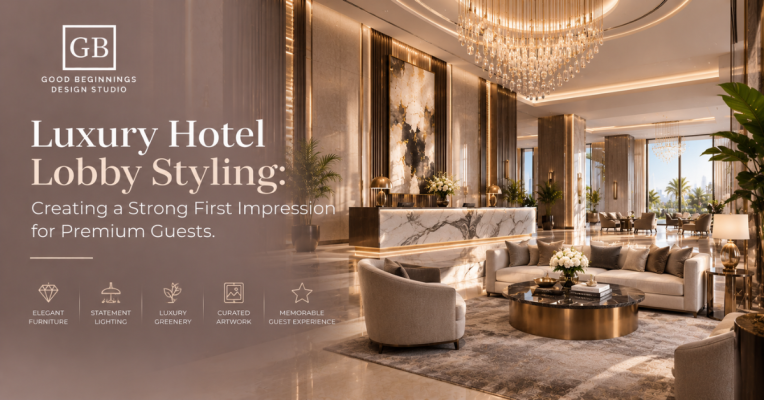
The hotel lobby is usually the first interior space guests experience when they arrive at a property. The architecture, lighting, furniture, materials, and overall atmosphere of the lobby speak to the hotel’s identity before they even enter their rooms or explore the facilities. Thoughtful styling of a luxury hotel lobby helps make a good first impression and set the tone for the quality of the stay.
The lobby must be visually appealing and meet practical demands for premium hotels. It should be elegant and comfortable to support check-in, guest movement, waiting, social interaction, and concierge services. The goal for every design element is to create a cohesive experience without making the space feel cluttered or difficult to navigate.
Good Beginnings Design Studio specialises in interior styling with a focus on space planning, material selection, turnkey interior, furniture coordination, décor styling services, lighting and attention to detail. These principles are especially relevant to the design of hotel lobbies, which need to be sophisticated yet functional at all times of the day.
Also Read: Best Colour Combination for House Interior: Luxury Colour Ideas for Every Room
1. Create a Unique Design Idea
A successful luxury hotel lobby design begins with a well-defined concept. The design should be sensitive to the site, architectural character, target market, and trademark of the hotel. A modern city hotel could have clean lines and restrained finishes, while a resort property might incorporate natural textures, softer colours and locally inspired decorative elements.
A defined concept helps keep flooring, wall finishes, furniture, lighting, artwork and accessories consistent. Visually, the lobby can be disjointed without a clear direction, although individual elements are nice.
Components of a strong lobby concept
- Consistent colour scheme and material selection.
- Furniture that fits the hotel style and guest profile.
- Lighting that accommodates mood and function.
- Artwork or decorative features that reinforce the identity of the hotel.
- A layout that allows for reception, seating, and circulation.
The idea is to create a lobby that’s unique and memorable but appropriate to the level of service of the property.
2. Attract Guests Visually to the Hotel Entrance
The entrance is the transition from the outside environment to the interior of the hotel. Hotel entrance design: Consider the arrival sequence, visibility, access, lighting, and how the entrance relates to the reception.
Guests should be able to find the main entrance, know where to go next, and move comfortably into the lobby. A strong impression can be made with a dramatic entrance, but visual impact should not be at the expense of practical movement.
Key factors in entrance design
- Easy access from the drop-off point to the main entrance.
- Good lighting around doors, signage, and arrival points.
- Materials that add to the architectural style of the hotel.
- Plenty of room for bags and for people to move around.
- Visual cue to the front desk or guest services.
In the most exclusive properties, carefully selected doors, architectural details, flooring and decorative lighting can reinforce the identity of the hotel from the moment guests arrive.
3. Use Lighting to Design the Lobby Experience
One of the biggest styling factors in a hotel lobby is lighting. It determines how guests will perceive materials, colours, furniture and architectural details. During the day, a well-lit lobby can be open and inviting and in the evening can have a more intimate feel.
Designers do not rely on a single source of light but instead use several layers of light, each serving a different purpose.
- Ambient lighting: provides general illumination throughout the lobby.
- Task lighting: helps reception work, concierge services, and any other activity that requires clear sightlines.
- Accent lighting: is used to highlight artwork, feature walls, architectural details, sculptures or decorative installations.
Statement chandeliers and pendant lights are a great way to create centres of attention in double-height spaces. Wall lights and recessed lighting can highlight textured surfaces, and floor and table lamps can contribute to the relaxed mood of lounge areas.
The lighting should also be able to meet the operational needs of reception staff and must ensure safe visibility around entrances, stairs, and circulation routes. The best lighting scheme is one that combines atmosphere with clear functionality.
4. Select Comfortable and Elegant Furniture
Furniture is a big part of the look and function of a premium lobby. Seating should be in keeping with the hotel’s design concept and offer guests a comfortable place to wait, meet or relax.
Sofas, lounge chairs, coffee tables and occasional seating can help define different areas in a large lobby. Their disposition should not obstruct the way to reception, lifts, restaurants or other facilities but should encourage conversation.
Furniture proportions are very important for premium hotel lobby design. Large seating can make a small lobby feel cramped, while undersized pieces may seem out of place in a large architectural space.
Tips for Planning Furniture
- Select seats with comfortable proportions and durable upholstery.
- Provide clear circulation paths around groups of furniture.
- Provide coffee tables and side tables for guests to put their belongings.
- Select materials that can stand up to repeated use.
- Design a variety of seating arrangements for individuals, couples, and small groups.
An effective balance of the furnishings creates an inviting lobby to welcome guests and provides for a range of guest activities.
5. Design an Effective Reception and Check-In Area
The reception desk is one of the most important functional elements of the hotel lobby. This is where guests are helped, checked in, asked questions, and start their stay. Its design should reflect the quality of the hotel and at the same time allow efficient service.
The reception desk should be clearly visible from the entrance. It needs to be of appropriate size and location for the available space, expected guest numbers, staffing requirements, and how it relates to other zones in the lobby.
Key points on reception styling
- A visible reception desk.
- Durable desk finishes that look good together.
- Proper lighting for staff-guest interactions.
- Usable working area and accessible surfaces.
- Hidden storage space for documents and working equipment.
- Good signs where needed.
Timber, stone, metal accents, and textured finishes can help create a refined reception feature. But the design should not obstruct the movement and communication of the staff or practical tasks involved in check-in.
The key to good hotel reception styling is a strong visual presence coupled with a slick and intuitive arrival experience.
6. Choose Materials That Speak Quality
Materials influence the guests’ perception of the hotel’s quality. The finishes of flooring, wall panels, reception, furniture upholstery, and decorative details should be combined to create a unified visual language.
Natural stone, timber, metal, glass, textured surfaces and quality fabrics all contribute to a premium environment when used appropriately. The selection should be consistent with the design concept and the practical requirements of a busy hospitality space.
Luxury hotel interiors need to be as beautiful as they are durable and low-maintenance. Lobby flooring must consider foot traffic; entrance finishes may require moisture resistance; seating fabrics must be suitable for regular cleaning.
Principles of material selection
- Choose flooring based on traffic levels, slip resistance, and maintenance requirements.
- Coordinate the wall finishes with the reception desk and furniture.
- Create depth with contrasting textures
- Pick upholstery that can stand up to frequent use by guests.
- Consider the natural and artificial light on each finish.
Using fewer materials can often be more sophisticated than using a lot of competing finishes. Repeating select materials throughout the lobby can create a coordinated and intentional feel.

7. Develop Identity with Artistic and Decorative Components
Artwork, decorative installations, and the like can give a hotel lobby a personality all its own. They could be determined by the location of the property, cultural influences, architectural style, or the overall brand concept.
Big art, sculptures, feature walls, curated objects, and carefully placed mirrors can give you a focal point without needing to add lots of decoration throughout.
The trick is to choose elements that relate to the surrounding interiors. Art should be appropriate to the size of the wall, decorative objects should be appropriate to their surfaces, and statement pieces should not impede circulation or sight lines.
Ideas for premium lobby styling
- Display artwork that complements the hotel’s identity.
- Choose one or two strong focal features rather than many competing features.
- Incorporate locally made objects if they fit the design concept.
- Decorative accessories should be coordinated with the colour and material palette.
- Select plants that will receive the right amount of light, in the right climate, and where the conditions of maintenance are suitable.
Decorative features are used in good hospitality interior styling to enhance the guest experience and not simply to fill empty spaces.
8. Bring in Natural Elements for Warmth and Balance
Natural materials and greenery can help to soften the formal character of a hotel lobby. Plants, timber, stone, water features, and nature-inspired textures can all help create a more relaxed environment, especially in properties with large open spaces.
The approach should reflect the hotel’s location and architectural style. A tropical resort may require heavy planting, whereas an urban hotel may be able to get away with a few well-placed plants and accents of natural material.
Methods for adding natural elements
- Place suitable plants in natural or artificial light suitable to them.
- Bring an organic feel with timber or stone finishes.
- Use greenery to define seating zones while not blocking circulation.
- Consider a water feature only if space, acoustics, and maintenance allow.
- Combine different design elements in natural colours.
Natural features should be selected in accordance with operational requirements. Plants need to be taken care of properly, water features require maintenance, and materials should be suitable for the traffic and environmental conditions of the lobby.
Thoughtful use of natural elements can add a sense of balance and warmth to the lobby.
9. Design Clear Pathways and Comfortable Seating Areas
A visually impressive lobby can lead to disappointment if guests have trouble navigating it. Good layout planning helps guests move from entrance to reception, lifts, restaurants and waiting areas without confusion.
Large lobbies can be broken into functional zones by furniture, lighting, rugs, changing flooring or subtle architectural features. In smaller lobbies, it is important to carefully prioritise so that the essential functions are still accessible without overcrowding the space.
Hotel Lobby Design: Layout Principles
- Keep the main route from the entrance to the reception clear.
- Don’t place furniture in front of key access points.
- Where possible, separate waiting areas from busy circulation routes.
- Offer a variety of seating options.
- Allow sufficient space for baggage and access requirements.
- Use signage where the layout needs more direction.
The reception area should be easily found, and seating should be comfortable without impeding staff or guest circulation.
A well-organised lobby makes the general design feel more thought out and increases usability.
10. Coordinate Technology Signage Practicalities
Today’s hotel lobbies must cater to guest communication, digital services, staff work and wayfinding. These practical features should be incorporated into the design, not tacked on as afterthoughts.
Depending on the service model of the hotel, digital displays, charging points, Wi-Fi information, concierge technology and access-control systems may all be relevant. Their placement should support usability but not compromise the visual quality of the lobby.
Signage is especially important on larger properties. Guests should be able to find reception, lifts, restrooms, restaurants, and meeting areas without unnecessary confusion.
A few things to keep in mind
- Wayfinding signage that is consistent and clear.
- Accessible charging points, where appropriate.
- Digital information display made easy to locate.
- Tidy or hidden cable management
- Guest services made easy.
- Easy-to-use lighting and controls for staff.
These may not be the first things guests notice, but they do add to the lobby’s smooth operation. “Good design is practical details that enhance the experience without overpowering the space.
How Good Beginnings Design Studio Tackles Hotel Lobby Styling
Successful hotel lobby design requires the coordination of architecture, layout, furniture, lighting, materials, and decorative elements. Every decision has to serve the hotel’s identity and meet the needs of guests and staff.
Good Beginnings Design Studio provides cohesive interior styling through space planning, material coordination, furniture selection, and attention to detail. A clear design direction helps to ensure that the entrance, reception, seating areas and decorative features all work together and do not look out of place.
Whether the project is a boutique hotel, contemporary city property or luxury hospitality project, a structured approach can help balance visual impact with functionality, comfort and long-term maintenance.
Also Read: Modern House Interior Colour Combinations That Create Elegant and Timeless Living Spaces
Conclusion
Luxury hotel lobby styling is about creating an impactful first impression but also making guests feel comfortable and confident the moment they walk in. A cohesive environment is created by a clear design concept, an inviting entrance, layered lighting, comfortable furniture, refined materials, and carefully selected artwork.
But a big lobby has to be efficient, as well. To support the day-to-day operations of a hotel, clear circulation, a welcoming reception desk, workable seating areas, appropriate technology, and hard-wearing finishes are needed.
Visual refinement and thoughtful planning can create hotel lobby environments that are a reflection of a hotel’s personality, welcome premium guests, and set a positive tone for the whole stay.
Questions And Answers
1. What is a luxury hotel lobby design?
Ans: Luxury hotel lobby design is the layout, materials, lighting, furniture, reception, and decorative elements of a hotel entrance and shared arrival space. The purpose is to convey the identity of the hotel and to provide a welcoming and functional experience to the guest.
2. What’s good about luxury hotel lobby styling?
Ans: Good styling is a matter of a solid design concept, comfortable seating, layered lighting, coordinated materials, signature art, and intuitive circulation. The space should look sophisticated but not compromise its practicality.
3. Why do we care about hotel entrance design?
Ans: The entrance is often the first physical touchpoint guests have with the property. Easy access, good lighting, appropriate materials, and an easy-to-understand arrival path contribute to a good first impression.
4. How to make reception areas more attractive?
Ans: Hotels can align the reception desk with the material palette of the lobby, use suitable feature lighting, keep a clean counter, and give a clear line of sight from the entrance. The design should give prominence to the staff requirements for practice.
5. What materials are good for hotel lobby design?
Ans: Stone, wood, glass, metal accents, texture on the walls, and strong upholstery can create a high-end look. The final decision should take into account traffic levels, cleaning, security, and the general design concept of the hotel.

Shubhangi Singh has been the creative marketing consultant for several luxury brands, with more than 18 years of experience in curating meaningful campaigns for brands like Reliance Brands, Walking Tree, Malabar, Simone, D’décor, Jio Wonderland, Zoya Jewels, Per Te Jewels, Rustomjee, Farah Ali Khan, Puma, Benetton, Vogue Wedding Show, and Foodhall X Vogue Sensorium.