

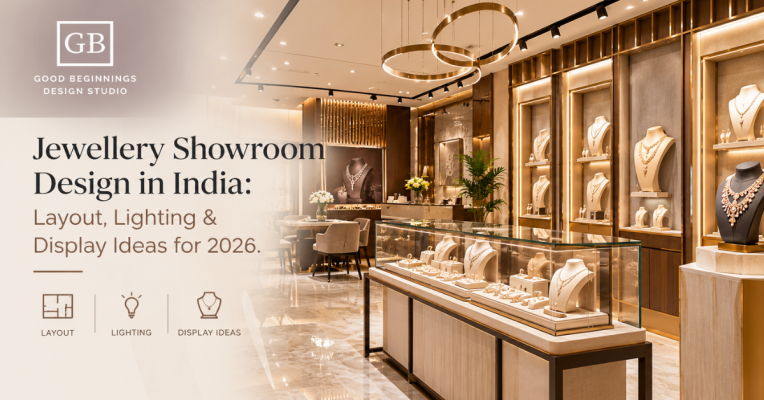
A jewellery showroom is not just a retail space. It’s a place where customers evaluate craftsmanship, materials, design, quality, and value before making an important purchase. The interior thus has to create a feeling of trust and exclusivity and make the jewellery the visual centre of attraction.
Jewellery showroom design 2026 is heading toward a balance of luxury aesthetics and practical customer experience. Thoughtful layouts, layered lighting, elegant display units, décor styling services, comfortable consultation areas, turnkey interior execution, secure storage and distinctive branding can all help to create a showroom that feels premium without being visually overbearing.
In India, design for jewellery businesses also has to cater to local customer expectations, product categories, showroom size, security requirements, and the identity of the brand.
A successful jewellery showroom interior design should naturally guide customers through the space and give each collection enough attention.
Also Read: Modular Kitchen Design Trends for Luxury Mumbai Homes (2026)
Designing a Jewellery Showroom – The Art
The best interiors in jewellery combine a number of elements.
These are:
- Flow of customers
- Eye-catching jewellery displays
- Best Quality Lighting
- Spacious consultation rooms
- Secure display systems
- Proper storage
- Brand awareness
- High-quality fabrics
- Palettes of controlled colour
- Practical measures for staff
The showroom must be luxurious, but it also must be easy to navigate and comfortable for customers who spend time comparing products.
1. Begin With an Efficient Showroom Layout
The layout is one of the first decisions you need to make when designing a jewellery store.
Customers should feel free to walk in, see the collections, talk to sales staff and move from one section to another without feeling constrained.
A jewellery showroom may consist, depending on size and business model, of:
- Entrance zone
- Lobby area
- Primary display counters
- Wall displays
- Section: Bridal Jewellery
- Gold Jewellery Section
- Diamond Jewellery
- Silver Jewellery Department
- Consultation rooms
- Billing desk
- waiting room
- Safe storage
The layout should provide for a logical customer journey and appropriate staff visibility and security.
2. Enter in a powerful way.
The jewellery store’s first impression is created by the entrance.
You don’t want to over-decorate a luxury entrance. A clean display, first-class materials, illuminated signage, and a balanced façade can convey the message of the brand.
Think about:
- Brand signage on
- Glass façade
- Architectural warm lighting
- Stone or textured wall
- Metal detailing
- Thoughtfully designed window displays
The entrance should give a visual link between the outside and the interior of the showroom.
3. Design an Inviting Reception Area
A reception area can help orient customers and create a feeling of hospitality.
Depending on the size of the showroom, it can have:
- Reception counter
- Brand logo seating
- Product Details
- Decorative lights Digital display
Reception should not be a visual barrier. Beyond it, customers should be able to see the showroom.
4. Let Display Counters Be Your Main Design Feature
Most interiors of jewellery showrooms are centred around display counters.
The size, material, lighting and location of these displays directly affect how customers experience the jewellery.
A good display counter should offer:
- Clear visibility of product
- Comfortable viewing height
- Proper Lighting
- Safe storage
- Room for staff to give help
The glass tops and clear display areas allow the jewellery to be viewed while being kept safe.
The materials surrounding the display should not compete with the jewellery but synergise.
5. Product Zone Construction
A large jewellery showroom can have a number of categories, and each collection can benefit from a clearly defined area. For example.
Jewellery Gold
Warm materials and controlled lighting may produce an inviting presentation.
Diamond Jewellery
A cleaner, brighter setting may improve the sparkle and clarity of the diamonds.
Bridal Jewellery
Larger showcases, seating and compatible decor can create a more immersive display.
Silver Jewellery
A modern display system will create a lighter, more modern environment.
Dividing products into zones aids customers in understanding the collection and helps them navigate the showroom.

6. Plan Jewellery Showroom Lighting Carefully
Lighting is one of the most vital elements in the design of a jewellery showroom.
Jewellery needs to be lit in a way that shows its colour, brilliance, texture and craftsmanship.
Mixing lighting layers can create a more controlled environment.
Mood Lighting
General illumination of showrooms.
Lighting for Display
Focuses attention on individual jewellery collections.
Accent Lights
Highlights include displays, architectural features and brand elements.
Decorative lights
Pendant lights, chandeliers or sculptural fixtures can help create the overall luxury vibe.
Careful calibration of lighting should be ensured so that the jewellery remains the visual focus.
7. Use good quality display lighting.
Different materials of jewellery will react differently to light.
Gold, diamonds, gemstones and silver may need different colour temperature, intensity and position.
Reflections on display lighting can make it hard for customers to look at jewellery properly, so avoid glare on glass surfaces.
Individual pieces or selected collections can be highlighted with targeted lighting.
It is not only about making the showroom bright. It is meant to make the jewellery attractive and easy on the eyes.
8. Design Comfortable Consultation Rooms
Jewellery purchases are often talked about and paralleled.
Customers may want to sit with family members or sales consultants before making a decision.
The consultation area may include:
- Easy chairs
- Small tables for tables
- Specialised Display Trays
- Directed lighting
- Privacy Screens
- Storage of product
Larger consultation areas can be particularly useful for bridal jewellery, as customers are often comparing multiple items before making a purchase.
9. Install a Luxury Waiting Room
A waiting area can improve the overall customer experience.
It doesn’t have to be big. A small seating area can be quite useful during busy times in the showroom.
The experience of waiting can be made more refined with gentle lighting, understated décor, comfortable chairs and brand-related details.
The materials used should complement the rest of the showroom.
10. Select a Sophisticated Material Palette
The materials used play a major role in how customers perceive a jewellery store.
Common application materials include:
- Stone and marble
- Wood & Veneer
- Glass Metal
- Quality Laminates
- Wall finishes with texture.
- Upholstering
Neutral surfaces and a few carefully placed metallic accents can create a luxurious atmosphere without making the interior look overdone.
The material palette should also be a reflection of the identity of the jewellery brand.
Jewellery Showroom Design Trends 2026
Jewellery showroom design in India is shifting more and more toward the fusion of luxury aesthetics with customer practical experience. Here are some key trends.
Luxury Minimalist.
Elegant décor, clean lines, and premium materials create an upscale environment.
Layered Lighting
Different collections and architectural features can be highlighted with multiple levels of lighting.
Display Cases – Custom
Custom counters and displays can help to build a stronger brand reputation.
Warm Minimalist
Natural materials, warm neutrals and soft lighting create a more welcoming luxury environment.
Bendable screens
Modular display systems make it easy to refresh collections and seasonal displays.
Integrated Technology
You can use digital displays and interactive elements that enrich the customer experience without dominating the interior.
Experience-Orientated Design
Showrooms are increasingly designed to focus on customer comfort, consultation, discovery and storytelling rather than simply maximising the number of display cases.
Typical Errors to Avoid in Jewellery Showroom Design
Even a beautiful showroom can do poorly if the planning is not practical.
Do not:
- Too many decorative elements.
- Chilly light.
- Glass and glare displays
- Limited circulation routes
- Too many product displays in one area.
- Not enough seating
- Inadequate storage planning
- Lack of brand visibility
- Security requirements ignored
- Using stuff is hard to keep up
Good jewellery store design balances visual impact, functionality, security and comfort for the customer.
Why Good Beginnings Design Studio?
Good Beginnings Design Studio adopts a functional approach to commercial interiors with an eye on aesthetics, materiality, lighting, space planning and branding.
These elements can be harmonised in a jewellery showroom to create a setting where the jewellery is the main focus while the customers get a comfortable and premium ambiance.
The entrance design, display counters, lighting, consultation areas, storage, ceiling details, materials, and décor can all be planned as a single holistic interior concept for the showroom.
For jewellery businesses looking for jewellery showroom interior design in India, the aim should be to create a space that reflects the brand, supports daily operations and offers customers an engaging buying experience.
Also Read: Vastu Tips for Home Interior Styling: Balancing Luxury and Positive Energy in Mumbai Homes
Conclusion
A successful jewellery showroom is a combination of planning, sophisticated aesthetics, strategic lighting, secure displays and a welcoming customer experience.
The right jewellery showroom design should make it easy for customers to explore collections and ensure that the jewellery remains the star of the show. Layout, display counters, lighting, materials, colours, mirrors, consultation areas, and security all contribute to the final experience.
So, if you are a business planning a jewellery showroom design in India, then 2026 is a great opportunity to move beyond traditional retail interiors and create spaces that feel more personalised, contemporary and experience driven.
Good Beginnings Design Studio works with interior styling, space planning, lighting, materials, furniture and brand considerations to create commercial interiors that are visually distinctive and practical for everyday use.
Frequently Asked Questions
1. What is important in the design of jewellery showrooms?
Ans: The layout, display counters, lighting, customer circulation, security, seating, storage, branding, and material selection are some of the most important aspects of jewellery showroom design.
2. How lighting affects a jewellery showroom?
Ans: Light can affect how customers perceive the colour, shine, texture, and craftsmanship of jewellery. Layered and strategically placed lighting can help enhance products while minimising unwanted glare.
3. What materials are good for a luxury jewellery showroom?
Ans: Depending on the brand name and overall design concept, the materials can be stone, marble, glass, wood, veneer, metal, premium laminates, and textured finishes.
4. How to plan the layout of a jewellery showroom?
Ans: The layout should have a clear circulation between the product zones, display counters, consultation areas, reception, billing and other operational spaces while maintaining security at the same time.
5. What are the 2026 jewellery showroom design trends?
Ans: The main directions for 2026 are minimalist luxury, warm materials, layered lighting, custom display furniture, flexible showcases, integrated technology, and experience-focused layouts.

Shubhangi Singh has been the creative marketing consultant for several luxury brands, with more than 18 years of experience in curating meaningful campaigns for brands like Reliance Brands, Walking Tree, Malabar, Simone, D’décor, Jio Wonderland, Zoya Jewels, Per Te Jewels, Rustomjee, Farah Ali Khan, Puma, Benetton, Vogue Wedding Show, and Foodhall X Vogue Sensorium.