

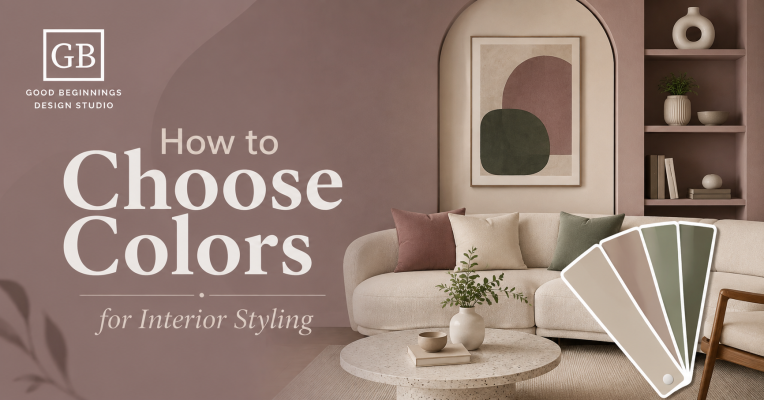
Choosing the right colours is one of the most important elements of interior styling. Colour can affect the mood, the visual balance, and the overall aesthetic of a room. The right combination can create a space that feels calm, spacious, warm, elegant, or vibrant.
But picking colours isn’t just about choosing your favourite hue. Before you decide on a colour scheme, consider the size of the room, the natural light, the furniture, the flooring, the materials, and the overall style of design.
The Good Beginnings Design Studio approach to colour selection is holistic and part of a complete interior styling process to ensure that colours work together with furniture, lighting, materials and décor.
Also Read: Interior Turnkey Projects: The Complete Guide to Luxury Home Design and Execution
What’s a colour palette in interior styling?
A colour palette is a deliberate combination of colours to be used throughout an interior.
It usually consists of:
- A primary colour
- Secondary or complementary colours
- Neutral colours
- colour accents
A carefully chosen palette will create visual consistency and help the various elements of a room work together.
Choose Colours for Interior Styling
1. Know the Room Size
Think about the size of a room before choosing colours.
Lighter and neutral colours can make smaller rooms appear larger. Darker shades can add depth and character, but overuse can make a small room feel visually heavy.
Deeper colours can be integrated into larger rooms via walls, furniture, or accent features without overpowering the space.
2. Consider Natural and Artificial Light
The colour of a thing can change in the light of the day.
The shade that appears warm in a showroom may not look the same in the natural light of your home.
Now imagine:
- Amount of natural sunlight
- Orientation of windows
- Artificial light (either warm or cool)
- Time of day the room is most used
It is helpful to try out colour samples in the room itself before you make your final choice.
3. Begin with a base colour.
A base colour sets the foundation for the interior.
Neutral shades are commonly used in white, beige, cream, grey, and earthy tones, as they can work well with different furniture and décor styles.
The base colour can be put on:
- Wall 6
- Big furniture
- Flooring Curtains
- Main architectural features
Once the base is established, complementary and accent colours can be added.
4. The 60-30-10 Rule
One simple way to create a balanced colour scheme is to divide colours by visual presence.
A typical approach is:
- 60% dominant or base colour
- 30%: Secondary colour
- 10%: Accent colour
For example, in a living room you might use a neutral colour as the main wall colour, a complementary colour in furniture and textiles, and a stronger accent in cushions, art, or accessories.
This adds some variety but keeps it balanced.
5. Match colours to furniture and materials.
Wall colours should never be selected in isolation from the rest of the interior.
Take into account the existing or planned:
- Sofa and chairs
- Wood Finishes
- Flooring Drapes
- Finishes for the kitchen
- Closets
- Countertops
- C. Decorative features
For example, natural wood finishes can work well with earthy and neutral tones, whilst metallic finishes can complement contemporary colour schemes.
The goal is for the room to have a consistent visual language.
6. Select Colours Based on the Mood
Different colours can give different visual impressions.
Neutral Colours
Create a look that is laid back, classic, and elegant.
Colours Warm
Can create a welcoming and homely feel to interiors.
Cool Colours
Can create a new and relaxing atmosphere.
Dark Colours
Used thoughtfully, it can add depth, drama, and a sense of luxury.
Colour Highlights
Can add personality and visual interest without overwhelming the whole room.
The decision should be determined by how the room will be used and the ambiance you want to create.
7. Think About the Overall Interior Style
The colour palette should be in keeping with the design style of the home.
Contemporary Interiors
They often work well with neutral shades, clean contrasts, and controlled accent colours.
Minimalistic Interiors
Generally, they use soft neutrals and limited colour variation.
Luxury Interiors
May include deeper tones, earth colours, metallic accents, and rich materials.
Classic Interiors
You can work within warm neutrals, muted colours, and traditional combinations.
A colour scheme consistent with the overall style makes for a more cohesive interior.

8. Use Accent Colours Carefully
Accent colours can be great to bring character to a room.
They can be included through:
- Cushion Art Rugs
- Vases and Curtains
- Decorative items
- Accent Chairs Feature Walls
An accent colour doesn’t have to be everywhere. Used sparingly, it can add visual interest to a room without throwing things out of whack.
9. Consider the Flow Between Rooms
Open-plan homes need to give more thought to colour coordination.
If the living room, dining area and kitchen are visually connected, using entirely different colour schemes can make the space feel disjointed.
Instead, choose related colours or repeat some shades in different areas.
A colour introduced through living room cushions, for example, can then be echoed in dining décor or kitchen accessories.
This is continuity, but not every room looks the same.
10. Test colours before you commit.
Colour samples can appear different due to lighting, surrounding materials, and the size of the room.
Before you choose a colour:
- Test a sample on the wall.
- Check it at various times of the day
- Check it in artificial light
- Compare with floor covering and furniture
- See it with fabric and material samples
This simple step can help to avoid unexpected results after the final application.
Common Colour Selection Mistakes (to Avoid)
Choosing colours without thinking about the whole interior can affect the final appearance.
Common mistakes are:
- Too many colours picked
- Disregarding daylight
- Wall colours before furniture
- Too many strong accent colours
- No testing paint samples
- Ignoring the colour of the flooring
- Making different palettes for connected spaces
- Followed by trends, not personal taste
A good colour scheme should be attractive but also should work with the practical requirements of the home.
Living Room Colour Ideas for Different Parts of the Home
Neutral walls with warm tones of furniture and one or two accent colours can make a comfortable and sophisticated environment.
Chamber
Soft neutrals, muted greens, earthy tones, and subtle blues create a calm atmosphere.
Culinary
White, beige, grey, wood tones, and a few carefully chosen accent colours can create a clean and functional look.
Dining room;
Warm shades and controlled accent colours will make the space more inviting.
Restroom
Light neutrals and soft cool colours can create a relaxing and clean atmosphere.
Verandah
“Natural greens, earthy tones, wood finishes and outdoor textiles can make a comfortable extension of the living space.
How a Professional Colour Consultation Can Help
It is easier to choose colours in a holistic way when you look at the whole interior.
Coordination through professional colour consultation:
- Wall colours, furniture, flooring, lighting, curtains
- Upholstery and wall finishes
- Decorative items
- Surface finishes
This makes for a cohesive interior as opposed to picking each colour individually.
Why Good Beginnings Design Studio for Interior Styling?
Good Beginnings Design Studio provides interior design and styling with colour, materials, furniture, lighting, and décor as part of a cohesive design concept.
The studio works on luxury residential interiors, space planning, custom furniture, modular kitchens, lighting consultation, décor styling services, and turnkey interior execution projects.
Colour choice can be designed around the architecture of the home, the natural light, lifestyle, preferred design style, and existing materials.
The goal is to design interiors that are visually balanced, comfortable, and personalised.
Also Read: Turnkey Interior Contractors in Mumbai: Why Homeowners Choose End-to-End Design Solutions
Conclusion
Selecting colours for interior styling is not only about selecting shades that look attractive on their own. All of these should be considered: the size of the room, lighting, furniture, materials, style of design, and the relation between the different spaces.
A good colour palette can help bring an interior space together and improve the overall design. Whether you love neutral interiors, warm earthy tones, contemporary contrasts or subtle luxury shades, a considered colour selection can make a big difference.
Good Beginnings Design Studio combines colour planning and space planning, furniture, lighting, materials, and decor to create elegant, functional interiors.
Frequently Asked Questions
1. How to choose the right colour for your interior?
Answer: Think about the room size, natural light, furniture, flooring, materials, and overall design style. Start with a base colour and then add complementary and accent shades.
2. Which colours make a room appear bigger?
Ans: Yes, light and neutral colours can help make a room feel more open and spacious, especially when paired with the right lighting and furniture placement.
3. What colours should be used in one room?
Ans: A simple combination of a dominant colour, secondary colour, and accent shade can create balance without making the interior look visually crowded.
4. Should wall colour match furniture?
Ans: Wall colours don’t have to match furniture exactly, but they should complement the furniture, flooring, curtains, and other main elements of the room.
5. How does light affect the colours inside?
Ans: A colour can look different under natural and artificial lighting. That’s why it’s important to test your colour samples in the room itself before you settle on a shade.

Shubhangi Singh has been the creative marketing consultant for several luxury brands, with more than 18 years of experience in curating meaningful campaigns for brands like Reliance Brands, Walking Tree, Malabar, Simone, D’décor, Jio Wonderland, Zoya Jewels, Per Te Jewels, Rustomjee, Farah Ali Khan, Puma, Benetton, Vogue Wedding Show, and Foodhall X Vogue Sensorium.