

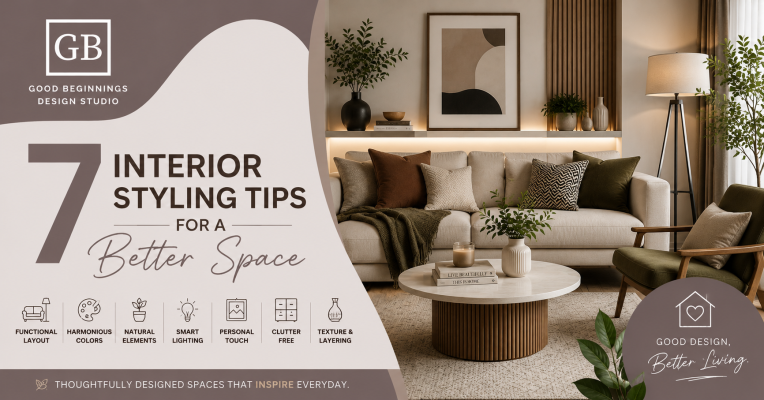
A beautiful interior isn’t only about choosing expensive furniture or decorative pieces. Good interior styling is about putting together colours, textures, lighting, furniture, and decor to create a space that feels balanced and comfortable.
Whether you are decorating a living room, bedroom, apartment or villa, small design decisions can make a noticeable difference. With the right approach, even a simple space can look refined and well planned.
Good Beginnings Design Studio designs beautiful and functional interiors. We help homeowners create spaces that truly reflect who they are and what they love.
Also Read: Top Interior Contractors in Mumbai for Premium Homes, Penthouses, and Commercial Spaces
What is interior styling?
Interior styling is the art of choosing and placing furniture, colours, lighting, artwork, accessories, textiles, and other decorative elements to create a cohesive interior.
Styling is often a matter of the finishing touches that add character and personality to a room, unlike structural interior design.
A well-styled space is visually balanced yet still practical for everyday use.
7 Interior Design Tips to Enhance Your Space
1. Begin With a Defined Design Style
Before buying furniture or décor, decide on the style you want for the room.
The popular interior styles are:
- Modern
- Contemporary
- Minimalist
- Luxury
- Classic
- Scandinavian
- Transitional
Having a clear direction makes it easier to choose furniture, colours, materials, and accessories that work well together.
A consistent design language also avoids the room looking cluttered or mismatched.
2. Pick a Well-Balanced Colour Palette
Colour has a big impact on how an interior looks and feels.
Pick one base colour for walls and larger pieces of furniture, then add complementary shades with cushions, curtains, rugs, artwork, and accessories.
A simple colour approach may include:
- 1 primary colour
- One or two additional colours
- Neutral tones to balance
- Accent colours for visual intrigue
Neutral colours provide a calm and sophisticated base, while thoughtfully selected accent colours add personality to the room.
3. Be mindful of furniture placement.
Furniture should not only fill the room. It should be so arranged that movement, comfort, and conversation are easy.
When choosing furniture, consider the size of the room. Leave enough space between major pieces so that the room doesn’t feel cramped.
Good furniture planning involves:
- Make comfortable walking paths
- Adequate distance between furniture
- Arrange seating around a centre of attention.
- Furniture selection according to room proportions
- Maintaining high-traffic areas in service
Proper placement of furniture can make a room appear more spacious and organised.
4. Incorporate Layered Lighting
Lighting can make a big difference to the way an interior looks and feels.
Layer different types of lighting, instead of relying on just one light source, to add depth and functionality. The main layers of light are:
Luminous Environment
Provides general illumination to the room.
Task Lighting
Helps with things like reading, cooking, working, or preparing.
Accent Lighting
Draws attention to artwork, architectural elements, furnishings, or decorative elements.
Pendant lights, wall lights, floor lamps, recessed lighting, and decorative fixtures are available that can be mixed and matched as per the requirements of the space.
5. Use Fabrics and Materials for Texture
A room can look flat if you use one finish or type of material. Adding different textures gives visual interest and makes a room more inviting.
You might try:
- Carpets and Drapes
- Cushions.
- Upholstered furniture
- Woodwork finishes
- Stone natural
- Ornamental wall panels
- Upholstery
For example, combining wood, fabric, glass and stone can create a layered interior without appearing busy.
6. Make a central focus
A well-furnished room always has something that naturally draws the eye.
The focus can be:
- A statement wall
- Couch statement
- Art piece
- A designer light fixture
- A wall of TV
- Decorative panel
- A Great Mirror
- An architectural element
The centre of attention should complement the rest of the interior, not overshadow it.
Once you have picked your main focus, you can bring in the rest of the furniture and décor to complement it.
7. Decor: Be Thoughtful and Functional
Accessories are the finishing touch to an interior, but too many decorative pieces can make a space look cluttered.
Pick up décor that adds personality but maintains a sense of balance.
Interior decoration may include:
- Mirrors Artwork
- Decorations
- Plants Within
- Vases
- Books, Cushions, Rugs, Curtains
The trick is fewer pieces, well-chosen, than to cover every surface possible.
Thoughtful styling creates the sense of a finished room without compromising function.
Making a Small Space Look Better
Interior styling can make small rooms seem more spacious and cosy too.
Some useful approaches are:
- In neutral and light colours
- Choosing the right size furniture
- Free pathways
- Strategically Placed Mirrors
- Pick out furniture that has storage built in
- Multilayer light
- Over-decorating
Thoughtful space planning and mindful styling can help you make a small room appear more organised and visually spacious.
Why you should hire a professional interior stylist
Professional interior styling brings together different design elements into a single, unified concept.
Trust an experienced interior design studio for your:
- Choose colours
- Furniture Arrangement
- Materials coordination
- The lighting
- Soft-furnishing
- Decor selection
- Wall treatments
- Planning of Space
- Final Style
This helps to make sure that individual elements function together rather than appear to be selected separately.
Home Interior Styling of Different Areas of the House
Each room has its own needs, both functional and aesthetic.
Sitting Room
Focus on comfy seating, lighting, artwork, rugs, feature walls and coordinating decor.
Bedroom.
Think comfort, soft lighting, soothing colors, wardrobes, textiles and personal decorative features.
Dining Area
The right lighting, a proportioned dining table, comfortable seating and simple decorative accents.
Terrace
A balcony can be turned into a comfortable continuation of the living space with the addition of outdoor seating, planters, ambient lighting, and other appropriate accessories.
Why should you choose Good Beginnings Design Studio for Interior Styling?
Good Beginnings Design Studio specialises in interior styling and design solutions with an emphasis on elegant and functional spaces.
The studio works on residential interiors, luxury home design, décor styling services, custom furniture, lighting, space planning, and turnkey interior execution.
Every project can be tailored to the homeowner’s lifestyle and preferences, space needs and overall design vision.
Also Read: Modern House Interior Colour Combinations That Create Elegant and Timeless Living Spaces
Conclusion
You don’t always need to make big changes to get a better interior. The right colour scheme, furniture layout, lighting, textures, highlights and décor can make a huge difference to the look and function of a space.
The best interiors are a compromise between beauty and everyday usability. Careful planning and professional styling can create more comfortable, cohesive and personalised rooms.
Good Beginnings Design Studio creates interiors that combine style and function through design planning, styling, materials, furniture, lighting and finishing details.
FAQs
1. What is interior designing?
Ans: Interior styling is the art of arranging furniture, colours, lighting, textiles, artwork, and décor to create a balanced and cohesive interior.
2. How can I make my house look better without remodelling?
Ans: Rearranging furniture, updating the lighting, and coordinating colours, rugs, curtains, artwork, plants, and well-placed décor can improve an interior.
3. How many colours to use in an interior?
Ans: Too many colours usually don’t work as well as a balanced palette. A main colour, a few complementary shades, and a few accent colours can create a cohesive look.
4. Why is lighting important in interior design?
Ans: The appearance of a room and its function depend on the lighting. Layering ambient, task, and accent lighting can add depth and improve mood.
5. How can I make a small room look larger?
Ans: Furniture that is well-proportioned, lighter colours, uncluttered walkways, well-placed mirrors, storage, and layered lighting can make a room feel more open.

Shubhangi Singh has been the creative marketing consultant for several luxury brands, with more than 18 years of experience in curating meaningful campaigns for brands like Reliance Brands, Walking Tree, Malabar, Simone, D’décor, Jio Wonderland, Zoya Jewels, Per Te Jewels, Rustomjee, Farah Ali Khan, Puma, Benetton, Vogue Wedding Show, and Foodhall X Vogue Sensorium.