

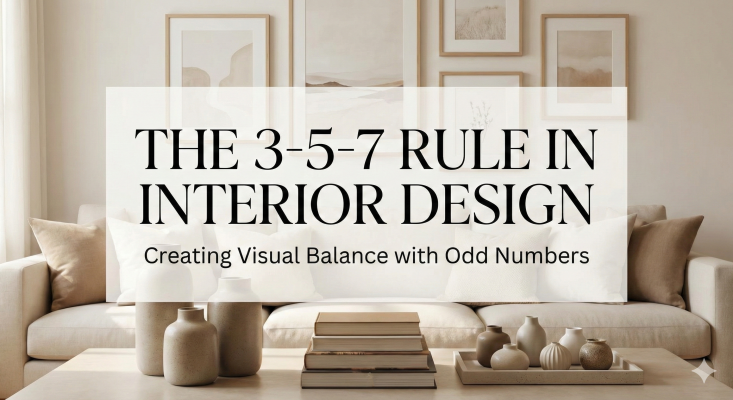
Interior design is a field that allows for immense creativity. At the same time, some of the best spaces are those that follow certain principles of balance, harmony, grouping, and rhythm. The 3-5-7 rule in interior design is one such simple and effective technique that helps designers create aesthetically pleasing groupings and balanced compositions in décor styling.
Whether it is a living room design, luxury bedroom styling, console décor, or even shop floor accessory curation, the 3-5-7 rule in interior design is a tool that can help you make spaces look intentional and visually pleasing. It is popular among top designers and luxury home stylists such as Good Beginnings Design Studio. Good Beginnings Design Studio is a luxury home design and styling consultancy with a reputation for creating elevated, balanced, and highly curated aesthetics.
In this comprehensive guide, we will cover everything you need to know about the 3-5-7 rule in interior design – from the what and the how to the why.
3-5-7 Rule in Interior Design: What is it?
The 3-5-7 rule in interior design is based on the concept that odd-numbered groupings – especially ones of 3, 5, and 7 – are more visually balanced and interesting than even-numbered clusters or rows.
Why odd numbers? Because:
- Odd numbers feel more organic and less structured.
- Odd numbers replicate patterns in nature.
- Odd numbers avoid rigid symmetry.
- Odd numbers help direct the eye inward.
The rule works on the design principle of the right amount of order balanced with creative flexibility. It is a classic trick in interior styling.
Also Read:-Top Window Display Trends for 2025
How does the 3-5-7 rule work?
The rule is primarily used in the styling of décor accessories, home surfaces, wall art balancing, creating design focal points, and many other applications in décor styling. We break it down into three parts here.
1. Grouping in Threes
Grouping in threes is the most popular way of applying the 3-5-7 rule in interior design. The rule applies to style variation, layering, and a shift in heights, textures, and shapes.
Examples:
- Three vases in staggered heights
- Three cushions of coordinating patterns
- Table décor in a trio (A candle, a bowl, and a sculpture)
- Three frames in an asymmetrical wall arrangement
All these create harmony, rhythm, and visual hierarchy.
2. Grouping in Fives
Grouping in fives works best for larger spaces, wider surfaces, or longer stretches.
Examples:
- Five well-curated accessories across a wide console
- A set of five layered pendant lights
- A gallery wall with five non-aligned picture frames
The idea here is to play with more items while still being intentional and thoughtful about creating visual harmony. This is where stylists like Good Beginnings Design Studio truly shine.
3. Grouping in Sevens
The seven-element composition is used for larger walls, wide shelving units, or big furniture pieces.
Common examples:
- Seven art pieces to form a statement gallery wall
- Seven decorative items across a long open shelf
- A combination of seven small plants or pottery arranged in an organic pattern
The higher the number, the more attention to detail required to curate a balanced composition.
Why is the 3-5-7 rule important in Interior Design?
1. Creates Visual Balance
Odd-numbered groupings subconsciously break uniformity in patterns, adding to a feeling of rhythm and movement to the room. It helps the space look well thought out.
2. Adds Depth and Dimension
The 3-5-7 rule in interior design also encourages designers to mix different elements of:
- Height
- Texture
- Shape
- Material
Contrast and layering add depth to a space, making it look visually interesting.
3. Makes Styling Easy and Intuitive
The rule gives structure to the design process. It makes the curation more instinctive and less about overthinking.
4. Works for All Styles
The rule is universal and can be used for any style, be it:
- Minimal
- Modern
- Vintage
- Eclectic
- Luxury
5. Enhances Focal Points
A design focal point (statement wall, feature coffee table, a mirror, etc.) looks better when it is also styled with an odd-number grouping that draws attention inwards.
Tips to Apply the 3-5-7 Rule in Different Rooms and Areas
Designers use the 3-5-7 rule in interior design all the time for both residential and commercial spaces. Here are some common examples and how to use them at home.
1. Coffee Table Styling
The coffee table is the heart of a living room. The 3-5-7 rule can help with achieving balance.
Examples:
- Book + Candle + Sculpture (Group of three)
- Flowers + Tray + Books + Candles + Bowl (Group of five)
Don’t forget to mix up the heights of décor objects for visual interest.
2. Dining Table Centerpieces
Instead of one massive centerpiece on the dining table, consider:
- Three vases
- Five candles
- A group of 3 or 5 smaller objects
3. Shelving and Console Styling
Shelves are perfect for layered styling. Odd-numbered groupings create a look that is dynamic and yet balanced.
For example, if you have a long console, you can:
- Group three accessories at one end at the same height
- Group five items at the other end at staggered heights
This is one of the most used styling methods by Good Beginnings Design Studio when curating accessories for luxury homes.
4. Cushions on Sofas & Beds
Sets of three or five cushions look less formal and more inviting.
Examples:
- Three cushions on a minimalist sofa
- Five-layered cushions on a king-size bed
Don’t forget to create contrast in textures.
5. Gallery Walls
The 3-5-7 rule in interior design applies to art arrangement in a big way.
Examples:
- Three aligned frames
- Five unaligned and mismatched artworks
- Seven curated pieces for a large wall
The trick is to maintain visual flow.
6. Kitchen Counter & Island Styling
Fill kitchen counters or islands with random décor.
Instead, group:
- Three countertop accessories
- Five décor accents across a long island
This keeps the kitchen looking elegant and minimal.
7. Entryway Styling
The rule also works when creating a welcoming first impression.
Ideas:
- A trio of décor elements in the entryway
- Five different curated objects for larger foyers
A balanced composition at the entrance feels more intentional and elevated.
Mistakes to Avoid
It is easy to follow the 3-5-7 rule and still go wrong in design. Avoid these mistakes to ensure you create a space that is balanced.
1. Too many small objects
The collection looks cluttered.
2. Lack of height contrast
The grouping should not have all elements at the same height. This creates a sense of movement.
3. Crowding
Leave some negative space so the room can breathe.
4. No color or texture coordination
Items should still look connected by having a similar color or material palette.
5. Scaling the group to the room size
The scale of the room and the elements of the grouping should match.
Why Do Professional Designers Follow the 3-5-7 Rule in Interior Design?
Professional interior designers and luxury home stylists follow this rule because.
- It allows them to effortlessly build a design composition.
- It ensures they create balanced and cohesive styling.
- The room looks curated, not cluttered.
- It enhances the luxury aesthetic.
- It is useful for creating narrative-led styling.
Good Beginnings Design Studio style high-end homes using interior design techniques like the 3-5-7 rule to create composition, harmony, and design concepts that are thoughtful, highly curated, and artful.
Their luxury home décor styling services focus on:
- Building cohesive material narratives
- Achieving material harmony
- Creating an elevated luxury spatial experience
- Personalized storytelling
This helps each room be polished, intentional, and look like the best version of itself.
Also Read:-How to Tell a Story Through Your Window Display
FAQs
1. What is the 3-5-7 rule in interior design used for?
Ans:-It is used to create balanced and visually appealing groupings of odd numbers.
2. Can I use the 3-5-7 rule in small spaces?
Ans:-Yes, groupings of 3 are ideal for smaller rooms, while larger groups of 5 and 7 work well for wider spaces and surfaces.
3. Is the 3-5-7 rule only for décor accessories?
Ans:-No, it can be applied to wall art, lighting fixtures, cushions, shelving, and even exterior landscaping.
4. Do I have to follow this rule religiously?
Ans:-It is a rule of thumb, not a strict rule. You can use it to get a sense of balance and rhythm in the space, but make changes as needed for your project.
5. Should I hire professional stylists like Good Beginnings Design Studio for my home design?
Ans:-Yes, designers like us have the experience and skills to curate and style your home in a way that looks professional, cohesive, and truly luxurious.

Shubhangi Singh has been the creative marketing consultant for several luxury brands, with more than 18 years of experience in curating meaningful campaigns for brands like Reliance Brands, Walking Tree, Malabar, Simone, D’décor, Jio Wonderland, Zoya Jewels, Per Te Jewels, Rustomjee, Farah Ali Khan, Puma, Benetton, Vogue Wedding Show, and Foodhall X Vogue Sensorium.
Comments are closed.