

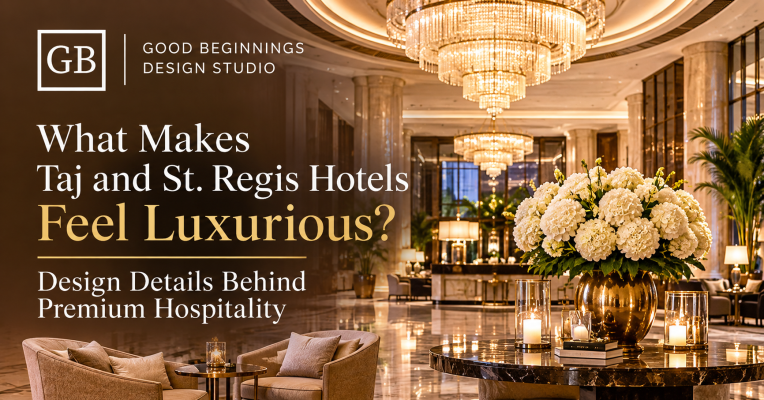
Luxury hotels offer a unique experience beyond just grand entrances or expensive finishes. Luxury is in the planning of the space, the materials used, the way guests move through the property, and how every detail contributes to comfort. Useful examples of how design can shape a memorable hospitality experience are the Taj and St Regis hotels.
In this article, we explore the design principles that underlie premium hospitality interiors, from spatial planning and material selection to lighting, turnkey interiors, furnishings and personalised details. These ideas can help explain what makes luxury hospitality interior styling feel considered and timeless.
Also Read: Christmas Styling Ideas for Luxury Villas and Holiday Homes
1. A strong sense of arrival
The guest experience begins even before you get to the room. A clear entrance, a welcoming reception and a well-composed lobby set the tone of the hotel.
Taj hotel interior design can express a sense of place through architectural details, materials, artwork, and references to local culture. St. Regis hotels tend to have a polished, formal feel to the interiors, with deliberate spaces and fine finishes.
The arrival sequence of any five-star hotel interior design project must be intuitive. Guests should know where to check in, where to wait, and how to move to the next area of the property without getting lost.
2. Sturdy, Elegant Materials
The choice of materials has a huge impact on the hotel experience. Used in balance, natural stone, timber, metal, glass and quality textiles bring depth and visual interest.
Luxury is not about using the most expensive material in every turn. It is about choosing finishes that are sympathetic to the architecture, perform well in use, and work together as a coherent palette.
For example, a stone reception counter can be balanced with warm timber panelling, upholstered seating and soft textiles. This combo can make a big lobby feel a lot more inviting.
3. Lighting that creates an atmosphere
Light is what gives each room its mood. A lobby may require bright, friendly light, while a lounge or guest room can have softer layers of light.
A thoughtful lighting scheme might include:
- General visibility ambient lighting
- Work and reading task lighting
- Accent lighting for artwork and architectural elements
- Decorative light added to character.
The colour temperature and intensity should be appropriate to the materials and activities in each area. Dimmable lighting can also help a room shift from use during the day to relaxation in the evening.
4. Furniture Setup Considering Guest Comfort
The furniture should be in the style of the hotel and allow the guests to use the space as they like. Seating arrangements in a lobby can also create places for conversation, waiting, or quiet time. In guest rooms, the bed, bedside tables, lighting and storage should be positioned for ease of use.
It’s not only a matter of choosing statement furniture that styles a luxury hotel. Proportion, spacing, and circulation are also involved. Guests should be able to move around freely, reach necessary items, and use the room without much trouble.
5. Attention to Details of Guest Rooms
A well-planned guest room feels calm and orderly. Layouts should maximise the space provided and make everyday functions easy to understand.
Useful details are:
- Convenient bedside controls & lighting.
- Charging points accessible
- Plenty of room for luggage and wardrobe
- Comfortable seating, where space allows
- Separate sleeping, working, and dressing areas
These practical features add to the overall impression of quality. A well-functioning room lets guests concentrate on their stay rather than adapting to the space.

6. A consistent design language throughout the hotel
Premium hospitality design creates a link between the various areas of the property. The lobby, restaurant, corridors, guest rooms and wellness spaces may have a different purpose but should still feel part of the same hotel.
This may be done by repeating certain materials, colours, forms or decorative elements. Consistency doesn’t mean every room has to look the same. This means the design feels intentional as guests traverse the property.
7. Personalisation and Character
“If a luxury hotel’s design reflects its location, it can feel more memorable.” Artwork, craft, material, and architectural references can link guests to the destination.
This information should be incorporated in a meaningful way, not as decoration without any context. Lots of random things will have less effect than a few meaningful things.
Guests also experience the interiors through personalised service. The design should promote inviting interaction, privacy and a sense of ease.
8. Public Spaces that Serve Different Needs
Hotel public areas must serve a variety of guests and activities. The lobby can be used for arrivals, informal meetings and quiet waiting. The layouts of restaurants and lounges must provide for service as well as comfort.
Successful planning takes into consideration:
- Set paths for movement
- Various seating arrangements
- Good acoustics
- Effortless movement
- Staff Access in Practice
While these decisions may not be obvious to guests, they do help make a stay easier and more comfortable.
9. Luxury That’s Practical to Maintain
Many people visit hotels, so the materials and furnishings have to be chosen in terms of maintenance. Durable finishes, easy-to-clean surfaces, and well-thought-out storage help the property maintain its look over the long haul.
Housekeeping and service teams should also be provided for in the design. Easy-to-access maintenance points, functional furniture configurations, and clear circulation can improve everyday efficiency.
A luxury interior is not just one that looks good on opening day. It must stay comfortable and well cared for through regular use.
10. Thoughtful Design Leaves a Lasting Impression
The best luxury interiors balance the aesthetics with the practical choices. A warm welcome, balanced lighting, comfortable furniture, thoughtful material selections, and a consistent design language all contribute to the guest experience.
Taj and St Regis hotels show how the design identity of a hotel can be conveyed through architecture, finishes, service spaces, and details. They take different routes, but both demonstrate that premium hospitality design is all about the relationship between the space and the people who occupy it.
Also Read: Luxury Hotel Christmas Decoration Ideas for 5-Star Hotels
Final Thoughts
Luxury hospitality interior design is a process of a multitude of considered decisions. The best spaces feel coherent, comfortable, and connected to their setting. They have a thoughtful use of materials and lighting, make movement intuitive, and meet the needs of guests and staff.
Good Beginnings Design Studio brings these principles to life in hospitality interiors, décor styling services, balancing atmosphere, functionality and a strong design identity. Where every element contributes to the guest experience, a hotel can be sophisticated without losing comfort or functionality.
Frequently Asked Question
1. What creates a luxury hotel interior?
Ans: The layout, materials, lighting, furniture, and details combine to create comfort, visual harmony, and ease of use. All this creates a luxurious hotel interior.
2. What are the major features of Taj hotel interior design?
Ans: We can express our identity through architecture, materials, artwork, and local cultural references. The specific design approach will vary from property to property.
3. What are St Regis hotel interiors?
Ans: “Each St Regis has its own design identity, but premium finishes, well-composed spaces, and attention to guest comfort are key elements of their hospitality experience.
4. How is the interior design of a five-star hotel different from residential design?
Ans: Hotel interiors must accommodate a wider range of users, intensive use, service operations, and maintenance, yet still offer a comfortable and unique atmosphere.
5. Why is lighting important in luxury hotel design?
Ans: Lighting influences comfort, visibility, and mood. Layered lighting ensures spaces can accommodate a variety of activities throughout the day.

Shubhangi Singh has been the creative marketing consultant for several luxury brands, with more than 18 years of experience in curating meaningful campaigns for brands like Reliance Brands, Walking Tree, Malabar, Simone, D’décor, Jio Wonderland, Zoya Jewels, Per Te Jewels, Rustomjee, Farah Ali Khan, Puma, Benetton, Vogue Wedding Show, and Foodhall X Vogue Sensorium.