

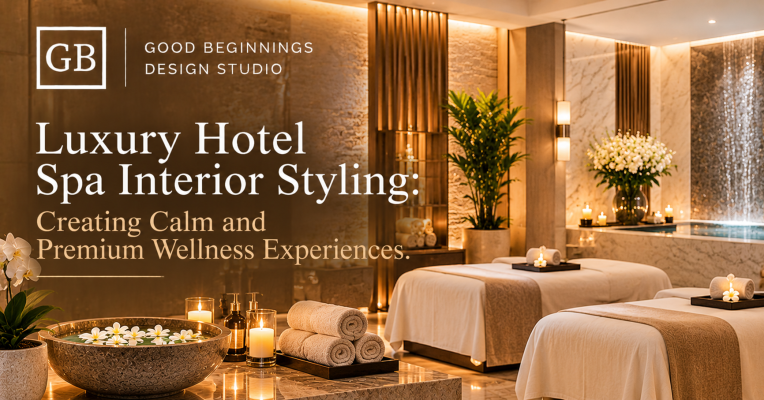
The hotel spa should offer a distinct change of pace from the day’s activities. Calm colours, comfortable materials, thoughtful lighting, and a well-planned layout can help guests feel relaxed from the moment they arrive. In a luxury environment, each and every detail should enhance the wellness experience and the practical needs of the spa.
Good Beginnings Design Studio mixes atmosphere, interior styling, turnkey interiors, comfort and function in the styling of the interior of a luxury hotel spa. The intention is to create spaces that are both restorative and refined, as well as supportive of the hotel’s treatments, services and routines.
Also Read: Luxury Villa Furniture Styling: Choosing the Right Pieces for Grand Living Spaces
1. Start with a Calm, Cohesive Colour Palette
Colour affects the mood of a spa. Soft neutrals and nature-inspired colours can create a restful but not boring atmosphere.
Think of such tones as
- warm white, ivory, beige
- Soft grey and muted taupe
- Sage green and other soft, natural tones
- Stone effect or brown earthy accents
Use the same colour scheme for walls, upholstery, towels, and accessories. A muted scheme connects the various areas of the spa, from reception and relaxation lounges to treatment rooms.
2. Incorporate Natural Materials for Warmth
Luxury spa interior design feels grounded and welcoming with natural materials. Timber, stone, linen, and textured ceramics bring visual depth while supporting a connection to nature.
Select finishes based on the function of each space. Materials in wet areas need to be suitable for moisture and regular cleaning, and softer textures can be used in lounges and changing areas.
A thoughtful mix of smooth and textured surfaces can create interest without the use of too much ornamentation.
3. Lighting Plans for Different Wellness Activities
Lighting should enhance the function of each spa area. Reception areas may need bright, welcoming light, while treatment rooms and relaxation areas benefit from dimmable light.
The layered approach might include:
- General lighting to enable safe movement
- Task lighting in areas where staff need to see clearly
- Accent lighting to highlight architectural features
- Dimmable fixtures for chill-out space
Avoid sharp glares and high contrast, which may disturb a peaceful ambiance. Make lighting controls easy for staff to adjust between treatments and other activities where possible.
4. Make a Friendly Spa Reception
The reception area ushers guests into the spa experience. Maintain an open and inviting desk, allowing enough space for guests to sign in without feeling cramped.
A simple display of fresh greenery, a well-chosen piece of art, or a textured feature wall can provide a centre of attention. Keep the reception area neat and ensure the early guests have somewhere comfortable to sit.
The spa design should be in keeping with the wider hotel, but it should also have its own identity.
5. Make treatment rooms comfortable.
Treatment rooms need to be calm but also practical. The layout should allow clear access around the treatment bed and adequate storage for products, linens and equipment.

Useful design considerations are
- Comfortable, adjustable illumination
- Clean surfaces
- Storage that hides supplies away
- Basic equipment is readily available.
- Acoustic privacy when feasible
Keep decorative elements simple so they don’t compete with the treatment experience. The room needs to be tidy, quiet, and comfortable for the guests and the staff.
6. Make relaxation spaces feel recuperative.
Guests can unwind in relaxation lounges before or after treatments. Quiet layout, soft lighting, and comfortable seating can make these spaces different from the busier parts of the hotel.
Select comfortable seating that does not impede the flow of traffic in the room. Add side tables for water or personal items and use practical textiles to care for them.
A few well-chosen accessories can bring the room to completion. Don’t overfill shelves and surfaces, as visual clutter can work against the calm vibe.
7. Think About Acoustics and Privacy
Sound is an important element in hotel spa interiors. Noise from corridors, reception, or nearby facilities can affect the feeling of relaxation.
Use acoustic treatments, soft furnishings and careful room planning to help reduce noise where appropriate. Doors, partitions, and circulation routes should also support privacy between treatment areas and shared spaces.
It’s not about silencing everything but about having a pleasant soundscape for each activity.
8. Wellness Areas Built to Use, Not to Show
The styling of the wellness centre should reflect what services are on offer – whether the spa has a sauna, steam room, hydrotherapy area, fitness space or meditation room.
The practical requirements vary from area to area. Choose finishes suitable for moisture, temperature, cleaning and safety criteria. Signage should be clear, and guests should be able to understand how to get between facilities.
In shared areas, unify the experience with a consistent palette and material language, but don’t make every room the same.
9. Subtle Decor
Premium spa decor should enhance the setting, not detract from it. With careful selection, artwork, plants, ceramics, and other decorative details can add character.
Pick a few highlights and leave plenty of space around them. Use plants only in places where the lighting and maintenance conditions are suitable and choose accessories that are easy to clean and maintain.
Thoughtful design makes the spa feel sophisticated, not overdone.
10. Connecting the Inside with Nature
A connection with nature may improve the ambiance of a wellness retreat. Where the building permits, use natural daylight, views of greenery, or an outdoor relaxation area.
If direct views are not possible, then introduce natural references into the design through materials, artwork, and a muted colour palette. Even little things can add up to a more restorative environment.
The experience of designing luxury wellness retreats must be cohesive from the moment you walk in until the treatment and the relaxation are over. Every space has a role to play in the overall feeling of calm.
11. Balance luxury with maintenance and operation.
The premium spa will need to be kept comfortable and well maintained throughout the day. Materials should be suitable for the intended use and the cleaning procedures the facility requires.
Design for usable storage and easy control of access and clear circulation for staff. Choose furniture and finishes that can withstand the rigours of daily use without sacrificing the desired aesthetic.
Good design is the foundation of the guest experience and enables the spa team to work efficiently.
Also Read: Vacation Home Styling for Coastal Properties: Creating a Relaxed Luxury Escape
Final Thoughts
Styling a luxury hotel spa interior requires more than just pretty finishes. A calming colour palette, natural materials, layered lighting, acoustic comfort, and a clear layout can all contribute to a premium wellness experience that is both relaxing and functional.
Good Beginnings Design Studio has a thoughtful approach to spa interiors that is focused on atmosphere, guest comfort and day-to-day operation. When these elements come together, the spa becomes a thoughtful retreat within the hotel, with décor styling services, providing a welcome place for guests to pause, recover and recharge.
FAQs
1. What is luxury hotel spa interior design?
Ans: It designs and styles spa spaces to create a calm, comfortable and refined environment that supports treatments, guest movement and daily operations.
2. What are the good colours for luxury spa interiors?
Ans: Warm whites, beige, soft grey, muted taupe, and gentle nature-inspired shades can help create a calm atmosphere.
3. Which materials can be used for hotel spa interior decoration?
Ans: Wood, stone, linen, and textured pottery can add warmth to a room. Select finishes for wet areas that are suitable for the moisture, cleaning, and safety requirements.
4. How to design a treatment room in a spa?
Ans: It should be well lit, have practical storage, have easy-to-clean surfaces, and have a calm atmosphere. It should provide clear access to the treatment bed.
5. Why is lighting important in the design of a spa?
Ans: Lighting is a factor in comfort and usability. Layered, adjustable lighting can be used for a variety of activities, from reception and treatments to relaxation.

Shubhangi Singh has been the creative marketing consultant for several luxury brands, with more than 18 years of experience in curating meaningful campaigns for brands like Reliance Brands, Walking Tree, Malabar, Simone, D’décor, Jio Wonderland, Zoya Jewels, Per Te Jewels, Rustomjee, Farah Ali Khan, Puma, Benetton, Vogue Wedding Show, and Foodhall X Vogue Sensorium.