

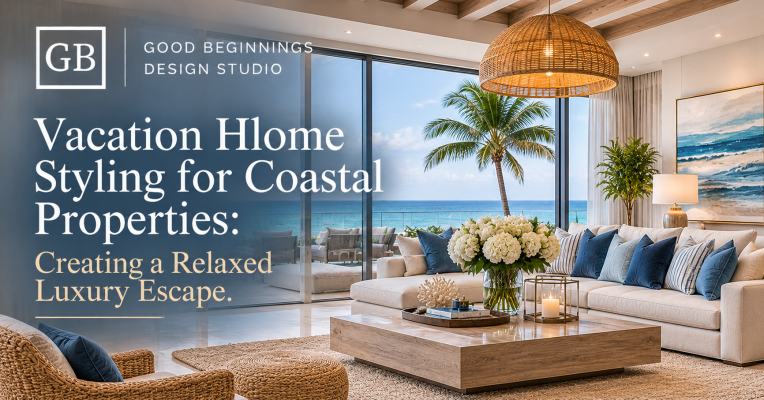
A beach house should feel like a welcome change of pace. With natural light, soothing colours, comfortable furniture and a few thoughtful touches, a seaside property can be a relaxing retreat without losing luxury. The aim is to create interiors that feel connected to the coast but are practical for holidays, family gatherings and longer stays.
At Good Beginnings Design Studio, turnkey interiors and vacation home interior styling start with how someone wants to experience the space. A good coastal home should be easy to enjoy, easy to maintain and comfortable in all seasons. From choosing the right furniture to layering textures and styling outdoor spaces, every decision should be made with the intent of creating a relaxed and inviting atmosphere.
Also Read: Penthouse Styling for High-End Properties: How to Create a Sophisticated and Personalised Interior
1. Begin with a Calm Coastal Colour Palette
Colour sets the tone for a coastal property. Soft, natural shades give a light, restful atmosphere, with a few deeper tones for definition.
Think of a palette based on:
- Ivory and cream, warm white
- Light blue and muted sea green
- Soft grey and natural beige
- Navy or charcoal as an accent now and then
Use the main colours on walls, big pieces of furniture, and window treatments. Add bolder colours with cushions, art, ceramics or other decorative objects. This keeps the room visually balanced and allows you to update the look over time.
You don’t have to go for obvious nautical motifs to get a coastal palette. Subtle colours drawn from the sea, sky and shoreline can be used for refined results.
2. Select Furniture for Comfort and Durability
The furniture in a vacation home should be attractive, comfortable and suitable for frequent use. Coastal properties can be home to sandy feet, wet swimwear, open windows, and regular visitors, so choosing materials carefully is essential.
Things to Consider When Choosing Coastal Home Decor:
- Upholstery easy to wash
- Cushion covers are removable if possible.
- Furniture that is solid and stable for shared spaces
- Natural wood finishes to blend into the surroundings.
- Outdoor furniture suited for the local climate
A big sofa, lounge chairs, and a practical dining table can make the home feel welcoming from the moment the guests arrive. Don’t over-decorate rooms. The open circulation makes the property feel open and relaxed.
3. Incorporate natural textures.
Texture brings warmth and depth to coastal interiors. Natural materials can soften a bright room and connect it to the landscape beyond.
You can use materials such as linen, cotton, timber, rattan, jute and woven fibres. These can be in soft furnishings, rugs, lighting and accessories. The space feels considered but not over-decorated with a mix of smooth and textured surfaces.
Mix and match, for example, a linen sofa with a timber coffee table, a woven rug and a few textured cushions. Mix the ingredients simply, letting the materials be the focus.
4. Use natural light as much as you can.
Natural light is one of the main features of a coastal property. Keep windows as clear as possible, and use window treatments that offer privacy while preventing rooms from feeling heavy.
Sheer curtains can soften bright daylight, while light-filtering blinds give you more control when you want it. For rooms that get intense afternoon sun, consider adequate shading to reduce glare and protect furniture.
Mirrors are good to bounce light into darker areas, but be careful where you put them. A mirror opposite a window can help bring more light into a room, but if the mirror shows a messy area, it can make a space feel less relaxing.
5. Design an Appealing Living Room
The living room is typically the central gathering space in a vacation home. “It should involve relaxed conversation, reading, watching films, and spending time together after a day out.
Instead of just facing each seat toward a television, arrange the seating to encourage interaction. Add side tables for drinks and books, and use layered lighting so the room works in the evening and during the day.
A few well-chosen accessories can complete the look:
- Coastal cushions in an array of colours and textures
- A soft throw for those cold evenings
- Art with local landscape inspiration
- An everyday essentials tray or bowl
- A rug to define the seating space
The goal is a room that feels edited but not precious. The guests can use it comfortably without worrying about the style.

6. Keep Bedrooms Simple and Relaxing
Bedrooms should be a place of escape from the busyness of the day. Opt for breathable bedding, comfortable mattresses and a muted colour scheme to help create a calm environment.
Put some nice sheets, a light coverlet and cushions on the bed. Stay away from heavy decorative bedding that requires constant adjusting. Bedside tables, reading lights and handy charging points further enhance the guest experience.
Use a limited number of materials or colours from the rest of the home to keep the design consistent. It gives continuity without every room looking the same.”
7. Design a functional coastal kitchen and dining space.
A vacation kitchen needs to work for fast breakfasts, meals shared with others, and casual entertaining. Have plenty of storage for groceries, dishes, and cooking equipment, and keep your most-used items within easy reach.
Select a table that fits the number of expected guests in the dining space without obstructing circulation. In a home where meals may be informal and frequent, durable chairs and easy-care finishes are helpful.
Simple styling can make the space feel special. Maybe a ceramic bowl, a vase with fresh greenery, or a natural table runner will do the trick. Leave a lot of open surface area for placing food and setting the table.
8. Bring the Coastal Landscape Inside
The best coastal holiday home decor is the one that reflects the location without the use of themed accessories. Select artwork, colours and materials that are relevant to the environment of the surroundings.
A local landscape photograph, an abstract piece inspired by the sea, or a selection of handmade ceramics can create a sense of place. Natural branches, greenery, and textured items can also add interest.
Use nautical elements sparingly, such as shells, anchors, etc. A few meaningful pieces can work, but too many can make the interior feel predictable.
9. Make the outdoors feel like an extension of your home.
Valuable living space can be created in a coastal property by using balconies, terraces, decks and gardens. Bring the outside in by repeating colours, materials or furniture styles in these zones.
Create comfortable areas to dine, relax and enjoy the view. Use furniture that is suitable for outdoor use and appropriate to the prevailing weather conditions and provide shade as necessary. Outdoor cushions and accessories should be easy to clean or easy to store.
Lighting is important too. For comfort after the sun sets, you can use wall lights, lanterns, or adequately rated outdoor fixtures. Walkways should be kept clear, and furniture should not block access.
10. Strike a Balance Between Luxury and Low-Maintenance
Luxury does not have to mean delicate, hard-to-maintain finishes. In the case of vacation homes, making the right material choices can help keep the property looking good and make it easier to maintain between visits.
Consider washable fabrics, durable flooring, practical storage, and finishes appropriate to the local climate. Be careful with decorative items and don’t put anything fragile in high-traffic areas.
A well-thought-out system of storage is especially helpful. Make room for beach bags, towels, shoes, and outdoor equipment so the living areas aren’t taken over by everyday items.
11. Personal Details without Over-styling
A coastal house should feel special, not like any other. Personal details may reflect the location, the interests of the owners, or the use of the property.
Pick a few meaningful objects, books, artworks, or locally made pieces. Keep surfaces neat and give each item enough space to be appreciated. This looks more considered than just filling every shelf and table.
If a property is used by different guests, keep personal styling balanced with practical needs. A tidy wardrobe, simple instructions and uncluttered surfaces make the home easier to enjoy.
Also Read: Vacation Home Interior Styling: 10 Design Elements for a Premium Holiday Experience
Final Thoughts
Styling a coastal vacation home successfully is a combination of relaxed comfort and thoughtful design. A calming colour palette, durable furniture, décor styling services, natural textures and good lighting can create a home that feels connected to its seaside surroundings. Practical storage and easy-care materials, along with comfortable indoor-outdoor spaces, make the property work for everyday living as well as for special holidays.
Good Beginnings Design Studio creates the interior styling for vacation homes with an eye to atmosphere and function. If the balance is right, a coastal property can feel inviting, elegant, relaxing and ready to enjoy.
Frequently Asked Questions
1. What is coastal vacation home design?
Ans: Coastal vacation home styling uses seaside-inspired colours, materials and furnishings to create a relaxed, comfortable and practical holiday property.
2. How to make a beach house look luxurious?
Ans: Pick a restricted colour palette, use comfortable furniture, good quality fabrics, natural textures and sympathetic lighting. Keep the layout clean and concentrate on a few carefully chosen details.
3. What are the best colours for coastal interiors?
Ans: Popular colours are warm white, sand, pale blue, sea green, and soft grey. You can use darker colours like navy for accents.
4. What type of furniture is best for a seaside vacation home?
Ans: Purchase comfortable, durable furnishings with easy-care upholstery and finishes suitable to the climate and anticipated use of the property.
5. How to decorate a coastal home without it looking too on theme?
Ans: Avoid repeated nautical symbols or accessories and use natural materials, artwork inspired by the landscape, and muted colours.

Shubhangi Singh has been the creative marketing consultant for several luxury brands, with more than 18 years of experience in curating meaningful campaigns for brands like Reliance Brands, Walking Tree, Malabar, Simone, D’décor, Jio Wonderland, Zoya Jewels, Per Te Jewels, Rustomjee, Farah Ali Khan, Puma, Benetton, Vogue Wedding Show, and Foodhall X Vogue Sensorium.