

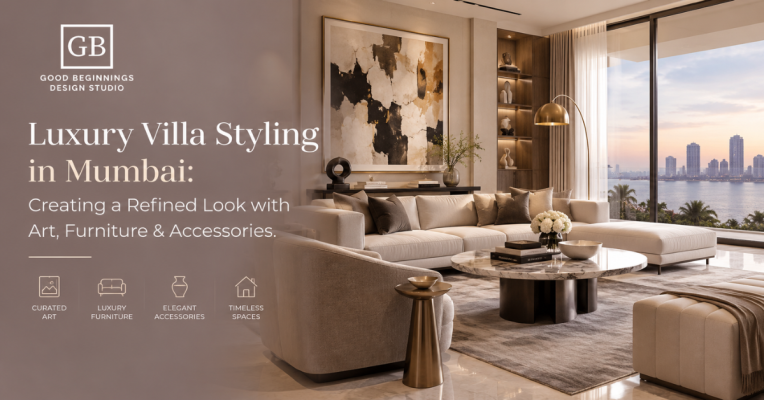
A luxury villa is more than the architecture. Big rooms, high ceilings, quality finishes, and large windows are a great start. Still, the home’s ultimate personality comes from how you furnish, style, and accessorise these spaces.
Thoughtful luxury villa styling: Mumbai homeowners can craft a refined environment by combining furniture, artwork, décor styling services, lighting, textiles, accessories, turnkey interior and carefully curated decorative elements. The idea is not to fill every room with expensive objects. It is to create a balance of proportion and comfort and a visual connection between different areas of the home.
Good luxury villa styling takes into account the architecture first and then builds the interiors around it. In Mumbai, where modern architecture, natural light, compact urban plots and indoor-outdoor living often intersect, styling needs to be sophisticated yet practical for everyday living.
Every area, from the living room and dining area to the bedrooms, corridors, balconies, and outdoor spaces, can contribute to the overall identity of the villa.
Also Read: Modular Kitchen Design Trends for Luxury Mumbai Homes (2026)
What Makes Styling Luxury Villas Different?
Luxury styling isn’t only about picking expensive furniture and accessories.
You have to think about:
- Size and scale
- Furniture Arrangement
- Colour scheme Materials
- Lighting, Art, Accessories, Textiles
- Architectural Features
- Natural light and views
- Indoor-outdoor links
The most successful luxury villa interiors tend to have a sense of restraint. Each piece has a purpose, and there is enough visual space so that important elements stand out.
1. Begin with the architecture.
The architecture should be the starting point for the style of the interior of the villa.
Before you decide on furniture or accessories, consider these things:
- Ceiling height
- Window sizes
- Flooring
- Wall Finishes:
- Stairs
- Built-in features
- Natural light spaces in the room
A contemporary villa with large glass openings may require a minimalist approach to furniture, while a more traditional architectural style may suit richer textures and classic detailing.
The styling should complement the architecture, not compete with it.
2. Create a Unified Design Language
A villa can have many different spaces, but they should feel connected.
By creating a consistent design language, you can:
- Materials Again
- Matching Metal Finishes
- matching colours
- Consistent furniture shapes
- Related textile
- Additional artwork
That doesn’t mean every room needs to look the same.
Instead of having the same character, each room can have its own character but with a common visual foundation.
3. Choose a Sophisticated Colour Palette
Colour is an important part of luxury villa decor.
Neutral tones provide a timeless base and allow artwork, furniture, and accessories to become the centre of attention.
Possible base colours are:
- Warm white
- Ivory
- Beige
- Taupe
- Greige
- Soft grey
- Natural wood tones
Accent colours can then be introduced by:
- Cushions Rugs
- Artwork: Decorative items
- Upholstery Draperies
Rather than trying to have a different colour scheme in each room, stick to a few accent colours for a sophisticated look.
4. Choose Furniture by Scale
Big villas require furniture in the right scale.
Large rooms can make small furniture look disconnected from the architecture.
In contrast, over-furnishing a room can restrict movement and give the impression of a cramped space.
Select the furniture based on:
- Room sizes
- Standard Ceiling Height
- Window placement
- Circulation requirements
- Architectural Elements
- Use intended
In a large living room, you might want to consider a spacious sectional or a thoughtfully put-together arrangement of sofas and lounge chairs.
5. Create a Robust Living Room Arrangement
The living room is often the core of the villa and is one of the most important areas for high-end villa styling.
Don’t just shove furniture against walls. Create a defined seating arrangement.
For instance:
- Sofa-Facing Feature Wall
- Two lounge chairs to create conversation space
- Coffee Table in the Middle
- Area rug, large
- Tableaux de côté
- Floor or table lights
- Artwork over the main seating
The arrangement should encourage conversation while allowing for comfortable circulation.

6. Use Rugs To Create Zones
Many large open-plan villas have multiple functional areas within a room.
Rugs can be used to visually demarcate these zones.
A rug can help set up:
- Space to live
- Reading nook
- Conversation area
- Dining room
- Seating in the bedroom
It needs to be big enough to connect the main pieces of furniture, not just look like a little island under a coffee table.
7. Add art as a main focus.
The artwork gives a luxury villa personality.
Large artwork works especially well in large spaces, where it can serve as a visual anchor.
The options are:
- Modern Paintings
- Abstract Art Photography
- Sculptural artwork
- Traditional Indian artwork commissioned to order
The art should be selected to complement the architecture, the furniture, the colour scheme, and the tastes of the homeowners.
It doesn’t have to exactly match the furniture.
8. Use Art To Connect Different Spaces
Artwork can also help establish continuity throughout the villa.
Similar colour accents can be found in artwork throughout:
- Livingroom
- Eating area
- Stairway
- Bedroom corridor, private lounge
This allows for subtle visual connections without making every room the same.
9. Restrained Decor for the Dining Room
The dining area should be elegant but not overly fancy.
A strong dining setting can consist of:
- A well-proportioned dining table
- Comfy chairs
- Pendant or chandelier lights
- Artwork/Feature wall
- Simple centrepiece
- SB: Sideboard
The dining table itself can be a visual element, especially when lit correctly.
Do not overdo it with the accessories on the table; they may interfere with everyday use.
10. Incorporate Lighting in the Styling
Lighting is crucial to luxury property styling.
Ideally, a villa should have several layers of lighting rather than only ceiling fixtures.
These may include:
Ambient Lighting
General lighting.
Accent Lights
Specialises in artwork, architectural details, or decorative objects.
Lighting Task
Suitable for specific activities, such as reading or working.
Decorative Lighting
Chandeliers, pendants, wall lights, or sculptural fixtures can be incorporated into the interior styling.
Lighting should also be adjustable so that the atmosphere can change throughout the day.
Luxury Villa Decor Ideas For Mumbai Residences
Mumbai homes can be styled to suit the urban lifestyle and climate of the city while still keeping a sophisticated look. Some practical ways would be.
Go with Nature.
Wood, stone, linen, and natural textures can lend warmth to contemporary interiors.
Maximise Natural Light
Keep major windows visually open, and use window treatments that allow flexibility.
Create Flexible Living Spaces
Furniture should meet the needs of everyday family life as well as formal entertaining.
Contact Outdoor Spaces
Balconies, terraces and gardens can be dressed up as extensions of the interior.
Controlled Luxury
Instead of filling the home with decorative details, concentrate on quality furniture, art, lighting and a few carefully chosen accessories.
Common Luxury Villa Style Mistakes
A refined home can lose its balance when styling choices are not coordinated.
Leave out:
- Furniture too small for the room
- Over-decoration
- Too many colours
- Badly positioned art
- Small carpets in big rooms
- Poor lighting
- Obstructing natural light
- Matching too closely to every item
- Circling in silence
- Room-by-room treatment
- Putting looks before comfort
The best luxury villa decor should feel like it was selected, not piled on.
How to Decorate a Luxury Villa
Here is a structured approach that can make styling easier.
Step 1: Understanding the Architecture
Study proportions, materials, natural light, and key architectural features.
Step 2: Define the Design Direction
Describe overall style, colour palette, and material language.
Step 3: Planning the furnishings
Choose furniture based on room scale, function, and circulation.
Step 4: Lighting
Layer ambient, task, accent and accent lighting.
Step 5: Add Artwork.
Artwork to create main points and personality.
Step 6: Bring in Textiles
Add rugs, curtains, upholstery, cushions, and throws to introduce comfort and texture.
Step 7: Accessorise Wisely
Add decorative objects, plants, books, and personal pieces.
Step 8: Polish the final look.
Whatever happens, whatever the people do, whatever the world does, it will never change the fact that I love you.
Why Design Studio?
Good Beginnings Design Studio tackles villa interiors with space planning, furniture selection, lighting, materials, artwork, accessories, and styling.
For standard luxury homes, you want to create an interior that feels refined but not overly formal or decorative.
From living and dining spaces to bedrooms, foyers, staircases, balconies and private lounges, each can be designed as per its function while keeping a uniform design language.
The studio aims to produce high-end villa styling that reflects the architecture and lifestyle of the homeowners, with an emphasis on proportion, comfort, visual balance, premium materials and personalised details.
Also Read: Vastu Tips for Home Interior Styling: Balancing Luxury and Positive Energy in Mumbai Homes
Conclusion
Successful styling of a luxury villa is all about achieving the right balance between architecture, furniture, art, lighting, textiles and accessories.
If you are a luxury villa styling Mumbai homeowner, the goal cannot be to fill a large home with expensive items. Rather, each piece must serve a specific purpose and contribute to the overall character of the space.
Thoughtful villa interior styling, luxury villa decor carefully selected, and practical villa decor ideas can turn an already impressive property into a refined and comfortable home.
The best luxury villa interiors balance quality and restraint, whether the design direction is contemporary, classic, minimalist, or eclectic. Furniture should be properly scaled, artwork should have space to breathe, lighting should add atmosphere, and accessories should add personality without creating clutter.
Good Beginnings Design Studio takes a considered approach to luxury property styling, uniting the different layers of an interior to create a villa that feels elegant, personal, functional, and timeless.
FAQs
1. What is luxury design for villas?
Ans: Luxury villa styling is the arrangement of furniture, artwork, lighting, textiles, accessories, colours, and decorative elements to produce a sophisticated and cohesive residential interior.
2. What counts in luxury villa styling in Mumbai?
Ans: Luxury villa styling in Mumbai involves key considerations such as furniture scale, natural light, material selection, indoor-outdoor connections, ventilation, comfort, lighting, artwork, and a cohesive colour palette.
3. How do I make a villa look luxurious?
Ans: Try to get furniture with good proportions, quality materials, layered lighting, large-scale art, sophisticated textiles, well-chosen accessories, and plenty of negative space.
4. What kind of furniture is perfect for luxury villa interiors?
Ans: The choice of furniture must depend on the scale and function of each room. Large villas can easily accommodate large seating, statement tables, lounge chairs, and custom furniture without making the space feel crowded.
5. How to use artwork in a luxury villa?
Ans: Art pieces can create centres of attention in living rooms, hallways, dining rooms, staircases, and corridors. Size and location should complement the architecture and furniture.

Shubhangi Singh has been the creative marketing consultant for several luxury brands, with more than 18 years of experience in curating meaningful campaigns for brands like Reliance Brands, Walking Tree, Malabar, Simone, D’décor, Jio Wonderland, Zoya Jewels, Per Te Jewels, Rustomjee, Farah Ali Khan, Puma, Benetton, Vogue Wedding Show, and Foodhall X Vogue Sensorium.