

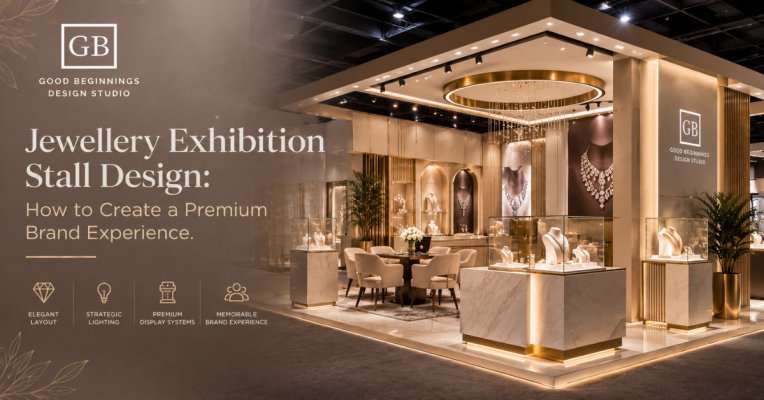
A jewellery exhibition stall has seconds to attract attention. An exhibition stall, unlike a permanent showroom, has to communicate the brand, showcase jewellery, guide visitors, and create a premium impression, all within a limited space.
This makes jewellery exhibition stall design an important part of exhibition marketing. The stall must not only be a product showcase. It should foster an environment where visitors understand the brand, feel relaxed browsing collections, and carry the experience with them after leaving the exhibition.
Successful jewellery stall design is a combination of space planning, turnkey interior execution, lighting, display systems, materials, décor styling services, branding, security and customer interaction. All elements must work together, as the available space is often limited, and the exhibition environment can be visually busy.
Thoughtful exhibition stall design can help jewellery brands build a stronger and more distinctive brand presence at jewellery exhibitions, trade fairs, wedding exhibitions and luxury lifestyle events.
Also Read: How to Choose Colors for Interior Styling
What Makes A Successful Jewellery Exhibition Stall?
A premium jewellery exhibition stall should be both functional and aesthetically good to look at.
Key components consist of:
- Brand visibility
- Access & Entrance
- Appealing product displays
- Directional Lighting
- Simple customer flow
- Areas of consultation
- Display case storage
- Premium stuff.
- Brand consistency
The stall should look good from afar but should also provide a comfortable experience when the visitors come in.
1. Begin with a Defined Stall Strategy
Choose the overall concept before selecting materials or display furniture. The design has to answer one simple question.
What do the visitors of the jewellery brand take away?
The idea may be based on:
- Modern luxury
- Handcrafted by Artisans
- Simplicity of elegance
- Indian legacy
- Bridal jewellery today
- Design for Sustainability
- Jewellery Collections
Once the concept is established, the architecture, colours, lighting, graphics, furniture and displays can all be consistent with the same visual language.
2. Achieve Brand Visibility from a Distance
Exhibitions can get visually crowded. The jewellery stall needs a strong visual identity as multiple brands compete for visitor attention.
The brand can be promoted through:
- Illuminated signs
- Logo placement
- Accent walls
- Common architectural forms
- Brand Colours
- Displays
- Raised signatures
Brand visibility should be designed according to the viewing distance.
A visitor should be able to identify a stall when walking through the exhibition without having to stand directly in front of it.
3. Make the Entrance Welcoming
Make an entrance that invites visitors rather than makes the stall feel closed off.
An open or semi-open entrance increases visibility and allows visitors to gain an understanding of the interior before entering.
The entrance can include, depending on the brand:
- Architectural details in frames
- Lighting branding
- Feature displays
- Screens for decoration
- Curved walls
- Luxury detailing, minimal
The entrance should be clear and easy to get to.
4. Design the Jewellery Stall Based on Visitor Movement
Visitor circulation is one of the most important aspects of jewellery stall design.
People should feel unrestricted as they enter, browse displays, interact with staff, and move toward consultation areas.
The stall can be broken down into zones like:
- Entry
- Featured collection
- Counter main shows
- New collection site
- Section: Bridal Jewellery
- Area of consultation
- Seating Storage
Precise layout will depend on the size of the stall and the requirements of the exhibition.
5. Use a Robust Feature Display
The feature display can become the visual focus of the stall.
It can show:
- Signature jewellery
- New collection
- Statement by Collier
- Wedding set
- Diamond collection
- Brand narrative
Choose a few key pieces and give them enough visual room instead of showing too many products in one place.
This makes for a more premium-looking presentation.

6. Make display counters simple to read.
Think of the display counters in terms of how people look at jewellery.
They should offer:
- Good product visibility
- Viewing height comfortable
- Good lighting
- Safe display
- Easy access to personnel
Counters can be outfitted with glass displays that won’t compromise the clean architectural aesthetic.
The design of the counter should also be in keeping with the general cubicle concept.
7. Lighting to create a premium experience
Lighting can make a whole difference to the look of an exhibition stall.
Lighting must showcase product details but also create an attractive atmosphere for jewellery. A layered lighting plan might include.
Ambient light
Provides general lighting.
Light your display
It is directly about jewellery.
Accent Lights
Selected collections or architectural features under the spotlight.
Decorative Lights
Gives character to the total stall.
The aim is to make the jewellery the most visually prominent and luminous aspect without creating uncomfortable glare.
8. Jewellery is the lead
One of the most frequent mistakes in the design of an exhibition is to let architecture overshadow the product.
A jewellery stall can have beautiful walls, furniture, graphics and lighting, but the jewellery has to be the star.
Support the products by using the inside:
- Managed backgrounds
- Spotlight
- Negative space
- Suitable display heights
- Not much distraction
The stall should complement the jewellery, not compete with it.
9. Make Good Use of Negative Space
Visual breathing room benefits luxury jewellery.
It can be hard for visitors to focus on individual products when too many pieces are displayed together.
Negative space can be created by:
- Wider gaps between products
- Minimal backgrounds for display
- clean counters
- Open-walled areas
- Minimal decorative elements
A well-edited display feels more premium than a crowded one.
10. Use Quality Materials
The material plays a big role in the stall’s perception.
Possible materials are:
- Marble or stone surface
- Premium Laminated Glass Metal Veneer
- Textured wall finishes
- Acrylic elements upholstery
Material choice should be in the spirit of the jewellery brand.
If you’re going for a contemporary brand, clean stone, glass, and metal can work well. If you’re a heritage-inspired brand, warmer wood tones and traditional detailing could be a more effective way to connect.
Jewellery Exhibition Design Trends
Modern jewellery exhibition design is moving toward spaces that are more comparable to high-end retail environments than traditional temporary booths. Key trends include.
Minimalist, Luxurious
The clean architecture, sparse décor, and choice of materials create a sophisticated feel.
Design Led by Experience
The stall is based on interaction, discovery, and consultation, not just product display.
Integrated Lighting
Lighting is built into the architecture and displays for a cleaner look.
Digital Narratives
Screens and interactive elements can tell brand stories and collections.
Flexible Displays
Modular counters and showcases make the stall adaptable to different exhibitions.
Design Driven by the Brand
The stall is made recognisable by distinctive shapes, materials, and details.
Mistakes in Jewellery Exhibition Stall Design
But a premium stall can lose its effect if the planning is not practical.
Do not:
- Crowded displays
- Too much branding
- Bad lighting
- extra text
- Limited circulation
- Not enough storage
- Uncomfortable chairs
- Cables exposed
- Low product visibility
- Materials are inconsistent
- Security Overlooked
- Bringing architecture to the fore over the jewellery
The best jewellery exhibition stall design should feel refined rather than complicated.
Creating a Premium Brand Experience
A visitor’s experience in a successful jewellery exhibition can be a simple journey.
Attract → Welcome → Discover → Explore → Interact → Consult → Recall
- The architecture is eye-catching.
- Visitors enter the entrance.
- Displays help them locate collections.
- Lighting and visual merchandising invite discovery.
- The staff provides information through interaction.
- Consulting areas influence purchase decisions.
- Finally, the whole experience leaves a lasting impression of the brand.
Why Good Beginnings Design Studio?
Good Beginnings Design Studio takes an integrated approach to exhibition interiors with space planning, styling, materials, lighting, branding, display systems, and customer experience.
In the case of jewellery brands, the goal is an exhibition environment that keeps the product at the center of attention, and the architecture around it communicates the identity of the brand.
From the design of the entrance and display counters to lighting, graphics, consultation areas, storage and seating, all can be planned as one cohesive concept.
Whether you are looking for a small jewellery stall or a larger premium exhibition space, a well-thought-out jewellery exhibition stand design can help you transform a limited area into a memorable brand environment.
Also Read: Modern House Interior Colour Combinations That Create Elegant and Timeless Living Spaces
Conclusion
A successful jewellery exhibition stall is not just a temporary exhibition space. It’s a chance to present the brand, display collections, tell stories about craftsmanship, and create meaningful interactions with visitors.
A successful jewellery stall design includes an inviting layout, high-quality materials, appropriate lighting, eye-catching displays, comfortable consultation spaces, effective branding, and suitable security.
A stall design for a jewellery exhibition must be well planned to make jewellery a visual hero. Architecture, graphics, lighting and furniture should support the products, not compete with them.
Well-planned jewellery exhibition design can create a memorable presence for visitors long after the event for brands at exhibitions and trade events.
Good Beginnings Design Studio creates premium, practical, and on-brand exhibition environments for the jewellery brand by combining interior styling, space planning, lighting, materials, display design, and branding.
FAQ
1. What is important in the design of a jewellery exhibition stall?
Ans: Elements of jewellery exhibition stall design are brand visibility, product displays, lighting, layout, customer circulation, materials, seating, consultation areas, security, and storage.
2. How to give a luxurious look to a jewellery exhibition stall?
Ans: A controlled material palette, elegant lighting, minimal decor, quality display counters, clear branding, and enough negative space can all create a premium look.
3. How to display jewellery in an exhibition stall?
Ans: Give jewellery room, light it up, put it in secure cases, and use chosen centrepieces to allow visitors to examine products with ease.
4. What role does lighting play in the design of jewellery exhibitions?
Ans: Lighting can be used to highlight the details of the jewellery, create a visual hierarchy, attract visitors, and add to the overall luxury mood of the stall.
5. Is there a consultation room in a jewellery exhibition stall?
Ans: Yes. A consultation area can be a comfortable space for detailed product discussions, high-value purchases, bridal jewellery consultations, and business meetings.

Shubhangi Singh has been the creative marketing consultant for several luxury brands, with more than 18 years of experience in curating meaningful campaigns for brands like Reliance Brands, Walking Tree, Malabar, Simone, D’décor, Jio Wonderland, Zoya Jewels, Per Te Jewels, Rustomjee, Farah Ali Khan, Puma, Benetton, Vogue Wedding Show, and Foodhall X Vogue Sensorium.