

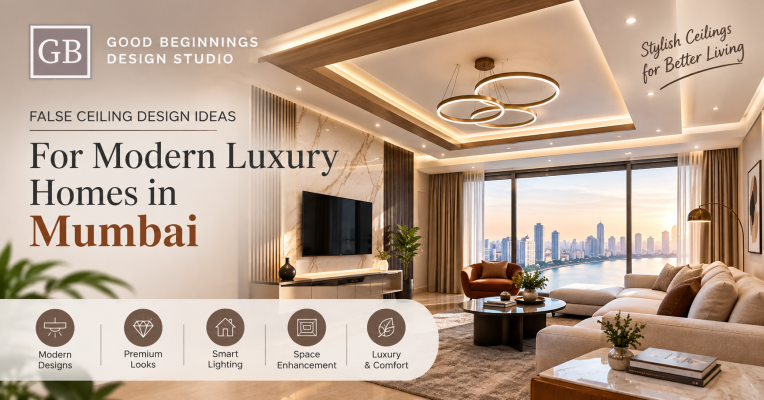
A ceiling is often one of the most overlooked aspects of an interior, but it can make a huge impact on the look and feel of a room. The ceiling in a modern luxury home can be used to hide electrical wiring or provide room for lighting, but it can do so much more. With a well-designed approach, it can be an important architectural feature, creating depth, character, and visual balance within the interior.
The false ceiling design is fast gaining popularity in modern-day Mumbai homes. This is because it allows the homeowner and designer to incorporate lighting, ventilation, electrical needs, and decorative detailing all in one cohesive design.
From minimalist floating ceilings and concealed LED lighting to wooden accents, geometric patterns, and elegant cove lighting, there are many ways to achieve a sophisticated ceiling without making the room feel over the top.
Good Beginnings Design Studio believes the ceiling is a part of the entire interior styling and not an isolated element. The design is planned according to room proportions, lighting needs, furniture arrangement, materials, and general style.
Also Read: Modular Kitchen Design Trends for Luxury Mumbai Homes (2026)
What Is a Suspended Ceiling?
A false ceiling is a secondary ceiling that is formed below the original structural slab. It provides a contained space to accommodate electrical wiring, lighting fixtures, air-conditioning components, and other services.
It can also be used to introduce architectural detailing into a room.
You can design a false ceiling with:
- Recessed light
- LED Strips Cove Lighting
- Highlights
- Panels, decorative
- Carpentry.
- Detailing in gypsum
- Air conditioning vents
- Strip lights
- Linear light
The final design should always be proportional to the room and the existing ceiling height.
Why Opt for a False Ceiling in a Luxury Home?
A well-designed false ceiling may improve the look and functionality of an interior.
Benefits include:
- Hiding wires and services
- Making layered lighting
- Adding architectural dimension
- Zone definition in different parts
- Improving the proportions of the room
- Keeping a consistent interior style
- Making points of focus
- Lighting integrated in furniture design
But it is not always the right approach to put a false ceiling just because it is fashionable. The design should have a purpose.
1. Minimalist Style False Ceiling Design
Minimalism is a strong choice for today’s luxury homes.
Instead of elaborate patterns, a minimalist false ceiling can use clean lines, subtle recesses, and carefully placed lighting.
This design is particularly useful in:
- Living spaces
- Bedrooms
- Eating Places
- Home Office
- Chapters
A simple ceiling will keep the attention on the premium furniture, wall treatments, artwork, and flooring.
2. False ceiling with cove lighting
Cove lighting is one of the most popular ways to add soft lighting to a luxury interior.
It is possible to hide LED strips in a recess in the ceiling so the light is reflected and not directly visible.
It creates a softer atmosphere and is especially nice in living rooms and bedrooms.
Cove lighting can be combined with spotlights or pendant fixtures for multi-layered lighting.
3. False Ceiling Floating
The floating ceiling gives the visual impression of a suspended or separated part of the ceiling from the main surface.
A hidden LED strip around the edges can enhance this effect.
This style can be good for contemporary luxury interiors, as it adds depth without too much decoration.
For Mumbai apartments, the floating element should be designed in such a way that the reduction in ceiling height does not make the room feel compressed.
4. Wood Accents for False Ceiling
Wood can bring warmth to an otherwise contemporary ceiling.
Instead of an all-wood ceiling, designers can introduce wood selectively through:
- Wooden bars
- Veneered panels
- Wood-look finishes
- Decorative joists
- Recessed wooden parts
Wooden ceiling accents go particularly well with neutral walls, natural stone, premium furniture, and warm lighting.
5. Ceiling Designs in Geometric
Geometric designs can also add more character to large spaces.
You can design a structured ceiling with squares, rectangles, linear elements, and layered forms.
The trick is moderation.
A geometric ceiling should complement the room’s architecture rather than compete with the furniture, flooring, wall decor, and lighting.
6. FALSE CEILING WITH LINEAR LIGHT
Linear lighting is a popular choice for the modern interior.
You can also integrate long LED lines into the ceiling for a clean architectural look.
You can use linear lighting to:
- To define a pathway
- Choose a dining table
- Make visual symmetry
- Various Zones
- Incorporate a modern design element
It can be particularly effective in living and dining rooms today.

7. False Ceiling for Living Room
Most often, the living room is the first place to experiment with ceiling design.
A luxurious living room may include:
- Coved ceiling
- lighthouse
- Key points
- Decorative pendant lighting
- Wood accents, ceiling panels
The ceiling design needs to be in coordination with the sofa arrangement, centre table, television wall, artwork, and other architectural features.
For instance, a rectangular ceiling niche could replicate the form of a seating area.
8. Bedroom Ideas with False Ceiling
Bedroom ceilings tend to look better with softer, less pronounced designs.
A recessed central panel with hidden warm lighting can generate a soothing ambiance.
Popular bedroom choices are:
- Floating floor
- Simple cove lighting
- Soft recessed lighting
- Wooden touches
- Little geometric detail
- Backlit ceiling elements
The lighting should be comfortable, not too bright.
9. False Ceiling Design for Dining Room
The centre of a ceiling composition may be the dining table.
A recessed or decorative ceiling section over the table can help visually define the dining area, especially in an open-plan home.
You could then introduce a pendant light into the ceiling feature.
This links the ceiling and lighting to the layout of furniture.
10. False ceiling Home Office
Functional lighting is a must for a home office, but that doesn’t mean the ceiling has to look purely commercial.
A clean ceiling with recessed downlights and integrated linear lighting can deliver sufficient light while still maintaining a residential appearance.
Lighting for professionals working from home should also be planned in a way that it does not cause glare on the screen and provides a comfortable environment for long working hours.
Frequently Used Materials For False Ceilings
The material choice should be based on the design, room conditions, durability requirements, and maintenance expectations.
Some common choices include:
- Gypsum board
- Plasterboard System
- Wooden panel
- Veneer metal parts
- PVC-based systems for suitable applications
In residential luxury interiors, gypsum is often used to create clean forms and incorporate lighting.
The type of material and system of installation shall be chosen according to the project requirements.
How to Pick the Right False Ceiling Design
Before finalising a design, consider:
Ceiling heights
A ceiling outline of a lower room may be simpler.
Size of the room
Large rooms call for more complex designs, but small rooms are best suited to minimal detail.
Furniture layouts
Lighting and ceiling elements should correspond with the location of sofas, beds, dining tables, and workstations.
Lighting Needs
Decide where you’ll need ambient, task, accent, and decorative lighting.
Interior Design
The ceiling has to be consistent with the overall design language of the house.
Upkeep
Design should allow practical access to important services and be suitable for long-term maintenance.
False Ceiling: Mistakes to Avoid
A false ceiling should improve the interior and not unnecessarily complicate it.
Keep away from:
- Too many layers
- Too many bright lights
- Poorly placed lighting
- Disregard ceiling height
- Geometrical patterns that are too complicated
- Preventing Service Access
- Selecting materials without maintenance in mind
- The ceiling design is not suited to the room
- Installing lighting without thinking about where furniture will be placed
Usually the most successful ceiling designs are those in which each element has a definite purpose.
Why Good Beginnings Design Studio?
Good Beginnings Design Studio provides false ceiling design as a part of residential interior planning.
The studio explores the relationship of ceilings, lighting, furniture, wall treatments, materials, and room proportions to achieve a harmonious interior.
The roof can be tailored to luxury Mumbai homes with the architecture of the house, the height available, lifestyle needs, lighting preferences, and overall design direction in mind.
It can be a minimalist ceiling for a small apartment, an elegant living room accent, or a more detailed ceiling design for a large luxury home. The idea is to balance visual appeal with functionality.
Also Read: Vastu Tips for Home Interior Styling: Balancing Luxury and Positive Energy in Mumbai Homes
Conclusion
With proper planning, false ceiling design can change the look of a modern luxury home. Homeowners have a variety of choices to consider, from pared-back recessed ceilings and floating designs to cove lighting, turnkey interior execution, wooden accents, linear lighting, and statement features.
In the case of Mumbai homes, the most important things are the ceiling height, the proportions of the rooms, the lighting, ventilation, maintenance, and the relationship between the ceiling and the other interior elements.
A good false ceiling should not just be attractive. It should support the functionality of the room and be a natural part of the overall interior design.
Good Beginnings Design Studio combines ceiling design with lighting, furniture, materials, décor styling services, and space planning to produce sophisticated residential interior environments that are functional, comfortable, and aesthetically unified.
FAQs
1. Which is the best false ceiling design for a luxury home?
Ans: No one’s best design. Geometric and linear designs, as well as minimalist, floating, cove-lit, and wooden ones, could all work depending on the size of the room, the height of the ceiling, the interior style, and the lighting needs.
2. Is a false ceiling good for a Mumbai apartment?
Ans: Yes, but the design should be planned according to the available ceiling height. Shallow and minimalist ceiling designs are typically good for compact apartments.
3. What is the general material used for false ceilings?
Ans: False ceilings are commonly used in residential spaces and are made of gypsum-based systems, which can be moulded into neat designs and can also incorporate lighting.
4. Does False Ceiling Reduce Room Height?
Ans: Yes, a false ceiling can reduce the usable height to some degree. The amount will depend upon the design and what services will be accommodated.
5. What is the best type of lighting for a false ceiling?
Ans: A combination of ambient, task, accent, and decorative lighting can create a balanced lighting scheme. Cove lighting, recessed lighting, spotlights, and linear LEDs are typical choices.

Shubhangi Singh has been the creative marketing consultant for several luxury brands, with more than 18 years of experience in curating meaningful campaigns for brands like Reliance Brands, Walking Tree, Malabar, Simone, D’décor, Jio Wonderland, Zoya Jewels, Per Te Jewels, Rustomjee, Farah Ali Khan, Puma, Benetton, Vogue Wedding Show, and Foodhall X Vogue Sensorium.