

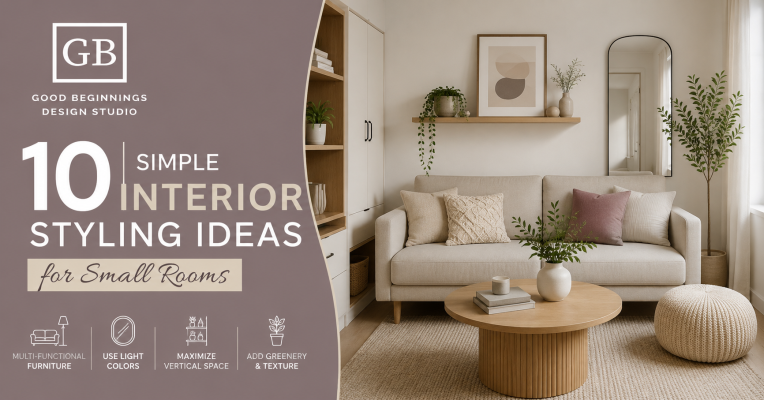
Styling small rooms can be a challenge. Every piece of furniture and décor needs to be selected with care. A small footprint doesn’t mean your space has to feel tight or personality-free.
A small room can be comfortable, organised, and look spacious with careful space planning, the right furniture, harmonious colours, good lighting, and clever storage.
The styling of the interior is all about using these elements to create a room that is both functional and attractive. Good Beginnings Design Studio philosophy of interior styling is built on space, lifestyle, materials, lighting, furniture and finishing details.
Also Read: How to Choose the Best Interior Contractors in Mumbai for Luxury Residential Projects
1. Select Furniture Based on the Room Size
Furniture that is too big can very quickly make a small room feel very crowded. Choose pieces that fit your space.
Think about:
- Small sofas and chairs
- Skinny side tables
- Beds of the right size
- Furniture for wall-mounting
- Furniture with transparent profiles
Leave enough space around furniture to move easily and to make the space feel larger.
2. Light and Neutral Colours
Colour can make a huge difference to how a small room looks.
Light colours such as white, cream, beige, soft grey or other neutral shades can help to reflect light around the room and make it appear larger.
You can add more intense colours by:
Rugs, cushions, art, Curtains, Decorative accessories
This gives visual interest without weighing down the whole room.
3. Improved Use of Vertical Space
If you are short on floor space, the walls are great opportunities for storage and styling.
For example, take:
- High storage units
- Shelves, floating
- Wall-mounted cabinets
- Art in the vertical
- Full-height wardrobes
- Decorative wall coverings
“Using vertical space will give the illusion of height and bring the eye upward.”
4. Use mirrors to your advantage.
Mirrors are useful in small interiors because they reflect light and create a greater sense of visual depth.
A large mirror on the wall can also be a decorative feature and help make the room more open.
You can put mirrors:
- Windows across
- in front of a console
- on cupboard doors
- Feature walls
You have to really think about placement so the reflection enhances the room and doesn’t add visual clutter.
5. Opt for Multi-Functional Furniture
Furniture that serves more than one purpose can be particularly useful in small rooms.
For instance:
- Storage beds.
- Storage ottomans
- Tables, foldable
- Sofa beds
- Desks on the wall
- Storage bench seats
Multi-functional furniture reduces the number of individual pieces needed and adds additional functionality.

6. Simple in the décor
Too many decorative items can quickly make small rooms cluttered.
Instead of covering every surface, select a few pieces that complement the interior.
Decorations may include:
- Art
- Indoor plants
- Pots,
- Cushions
- Small ornaments
- Books Desk lights
A few well-chosen accessories can give the room personality without making it look messy.
7. Multi-level Lighting
Good lighting can make a small room seem brighter and more comfortable.
Don’t just use one ceiling light; use a combination of illumination sources.
Think of:
- Ambient light
- Lights in the wall
- Lights to hang
- Table lamps
- Floor lamps
- Accent lighting
Layered lighting adds depth and highlights key areas of the room.
8. Sweep the Sidewalks
Planning a small room is an important part of movement.
Furniture should be arranged to allow for clear paths of travel.
Keep areas people walk through regularly clear of unnecessary furniture.
A good layout can make a room feel more organised and comfortable, even if you don’t have a lot of floor space.
9. Choose the same materials and colours.
Visually busy can result from too many unrelated colours, patterns and materials in a small room.
Instead, keep the design language consistent throughout the space.
For example, you might carry the same wood finish through furniture and storage and use accent colours throughout on cushions, artwork and accessories.
This gives the room a sense of continuity and makes it feel more cohesive.
10. Storage Design
Storage is one of the main things to think of in a small room.
Design storage into the overall plan rather than adding separate storage pieces wherever there is space.
Smart storage options are:
- Wardrobes and cupboards
- Under-bed storage
- Wall cabinets
- Shelves (floating)
- Hidden storage
- Furniture (custom)
Proper storage planning helps to organise everyday items and reduce visible clutter.
How to Make a Small Room Look Bigger
With limited floor space, interior styling and space planning should go hand in hand.
Some simple approaches are:
- Choose furniture of the right size.
- Maintain a light and consistent colour palette.
- Opt for natural lighting.
- Use mirrors to your advantage.
- Keep floors and aisles clear.
- Utilise vertical storage
- Opt for Multi-Function Furniture
- Don’t over-decorate
These changes can alter the appearance and the functionality of a compact room.
Small Living Room Styling Tips
A small living room needs comfortable seating but not so much that it takes up too much floor space.
Imagine small sofas, narrow coffee tables, wall-mounted storage, layered lighting, and a simple feature wall.
Rugs and cushions are a great way to add texture and colour without having to buy more furniture.
How to Decorate a Small Bedroom
A bedroom should remain comfortable and provide adequate storage.
A bed with built-in storage, a floor-to-ceiling wardrobe, wall-mounted lights and gentle neutral colours can create a practical and calming space.
Cut down on decoration and make it zen.
The Benefits of Professional Interior Styling for Small Spaces
Interior design is a delicate balancing act: each piece of furniture eats into valuable space.
Professional interior styling can help coordinate:
- Space planning
- Choosing Furniture
- Storage Lighting
- Colour themes
- Wall finish
- Design Material
A good design ensures that the room is functional without compromising its aesthetic appeal.
Why Should You Choose Good Beginnings Design Studio?
Good Beginnings Design Studio offers interior design & styling solutions for residential spaces. Merging Functionality, Aesthetics & Thoughtful Planning.
The studio works in interior styling, space planning, custom furniture, modular kitchens, lighting consultation, décor styling services, and turnkey interior execution.
For smaller spaces, the design approach may be to maximise the efficient use of available space while creating a comfortable and cohesive interior.
Also Read: Best Colour Combination for House Interior: Luxury Colour Ideas for Every Room
Conclusion
You can design a small room well if you plan the furniture, colours, lighting, storage and décor together. It’s not about filling the space but using the space wisely.
You can make a big difference with light colours, furniture sized appropriately for the space, mirrors, vertical storage, multi-functional pieces, layered lighting and simple décor.
Thoughtful interior styling and space planning can make even a compact room comfortable, organised and visually appealing.
Good Beginnings Design Studio creates interiors that make use of every available space in a practical way by combining design planning, furniture, lighting, materials, storage and décor.
Frequently Asked Questions FAQs
1. How to make a small room look bigger?
Ans: Light colours, furniture of the right sizes, mirrors, clear walkways, layered lighting and smart storage can help create a more open and organised look.
2. What kind of furniture is good for small rooms?
Ans: Furniture that is small and multi-purpose is generally good for small rooms. Space-saving solutions like storage beds, sofa beds, wall-mounted desks, and furniture with built-in storage can help.
3. Do mirrors make small rooms appear bigger?
Ans: Mirrors can reflect light and parts of the room to create a greater sense of depth. Plan their location according to the layout and the amount of natural light available.
4. What colours are suitable for small rooms?
Ans: Light and neutral colours such as white, cream, beige, and soft grey can help create a brighter and more spacious look.
5. How do I add storage without making a small room feel cluttered?
Ans: Built-in wardrobes, floating shelves, wall-mounted cabinets, under-bed storage, and concealed storage can give a functional and less cluttered look.

Shubhangi Singh has been the creative marketing consultant for several luxury brands, with more than 18 years of experience in curating meaningful campaigns for brands like Reliance Brands, Walking Tree, Malabar, Simone, D’décor, Jio Wonderland, Zoya Jewels, Per Te Jewels, Rustomjee, Farah Ali Khan, Puma, Benetton, Vogue Wedding Show, and Foodhall X Vogue Sensorium.