

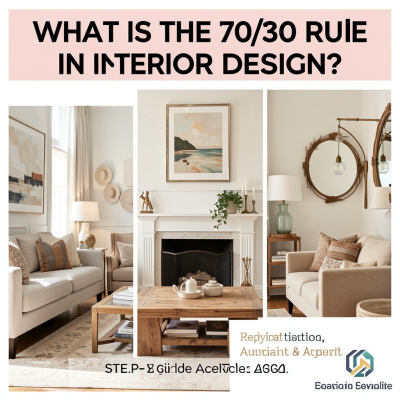
Good Beginnings Design Studio in a home is not just about splurging on expensive furnishings and accessories. It is also about how the different elements within a home are visually presented. Spaces are more likely to feel balanced when good design principles are applied.
The concept of the 70/30 rule in interior design is commonly used by interior design experts. It is a principle that is simple to follow, and the result is that a space will look the best when it is 70% consistent with a particular style, color, or theme, and 30% contrast.
Take a look at most modern apartments in India today. Professional designers have combined the best from various space planning services, color palette planning, furniture layout design, wall panel design, lighting design consultation, modular kitchen design, custom wardrobe solutions, décor styling services, premium material selection, living room interior styling, bedroom interior design, ceiling design concepts, flooring coordination, custom furniture design, storage optimization, balcony design planning, smart home integration, and turnkey interior execution services to come up with stylish interiors that always look like they just came out of a magazine, without looking too manufactured or uncomfortable.
Good Beginnings Design Studio, you can use the same rules to design a home that looks visually stunning and yet doesn’t look fussy and overdone. Good design follows a set of simple rules, and the 70/30 rule is one of them. Let’s take a deeper dive into this.
Understanding the 70/30 Rule in Interior Design
The 70/30 rule is a straightforward interior design principle that helps designers achieve a sense of balance within a room or space. The idea is that 70 percent of the interior space should be consistent with one style, color, or theme, while the other 30 percent is used for introducing contrast, variation, or accent elements. The rule aims to prevent a space from looking either too monotonous or too busy. If a room is designed entirely in one style or color, it can feel dull and uninteresting. On the other hand, introducing too many different elements can make the room appear cluttered and chaotic.
Designers aim:
to balance the two by sticking to 70% consistency and 30% contrast. This approach ensures that the room has a clear design direction while also providing visual interest. Let’s say a living room has neutral walls, a simple sofa, and minimal furniture as the primary design elements, which form the 70% base design. Accent chairs, decorative cushions, artwork, or lighting fixtures can then make up the other 30% of contrasting elements.
Also Read:- What is the role of a visual merchandiser in a store?
How the 70/30 Rule Works in Color Schemes
Color is one of the most popular applications of the 70/30 rule. Good Beginnings Design Studio designers will start by choosing a dominant color palette that will be used for most of the room.
Designers may choose to apply the 70 percent portion on wall colors, large furniture pieces, such as the sofa or bed, curtains, and flooring, and major cabinetry or wardrobes.
The 30% remaining portion:
The room is used for introducing accent colors or patterns in the form of decorative cushions, rugs, or throws, artwork, décor items, accent chairs or stools, and lighting fixtures. The key is that the accent colors should complement and not overpower the base color scheme.
For example, if a room is painted in neutral colors, such as beige, grey, or white, the accent colors can be bolder, such as navy blue, emerald green, or terracotta. By using such a combination, the space will look more interesting without appearing too overwhelming.
Interior designers will often apply the 70/30 rule to color coordination when designing living room interiors, bedroom styling, dining spaces, and modular kitchen interiors.
Applying the 70/30 Rule to Furniture and Layout
The rule can also be applied when it comes to furniture in a home. In most interiors, the majority of furniture pieces should be of a similar style. A smaller percentage of furniture or layout design can be used to add visual contrast.
For example:
- 70% Base Furniture
- The main sofa set
- Dining table and chairs
- Bed frame and wardrobes
- Coffee tables and side tables
- 30% Accent Furniture
- Statement armchairs
- Decorative stools
- Unique side tables
- Sculptural furniture pieces
This contrast between the primary furniture pieces and the accent pieces will ensure that the room looks put together without being boring.
Interior designers will often use the 70/30 rule in conjunction with custom furniture design and space planning services to ensure all pieces of furniture fit well with the overall theme of the interior.
Using the 70/30 Rule in Materials and Textures
Color and furniture are only a small part of what makes up good interior design. Materials and textures are also a critical element that interior design experts will need to work with in every project.
The 70/30 rule can also be used to help you decide which materials to use in a space.
For example:
- 70% Primary Materials
- Wooden furniture
- Neutral painted walls
- Standard flooring such as tiles or engineered wood
- 30% Accent Materials
- Marble or stone elements
- Metal accents in lighting fixtures
- Glass partitions
- Decorative wall panels or textured surfaces
By thoughtfully combining different materials and textures, the designers can create interiors that feel layered and more refined.
Architectural design studios that offer premium material selection consulting services and architectural detailing in their interiors will most often apply the 70/30 rule when it comes to materials.

Applying the Rule in Different Rooms of the Home
Let’s take a look at how the 70/30 rule can be applied to different rooms.
Living Room
The living room is usually the center of activity in a house. A living room will most often have neutral colors for the walls, sofa, and curtains as the main 70 percent. The remaining 30 percent can be used for accent chairs, decorative cushions, rugs, artwork, and statement lighting.
Bedroom
Bedrooms are spaces in a home that require a calm and soothing atmosphere. The base color scheme for a bedroom can be neutral with simple furniture and soft lighting. The remaining 30 percent can be applied through accent bedding, textured headboards, or decorative lamps.
Kitchen
In a modular kitchen, the cabinetry and countertops make up the most dominant design. Accent colors in such kitchens can be used on backsplash tiles, bar stools, or decorative lighting.
Dining Area
A dining space will often have a consistent furniture theme, with a smaller portion being used for contrast through statement lighting fixtures, artwork, or decorative centerpieces.
Why Interior Designers Use the 70/30 Rule
Interior designers use several design principles when designing homes for their clients. They do so to ensure that the finished spaces look visually pleasing to clients and visitors alike. Interior designers who have been in the industry for a long time have developed their unique design styles and approaches.
It is in this process that they will use principles, such as the 70/30 rule, to help them develop a suitable design for their clients.
Some of the reasons professional interior designers use the 70/30 rule include the following:
- The rule helps in preventing interiors from looking too busy.
- It helps to create a cohesive design theme.
- It helps to add personality and style to spaces without overwhelming the room.
- Designers can use the 70/30 rule in creating modern, contemporary, and luxury-style interiors.
Design firms will often have several designers, and they will use their design principles during various stages of a project. Luxury residential interior design services, custom furniture design, lighting design consultation, décor styling services, and turnkey interior execution are areas where design principles such as the 70/30 rule will be used.
Good Beginnings Design Studio is one of those firms that have stuck to design structures such as the 70/30 rule when coming up with the designs for their clients’ homes.
Combining the 70/30 Rule with Other Design Principles
The 70/30 rule is a principle that can be used with other interior design ideas or principles. This will usually be the case when working with a professional interior designer.
Some of these other concepts will include:
- Balance and symmetry when it comes to furniture placement
- Layered lighting to support functionality as well as ambience
- Space planning that can ensure there is no clutter within a room
- Consistent material selections in different rooms within a home
Professional interior designers will often consider these principles in their work to ensure the house looks cohesive from one room to another.
Also Read:- High-End Home Decor Services in Mumbai: What Makes Them Worth It
Conclusion
Good Beginnings Design Studio’s 70/30 rule is a basic interior design principle that can be used to create stylish and balanced interiors in a home. By following the general idea that 70% of a room should be consistent in design, color, or theme, with the other 30% introducing contrast, homeowners can create spaces that are visually interesting without appearing too repetitive or cluttered.
The rule can be applied to different elements of interior design, including color schemes, furniture choices, textures, and décor accents.
Working with an experienced interior designer is one of the easiest ways of using interior design principles, such as the 70/30 rule.
Interior design studios will often provide space planning, custom furniture design, lighting consultation, modular kitchen planning and designing, wardrobe design, décor styling, and turnkey interior execution services to their clients, which will make it easy to implement these principles when designing the different spaces in a home.
FAQs
1. What is the 70/30 rule in interior design?
Ans: The 70/30 rule refers to the design principle of having 70% of the room be consistent in terms of color, style, or theme, with the other 30% being used for contrast.
2. Why is the 70/30 rule important in interior design?
Ans: The 70/30 rule is important in interior design as it helps prevent a room from looking too cluttered or monotonous. By introducing a contrasting element in 30% of the room, the space is visually interesting without being overwhelming.
3. Can the 70/30 rule be applied to colors?
Ans: Yes, the 70/30 rule can be applied to colors in interior design. For instance, a room can be painted in a neutral shade that makes up 70% of the space, while the other 30% is used for accent colors.
4. Does the rule apply to furniture and materials?
Ans: Yes, the 70/30 rule can be applied to furniture and materials in interior design. In furniture, for example, the main furniture pieces should be of similar styles, with contrasting pieces accounting for 30% of the total.
5. How can interior designers help with the 70/30 rule?
Ans: Interior designers can help with the 70/30 rule by providing their expertise and knowledge in creating a balanced and visually interesting interior design. They can help clients choose the right colors, furniture, and materials to achieve the perfect 70/30 ratio.

Shubhangi Singh has been the creative marketing consultant for several luxury brands, with more than 18 years of experience in curating meaningful campaigns for brands like Reliance Brands, Walking Tree, Malabar, Simone, D’décor, Jio Wonderland, Zoya Jewels, Per Te Jewels, Rustomjee, Farah Ali Khan, Puma, Benetton, Vogue Wedding Show, and Foodhall X Vogue Sensorium.